








Catfishing Adventure: A Family Mission on the Water
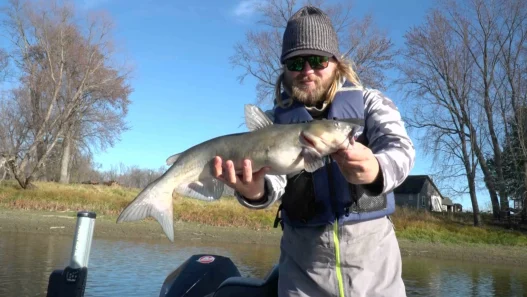
Today’s catfishing adventure is a special one—four generations of the Lindner family aboard a boat, all geared up for a day of catfishing. With patriarch Ron Lindner joining sons and grandsons, this multi-generational outing promises both family fun and serious angling. The target? Channel catfish—North America’s most abundant species and the fourth most pursued sportfish in the U.S., behind only bass, panfish, and trout.
Despite being somewhat underappreciated in northern states, catfish are prized by anglers for their hard fights and impressive size. And as the Lindners have discovered across North America—and even in the Amazon Basin—the same basic rigs and tactics prove effective no matter where you chase them.
Gear, Bait, and Preparation
The Lindners rely on fresh-cut sucker for bait, stored cleanly and conveniently in a Yeti tough bucket layered with ice. It’s a simple yet effective system to manage messy cut bait and keep the boat organized. Everyone has a role: Carter is in charge of bait and snacks, and more importantly, he’s the day’s designated net man. 
Safety remains a priority. Life jackets are secured, and lessons learned from past mishaps—like a knife-through-moccasin incident—ensure knives are always sheathed when not in use.
Reading the River and Targeting Log Jams
The team launches on a midsummer day, with the river running about two to three feet low. The Upper Mississippi is highly dynamic, with seasonal water fluctuations of five to eight feet not uncommon. Spring spots that once held cats are now high and dry, so the Lindners focus on the main river channel and particularly on isolated log jams, where fish often hold tight.
Two strategies are considered: fish downstream and work back up, or cruise down and fish the way back. They settle on the latter, choosing to anchor near promising log piles—many of which have persisted in the same locations for years, becoming long-term underwater habitats. One log jam in particular sits at the head of a deep hole that transitions from a shallow flat into an 8- to 10-foot depression, providing ideal structure and current breaks for catfish.
The First Hook-Up
As Ron Lindner hooks into the first fish, the crew springs into action. Carter, the young net man, receives careful instructions—net upstream, watch your positioning, keep away from the motor. It’s a family dance of excitement and guidance as Gramps brings the fish alongside and Carter scoops it perfectly on cue.
The celebratory high-fives follow, and Carter earns his Mike and Ikes reward. It’s a moment of pride and teaching, reinforcing the shared joy that comes with fishing across generations.
Understanding the Fish
After the catch, Ron points out the long, sensitive barbels—or “whiskers”—of the catfish. These are actually covered in taste buds, making the entire surface of a catfish’s body a sensory receptor. This adaptation gives rise to their nickname, “swimming tongues,” and explains their uncanny ability to locate bait in murky waters.
Terminal Tackle Tips
The team uses VMC octopus hooks, size 2 to 5 depending on the size of fish targeted. Lines are heavy—25-pound test mono (Sufix Siege in high-vis orange) for abrasion resistance and a long tag end to prevent knot slippage under pressure. The mainline is a robust 65-pound braid, perfect for yanking cats out of heavy cover.
Sinkers are another critical component. Despite fishing shallow water—just three to five feet deep—the Lindners use three-ounce (or heavier) sinkers to anchor the rig in place in front of submerged timber. These heavy sinkers prevent bait from drifting and reduce the chances of snagging.
Leader Length and Submerged History
Leader length is kept short, especially around log jams, to minimize movement and prevent hang-ups. The crew is currently fishing near submerged remnants of an old railroad trestle—a piece of history left from the logging and milling days, now serving as prime catfish structure. These wooden remnants have sat in the river for decades, with some visible as far back as 60 years ago.
Rigging for Heavy Cover: Knots, Structure, and Strategy
Fishing for catfish in heavy cover demands thoughtful rigging, and knot selection is more important than many anglers realize. For optimal strength and gear retention, the Lindners favor a Palomar knot for connections at the swivel. This knot is nearly twice as strong as the standard fisherman’s knot, and strategically placing it higher in the rig increases the odds that only the hook will break off if snagged in a log jam—saving the sinker, swivel, and most of the leader.
At the hook end, a standard improved clinch knot does the job. Since it’s the weakest point in the system by design, it breaks first in the event of a snag, simplifying re-rigging.
This thoughtful setup reflects years of experience. As the team observes, water level plays a major role in fish positioning. Earlier in the year, high water pushes fish into shallow log jams along the banks. But as water drops, fish move toward the main river channel and hug the fastest current seams. This movement concentrates them into predictable stretches where anglers can target deeper log piles with confidence.
Fast Action and a Bigger Catch
As soon as the team sets lines in a promising spot along a faster current edge, the action picks up. Another catfish smashes the bait within seconds—no gentle tap, just a firm, unmistakable takedown.
Carter, now a seasoned “net man,” executes a clean scoop, although not without some family teasing. The fish has a missing barbel, prompting jokes that Uncle Al might have had something to do with it. These moments underscore the trip’s lighthearted nature and multi-generational camaraderie.
Even though no one else had a line in the water yet, the fish was quick to bite—a trend that holds across the day. On productive days, catfish often strike within moments of a bait hitting the bottom. As Nick notes, when the fish are feeding, you’ll know fast.
Generations on the Water
The trip is more than just fishing—it’s a celebration of family legacy. From 6-year-old Carter to 86-year-old Ron Lindner, the boat spans four generations.
Ron shares stories of his early years raising fishing sons. He recalls his youngest, Danny, napping in rod lockers as a child—something he claims cured him of seasickness. He also reflects on James, who helped film the family’s first fishing television show at age 10 in 1969. Now, decades later, James is helping guide the next generation just as he once was.
From musky trips in cold November rain to teenage adventures on the Red River, catfishing has been a family tradition and a rite of passage. And it continues today, as Carter holds his own among the veterans.
Reading the River and Prime Spots
Their current location is a textbook setup: a sweeping outside bend in the river funnels current into a major log jam that leads into a deeper hole downstream. This “lead jam” acts as a feeding zone, where current and cover create ideal ambush points for hungry catfish.
Carter jumps back into netting duty as another fish hits. The instructions are clear—net upstream and time the scoop with precision. It’s a team effort, with Grandpa giving pointers and Carter learning through hands-on experience. The payoff is a beautiful channel cat, feisty and full of fight.
Myths About Catfish and Fishing Methods
One enduring misconception is that catfish are slow, passive bottom scavengers. In truth, they are aggressive predators, especially in river systems. The Lindners fish them with a range of tactics including spinner rigs, float rigs, and the classic Santee Cooper rig.
Fish behavior can vary by day or even hour. On active days, multiple rods go down at once—clearly indicating fish are stacked up and ready to eat. Other times, it takes a solid 6 to 10 minutes per bite. But when they’re on the move, they find the bait fast—often within 30 to 40 seconds.
Technology That Makes It Easier
Modern electronics greatly enhance this catfish game. The Minn Kota Ultrex trolling motor with Spot-Lock eliminates the need to heave a 25-pound anchor repeatedly. Add in Humminbird Side Imaging, and the crew can find submerged, unseeable log jams in the main river channel with ease—especially helpful as summer water levels drop and fish concentrate.
AutoChart Live is another game-changer. By creating real-time 1-foot contour maps and adjusting them for water level changes, the crew maps out key depths and structures with pinpoint precision. Whether the river is two feet low or five feet high, the maps stay accurate.
In a dense tangle of brush and logs, it may seem like fish could be anywhere. But as Ron points out, specific structural features like main beams offer prime spots within the chaos. These areas consistently produce more strikes. When baits hit the bottom and start releasing scent, catfish often respond almost immediately, honing in on the source with remarkable efficiency.
When the Bite Is On
Sometimes, the bites come in rapid succession. Other times, the fish make you wait. But when they’re active, it’s a game of immediacy. Cast, sink, wait a few seconds—bam.
That’s what keeps this style of fishing so engaging: the simplicity, the tradition, and the sudden thrill when a rod goes down. As another fish hits and the team scrambles to maneuver around logs and current, it’s clear this is a day to remember.
The Final Fight: Big Cats in Heavy Cover
As the Lindners wrapped up their day on the water, the action didn’t let up. In fact, the biggest challenge of the trip was just beginning. A rod went down hard, and once again, Carter and his crew scrambled into action. This time, they had a real bruiser on the line—a true Mississippi River heavyweight.
The battle was intense. Rods bent deep, lines pulled tight, and the net man had his hands full. “It’s sort of like tuna fishing,” one joked, as the team worked to muscle a massive catfish out of a nasty tangle of submerged timber. But eventually, teamwork and strong gear prevailed, and they hoisted another beautiful channel cat aboard.
Why Heavy Gear Matters
The Lindners’ setup was designed for exactly this kind of challenge. They used 65-pound braid and 25-pound Sufix monofilament leaders, with three- to five-ounce sinkers to keep baits pinned precisely in position. This heavy gear isn’t overkill—it’s essential when wrestling powerful fish from tangled log jams.
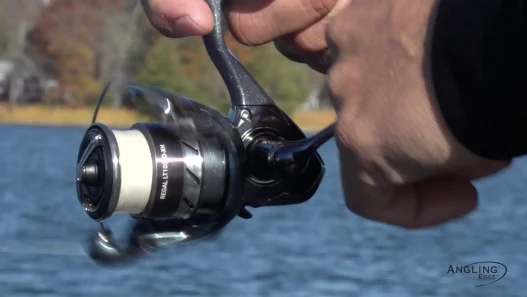
For rods, they relied on St. Croix’s Mojo Cat series, specifically the eight-foot heavy and extra-heavy models with fast actions. These rods provide the backbone needed to make pinpoint casts and the power to wrench fish from cover. Paired with Daiwa Lexa HD reels in both 300 and 400 sizes, the high-speed gear ratios—8.1:1 and 7.1:1—allowed them to pick up line quickly and keep pressure on fish before they could bury themselves in the timber.
Transitioning Seasons and Catfish Behavior
As the summer wanes and water temps fall toward 50°F, channel catfish begin transitioning toward their wintering holes—deep, slow stretches of river where hundreds of fish can concentrate. Right now, though, the cats are still holding in prime log jam spots, and each jam could hold anywhere from a handful to dozens of fish.
The team hit paydirt in one such area, catching multiple fish from a single log jam—a rarity on this particular trip. The success highlighted the importance of reading current seams, depth transitions, and structural features that concentrate fish in low-water conditions.
More Than Just Fishing: A Family Tradition
By day’s end, the crew had caught and released several impressive fish, but more importantly, they had shared a day on the water across four generations. From 6-year-old Carter to 86-year-old Ron, the experience was about more than just catfish—it was about mentorship, storytelling, laughter, and memories.
Carter, now a seasoned net man and snack manager, was beaming with pride. The team teased each other, told old fishing stories, and celebrated every fish as a small victory.
As Ron summed it up: “Tell you one thing—it is fun. I can guarantee you that much.”
Final Thoughts
Fishing for channel catfish might not have the glitz of bass tournaments or the lore of musky hunts, but for the Lindner family, it’s a pursuit full of action, strategy, and connection. With the right gear, a solid understanding of river systems, and a boat full of family, it becomes more than a fishing trip—it becomes a legacy.
And as the last big cat slid back into the Mississippi’s current, one thing was clear: the fish were big, the laughs were loud, and the memories made on that boat would last far longer than the fight itself.

