








The Cold-Water Color Puzzle
As water temperatures hover in the low-40 °F range, one question dominates any conversation on the boat: “What color are they biting on?” Color fuels an angler’s confidence, but it also offers insight into fish mood. Guide Jeremy Smith favors aggressive, high-visibility hues—chartreuse-and-red “clown,” orange “hot head,” and bright pink—when he’s searching for the first bite. If the bass prove finicky, he pivots to more subdued, natural tones.
Electronics First: Scanning for Hard Bottom
Locating prime habitat precedes any lure selection. In spring, both smallmouth and walleyes gravitate to hard bottom—big boulders for smallmouth, gravel-and-rock transitions for walleyes. Side-imaging sonar allows Jeremy to cruise a bar, drop waypoints on the choicest rock piles, and return with a precise milk run. Once fish show on side-imaging, a bow-mounted 360-degree transducer lets him fan-cast each boulder without guesswork.
Bright vs. Natural: Building a Search Arsenal
Smith’s deck bristles with four proven “search-and-destroy” baits, all in custom fluorescent patterns: 
- Rapala X-Rap® – a suspending jerkbait that slashes erratically to trigger reaction strikes.
- Rapala Rippin’ Rap® – a lipless rattlebait he can yo-yo, straight-retrieve, or snap-jig.
- Original Balsa Shad Rap® – indispensable whenever cold water demands subtle wobble.
- Big Bite Baits Suicide Shad™ – a 3.5- to 4-inch paddletail married to a moon-eye jig with a blaze-orange head for added visibility.
These baits cover multiple depths and cadences while maintaining a loud visual signature that roaming bronzebacks can’t ignore.
Slow-Motion Drifts in 40-Degree Water
With the surface stuck at 43–44 °F, Jeremy exploits a gentle wind to drift the rock line, but he reins in speed via Spot-Lock whenever electronics reveal a cluster of boulders. Each cast now lasts two to three times longer than it would at 50 °F as every lure must crawl, pause, and hang to tempt sluggish fish.
Depth, Speed, THEN Color
Color may headline tackle talk, yet two factors trump it in cold water:
- Running Depth – A bait hovering four feet over fish often goes untouched. Jeremy swapped to a deeper-diving Shad Rap to scrape the 8- to 12-foot zone where the bass sat.
- Retrieve Speed – Ultra-slow pulls and long pauses keep the lure in the strike zone.
Once those boxes are ticked, color fine-tunes the bite. Some lakes demand a blue Shad Rap; on others, a specific spinnerbait blade combo is the only option. Constant experimentation is mandatory.
On-the-Water Tweaks: Suspend Strips & Feathered Trebles
To make the Shad Rap linger in 10 feet, Jeremy added lead suspend strips and a feather-dressed VMC treble—simple mods that convert short followers into committed eaters. Bladed or glow-bead trebles, carried in a small box, offer similar advantages whenever fish need extra persuasion.
Four Rods, Four Line Classes
Each presentation rides on a purpose-built combo:
- 6 lb Sufix Nanobraid for the lightweight balsa bait—casts a country mile yet slices current cleanly.
- 10 lb Sufix 832 braid matched to the X-Rap … (section to be continued)
Finding the Right Hues: Early-Spring Smallmouth & Walleye Strategies
The Cold-Water Color Puzzle
When surface temps sit in the low-40 °F range, one question rules the boat: “What color are they biting on?” Color fuels an angler’s confidence, yet it also hints at fish mood. Guide Jeremy Smith opens every day with aggressive, high-viz hues—chartreuse-and-red “clown,” orange “hot head,” and loud pink—because those shades often tempt the first bite. Should the bass grow finicky, he pivots to understated, natural tones.
Electronics First: Scanning for Hard Bottom
Before lure color even matters, you must locate the right real estate. In spring, smallmouth favor boulders while walleyes hug gravel-rock transitions. Side-imaging sonar lets Jeremy cruise a bar, drop waypoints on clusters of prime rock, and return with a milk-run of targets. A bow-mounted 360-degree transducer then positions each cast so every boulder receives precise coverage.
Bright vs. Natural: Building a Search Arsenal
Smith’s deck bristles with four “search-and-destroy” baits—all dressed in custom fluorescent patterns:
| # | Bait | Why It Works in 40 °F Water |
|---|---|---|
| 1 | Rapala X-Rap® suspending jerkbait | Erratic slash, long hang-time triggers reaction strikes. |
| 2 | Rapala Rippin’ Rap® lipless rattler | Straight-retrieve, yo-yo or snap-jig to cover water fast. |
| 3 | Original Balsa Shad Rap® | Subtle wobble shines when bass demand finesse. |
| 4 | Big Bite Baits Suicide Shad™ paddletail on a moon-eye jig | Cast-and-wind or slow-roll; orange jig head adds flash. |
Every bait reaches a different depth or cadence while maintaining a loud visual signature that roaming bronzebacks struggle to ignore.
Matching Line to Lure
Each presentation rides on a purpose-built combo; line choice is as deliberate as lure choice:
- 6 lb Sufix Nanobraid – Ultralight, wind-cutting, long-casting partner for the tiny balsa crank.
- 10 lb Sufix 832 braid (hi-vis) – Slightly stiffer, less wind-drift on the X-Rap for controlled jerks.
- 13-strand Sufix 131 braid – Silky-smooth hybrid for paddle-tail jigs; blends Nanobraid’s castability with 832’s backbone.
- 12 lb Fluorocarbon on a baitcasting, glass-rod setup – Added stretch keeps small treble hooks pinned when ripping Rippin’ Raps.
Tiny Tweaks, Big Dividends
On a frigid outing, Jeremy added two lead suspend strips and a feather-dressed VMC treble to his No. 8 Shad Rap. The lead let the lure hang in the 10- to 12-ft strike zone; the feather pulsated when the bait sat still. Bass that only “nipped” the lipless crank devoured the doctored Shad Rap—proof that postage-stamp-sized tweaks often decide the day.
Slack-Line Strikes & Dead-Sticking
With water locked at 43–44 °F, the program slows to a crawl. High-viz braid doubles as a strike indicator: cast, create a gentle bow of slack, and watch. Many hits appear as a single twitch in the hanging line. True “dead-sticking” means pausing three…four…sometimes five seconds before the rod loads. Patience is everything.
Gear Spotlight: Legend Glass & Daiwa Ballistic
- Rod — St. Croix Legend Glass 7’2″ M/Moderate
- Full-length flex launches light balsa plugs and, more importantly, keeps fine-wire trebles pinned during lunging runs.
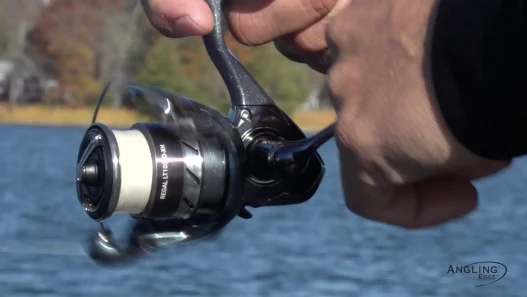
- Reel — Daiwa Ballistic LT 1000
- Small spool encourages slow cranking—perfect for cold-water pacing.
- MagSealed oil repels dust, water, and grit without adding friction, so the reel stays buttery for seasons.
Color, Depth, Speed: The Holy Trinity
Color absolutely matters—Jeremy’s bright clown pattern out-fished identical natural baits all afternoon—but depth and speed come first. If a suspending jerkbait rides four feet above neutral fish, they simply won’t move. Find bottom contact (depth), crawl the bait (speed), and then fine-tune the hue.
A Personal Note from Al Lindner
Toward the end of the shoot, Al Lindner paid tribute to his brother and lifelong partner, Ron Lindner (1938 – 2020). Ron’s encyclopedic knowledge of both angling and world religions inspired countless anglers and missionaries alike—from Minnesota to Beirut, Lebanon. His quiet acts of mentorship, his heart for addiction recovery ministries, and his relentless curiosity left a legacy far beyond fishing.
“My dearest friend, my brother, my compadre—you are missed, but you are also blessed, and you touched lives all over the world.” —Al Lindner
Final Takeaways
- Locate rock, then choose color. Side-imaging and 360 sonar reveal the fish; bright baits reveal their attitude.
- Match line to job. From Nanobraid to fluorocarbon, each diameter and material solves a specific cold-water problem.
- Slow is fast. In 40 °F water, three- to five-second pauses—and feathered hooks—turn nips into eats.
- Glass keeps them pinned. A parabolic fiberglass rod plus stretchy line protects tiny trebles.
- Never stop experimenting. Suspend strips, hi-vis braid, or a single orange jig head might be today’s missing link.
From everyone at Lindner Media and The Edge, have a safe season, fish slow, and don’t be afraid to tie on something brightly colored—you never know which tweak will unlock the next big brown bass. See you on the water.

