









Old School Contour Trolling Walleye
Contour trolling walleye is one of the oldest fishing techniques, which was done long before the invention of modern rods, reels, and electronics. In its most basic form, fishermen lured fish by following a moving boat with a simple line attached to a stick. This developed into a sophisticated and calculated method over time, particularly in the field of walleye fishing.
The Origin of Contour Trolling
Buck Perry, who invented “spoon plugging” and what is now known as contour trolling, is largely responsible for modern trolling. Long before depth finders were widely used, Perry pioneered the ground-breaking idea of using underwater contours to find fish. His theories were based on the notion that fish, especially in deep water, are closely related to depth transitions and structural changes. This realization permanently altered freshwater fishing.
New Confidence and the First Catch
The team makes their first catch, a large golden walleye, while talking about the history of trolling. With the white-tipped tail clearly identifying its species, the excitement is evident. The catch sets the tone and gives confidence a great start to the day. According to Dan, they have been reliably marking fish in 15 to 18 feet of water, indicating that their strategy is spot on.
The Precision Xtreme Deep Maverick is being tested.
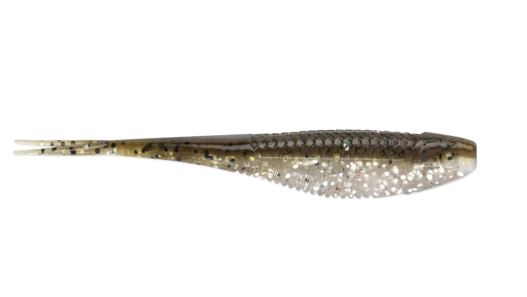
The Precision Xtreme Deep Maverick, a recent addition to Rapala’s lineup, is the lure that was responsible for the morning’s early success. This long, thin bait is an extension of the well-liked Maverick series and imitates the natural forage that walleyes prefer. Its shape is crucial; walleyes, which prey on similar-shaped prey, are particularly attracted to thin, minnow-like lures.
The team is thoroughly field testing the new bait during this trip. The ideal conditions for assessing its performance are fish suspended along structural breaks in 15 to 20 feet of water. In addition to performing well at these depths, the Maverick is efficient at swiftly covering wide swaths of water.
The Approach: A Hybrid of Jerk Trolling and Contour Trolling
To increase their efficiency, the team uses a combination of jerk trolling and contour trolling. Together, they cover enormous stretches of structure and different depth zones as Dan trolls from the back of the boat and Al casts from the front. Although both fishermen have success, including unintentional smallmouth bass catches, Dan routinely catches more fish.
Jerk trolling is more than just a random twitch-and-pull tactic, especially when using these carefully designed lures. A gentle “shuffle” motion works better for walleyes than forceful jerks. Because these baits are made to function naturally even with little angler manipulation, little effort is frequently required.
Presentation and Depth Control Are Important
The team locates schools of walleyes in that sweet 12–14 foot range using electronics like the Humminbird and forward-facing sonar. In that zone, the Precision Xtreme Deep Maverick performs flawlessly, and the hits start to pile up. Fish can stay in the strike zone longer when their behavior is observed and their depth is precisely adjusted, something that casting just can’t always accomplish.
Knowing Where to Look for Fish, Not Just Where to Cast
Targeting fish behind or beside the boat, rather than just in the shallows in front, is a crucial lesson that was shared. From their position, many anglers concentrate on casting toward shore, but the fish are frequently directly below the boat or farther out—areas that trolling tactics can more efficiently reach. This insight enables fishermen to fish “where the fish are.”
Increasing Trolling Efficiency with the Minn Kota Ultrex Quest
Reliable equipment is essential for effective trolling. Presenting the Minn Kota Ultrex Quest, a high-torque, brushless trolling motor designed for endurance and control.
A circuit board that controls power delivery minimizes wear, heat, and spark, resulting in a 50% increase in torque and a 30% longer run time. It is a powerful tool for contour trolling because of its lift-assist assembly, redesigned prop, and shaft infused with carbon fiber.
The Ultrex Quest is essential for cutting through weeds and staying in place in windy, choppy conditions. It gives fishermen the ability to keep control of their boats even when casting is no longer feasible.
Strength Through Difficult Circumstances
Trolling becomes not only feasible but also beneficial when the weather deteriorates—strong winds, roaring waves, etc. In such conditions, fish frequently push up onto structures, and when casting becomes disorganized and ineffective, anglers can stay on the bite by using a trolling motor or a kicker motor. In these situations, the Quest’s resilience and strength come through, transforming inclement weather into a chance rather than a barrier.
Results Deserving of a Trophy
Landing a big, probably 30-inch walleye is a huge reward. There’s no denying the excitement. Trolling demonstrates once more why it is still a popular method for fishing in large bodies of water like the Great Lakes or in lakes that have structural breaks. The secret to success is being able to cover water quickly while maintaining lures in the strike zone because walleyes are wary of calm, clear water.
Sonar, Strategy, and Structure
In this section’s last moment, the team uses their sonar to analyze structure and make sure their strategies match underwater contours. Every pass is guided by technology, and they are actively searching for transition zones and breaks—traditional walleye-holding locations.
Walleye Contour Trolling: An Accurate Method with Significant Benefits
One thing is evident as we come to the end of this enlightening day on the water: contour trolling with jerkbaits is a little-used but very successful technique for catching large walleyes. Working particular contours and making the most of every inch of the trolling pass is more important than simply running crankbaits in open water.
The Choice of Structure Is Crucial
A tight turn around an island is not the best situation for contour trolling. You can run your baits effectively because of its long, flowing breaks. You can keep your lures in the strike zone for longer and maintain your ideal trolling speed thanks to these wide contours.
Baits like the Deep Maverick 110 and Rapala X-Rap excel in this situation. The X-Rap was in charge yesterday. The Deep Maverick proved itself today. Because every bait has a unique personality and depth range, it’s crucial to mix them up.
Bait Behavior Is Important
When paused, different jerkbaits exhibit different behaviors; some float with their noses up, some sink with their noses down, and some hang horizontally, like the X-Rap. Specifically, the Deep Maverick presents itself in a unique way, darting forward and then falling nose-down when twitched. This causes fish that may have matured to more conventional profiles to strike.
The Value of Flexibility
The outcomes were self-evident when Al went a little deeper and tied on the Deep Maverick. This system’s flexibility is what makes it so lovely. While one angler uses a Deep Maverick to explore deeper contours, another can use an X-Rap to work shallower edges. A good day can be transformed into an exceptional one by modifying lure depth and presentation in response to real-time feedback.
Breakdown of Gears: Easy and Efficient
Downriggers and heavy equipment are not necessary for this technique. Actually, trolling can be done quite effectively with the same setup as jigging:
- Rod: 7′, fast action, medium power Avid Series of St. Croix
- Daiwa Tatula LT3000XH is the reel.
- Line: 5–6 lb Sufix fluorocarbon leader with a 10-lb Sufix braid
This combination gives you the strength to fight large walleyes and the sensitivity to detect light bites. One crucial piece of advice is to slightly reduce your drag. When a walleye hits like a freight train, hook pulls can be avoided with a slightly looser drag because braid has little give.
Greater Fish, Greater Baits
The team observed that trolling jerkbaits like these frequently results in larger average fish. Several large catches support the presentation’s appeal to walleyes on the prowl. This method elevates the fight, the strike, and the action.

