





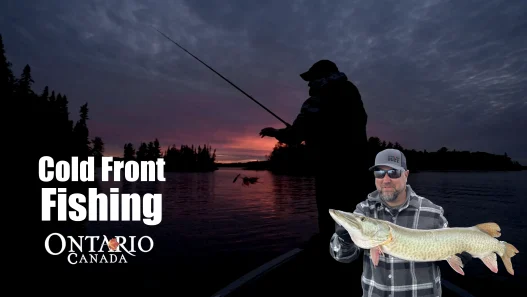




Al Lindner loves getting on the water as soon as possible to start using all the latest and greatest rods, reels, tackle, motors, and electro In this video he’s deploying the Rapala Rocco to catch largemouth on shallow rocks.
Mastering Cold-Front Bass Fishing with Crankbaits: A Day on the Water with Al Lindner
Few communities in the fishing world have pushed innovation further than bass anglers. Whether it’s finesse fishing in gin-clear water, power fishing through thick vegetation, or probing rocky depths, bass fishermen have a method for nearly every scenario. Many of these advanced tactics have emerged from the pressure-cooker environment of tournament fishing, where conditions often demand precision, adaptability, and results. Among the most enduring tools in their arsenal: the crankbait.
Crankbaits come in a wide array of models—each engineered with purpose. Bill shape, body buoyancy, hook design, and line tie position are all fine-tuned to produce ideal performance depending on structure types, be it wood, weeds, or rock. These purpose-built lures allow anglers to fish at specific depths and react effectively to ever-changing water conditions.
A Shallow Rock Cranking Mission Begins
Veteran angler Al Lindner recently took to the water with a new crankbait in hand—the Rapala OG Rocco—eager to put it through its paces during a quick solo trip. The mission? Targeting smallmouth and largemouth bass in a lake he knew intimately, where he could gauge the bait’s effectiveness across various conditions.
Despite heading out with no certainty of how the bite would unfold, it didn’t take long before Al had the trolling motor humming and the Mega Live imaging lighting up with fish. Within six casts, he was hooked into his first bass—a promising start to what would quickly become a showcase of crankbait effectiveness.
A Closer Look at the Rapala OG Rocco
The OG Rocco, part of the highly successful Rapala OG (Ott’s Garage) series designed by Bassmaster Elite pro Ott DeFoe, delivered results right out of the gate. On a day with water temps hovering around 51 to 52 degrees and a stiff northwest breeze cutting across the lake, conditions were prime for shallow cranking—and the Rocco showed its strength.
The bait’s construction—crafted from balsa wood—offered a tight yet aggressive wobble that transmitted clearly through the rod tip. The vibration was distinct, the hooks razor-sharp, and the slightly wider body compared to earlier OG models seemed to strike a chord with both smallmouth and largemouth bass.
“Nothing builds confidence like catching fish,” Al said after landing a thick smallie. “And this bait—man, it just feels right.”
Cold Fronts and Smallmouth Attitude
While many fish species sulk during post-frontal conditions, smallmouth bass are notorious for their resilience. Having just emerged from winter under a thick sheet of ice, they’re not fazed by a little north wind or dropping temperatures. “They’re gonna eat for a little while,” Al joked. “That’s just how smallmouth roll.”
This aggressive nature made them the perfect target on a brisk spring day, and the OG Rocco kept them coming boat-side. As the sun dropped and the air temp dipped into the 30s, Al continued sticking quality fish, including multiple smallmouth and a few giant Minnesota largemouths.
Balsa Over Plastic: Why It Matters
Throughout the outing, Al repeatedly emphasized the unique benefits of balsa over plastic in crankbait construction. The tighter action, quicker recovery, and lifelike vibration of balsa lures like the Rocco proved irresistible to bass during the shallow water crank window. “You can’t beat balsa for action,” he said. “You just can’t.”
One after another, largemouth bass were thumping the Rocko—some close to tournament-caliber size. Al even joked after one particular heavyweight: “If I was in a tournament, I’d be screaming, ‘Big, big donkey!’”
Dialing in a Pattern
As the session wore on, Al began to see the pattern forming clearly. Points with shallow rocks, saddles, and large boulders at the tips were holding active fish. With each cast and catch, confidence in the Rocco increased. Back-to-back hookups proved the bait wasn’t just a novelty—it was a reliable tool for cold-water cranking.
Despite losing a big walleye earlier in the day, the steady catch of bass had him grinning. “The confidence is sky high, baby, when you start putting ‘em in the boat like this,” he said.
Timing Is Everything
The bite window was dialed in—water in the low 50s, pre-frontal conditions, and the arrival of the first major cold snap of spring. It’s the kind of timing seasoned anglers wait all season for. Al noted how special that 48–52°F range can be for crankbait fishing in shallow water. Bass just moving up to feed before transitioning into summer haunts often become highly vulnerable to moving baits like the Rocko.
“These style baits work all year,” he said, “but in this temperature range and scenario, they’re absolutely dynamite.”
Dialed-In Gear for Cold Water Cranking
Throughout the outing, Al Lindner relied on a finely tuned setup designed specifically for shallow water cranking—an essential component of his success. His rod of choice was the St. Croix Mojo Bass Glass, a 6’10” medium power, moderate action model. This rod, built for precision and control, shines in close-quarters target casting where accuracy and feel are paramount.
Paired with it was a Daiwa Tatula 103 SBTW baitcasting reel with a 6.3:1 gear ratio—lightweight, high-performing, and ideally suited for moving baits. For line, Al used 10-pound Sufix fluorocarbon, a go-to for crankbait applications thanks to its low visibility and excellent sensitivity. This setup offered the perfect balance of power and finesse, helping transmit every vibration from the balsa-bodied OG Rocco straight to Al’s hands.
Targeting Structure and Transition Points
As the sun dropped lower, Al worked a prominent structure—a rocky saddle with a massive submerged boulder just 35 to 40 feet out. These transitional areas near spawning bays are magnets for pre-spawn bass, both smallmouth and largemouth, that stage up before pushing shallower.
“This is the first big point going into a spawning bay,” he noted. “They’re feeding up right here.” Throughout the evening, he continued to spot fish on forward-facing sonar, confirming that this staging area was loaded with aggressive bass, ripe for cranking.
One key observation Al made was the importance of directional changes during the retrieve. Often, strikes came just as the bait altered course or rose near the boat—a classic trigger moment when a bass decides to commit. Varying retrieve speeds, incorporating jerks and pauses, and letting the crankbait deflect off structure were all techniques he used to draw reaction strikes.
Fish of All Sizes, and a Pattern Revealed
Though the day featured several hefty bass—true “donkeys,” as Al put it—it also included smaller fish, or “juniors.” But that’s part of the process. On a productive school like this, mixed sizes often indicate a healthy system and confirm you’re fishing the right zone.
“These fish are looking good,” Al said. “They’ve been sitting deep all winter, and now they’re staging and feeding.” The afternoon proved to be one of those magical windows when weather, water temperature, and location align perfectly.

