








Cranking walleye is without question and has proven to be one of the top-producing ways to catch lots of fish. However, there’s no denying that pitching jigs for aggressive pre-spawn and post-spawn walleyes is a favorite tactical option for many anglers. And with favorable odds of catching a trophy fish — plus taking eaters home — spring walleye fishing is the most popular time of the year to target walleyes.
As water temperatures slowly climb, walleyes start moving toward the first major breaking and other structures. While casting jigs can continue to produce fish, using crankbaits to cover water quickly and more efficiently can often result in putting more fish in the boat by the end of the day.
Even in cooler waters, crankbaits can prove deadly – and there is a time and place when areas holding willing walleyes will also produce bonus fish like smallmouth, largemouth, pike, and many other species swimming in the waters you fish.
With a combination of Side Imaging and specific crankbaits, anglers can dial into shallow and break-in patterns where fish have moved into feed. On waters across the country, there’s a time and place you can catch multiple species in the same place – and that time is late spring, right before walleyes move out to sea in many lakes. 
Rock, bottom transitions, forage, and wind are all key to grouping both species in the same areas as you’re about to see.
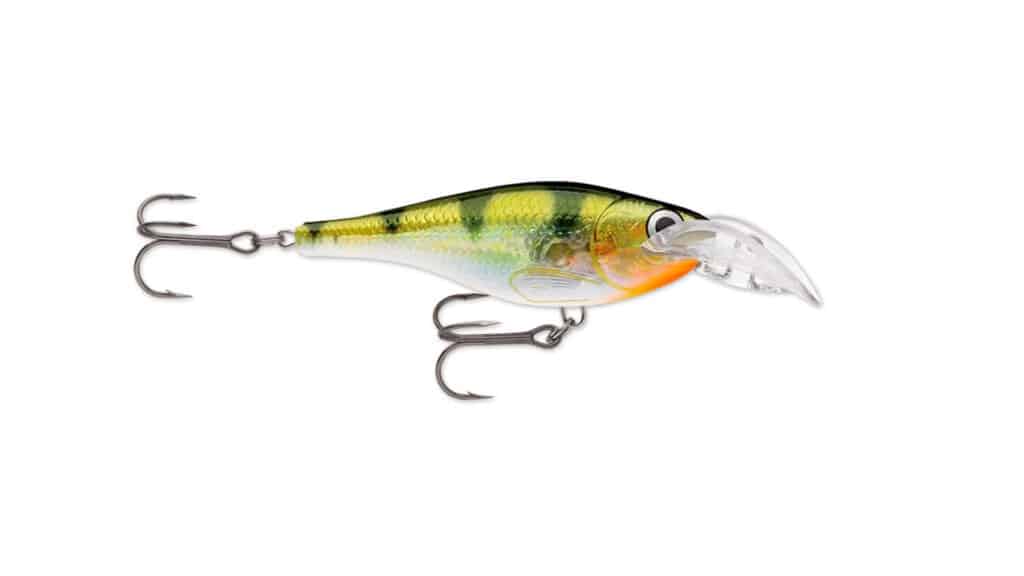 The Scatter Rap illusion of a spooked baitfish fleeing attack is heightened with the new incarnation of the Glass Shad. Its see-thru body emits and reflects surrounding colors resulting in a completely natural appearance.

