










There are days when crappies are easy. They’re shallow, relating to visible cover, and you can pick them apart vertically with a jig and plastics.
And then there are the other days.
The days when they suspend over basin water. When they roam the edges of deep weedlines. When they scatter across expansive flats or slide off structure and drift in open water following bait. Those are the days when you can graph fish all afternoon… and never catch what you’re seeing.
That’s where a small in-line planer board changes everything.
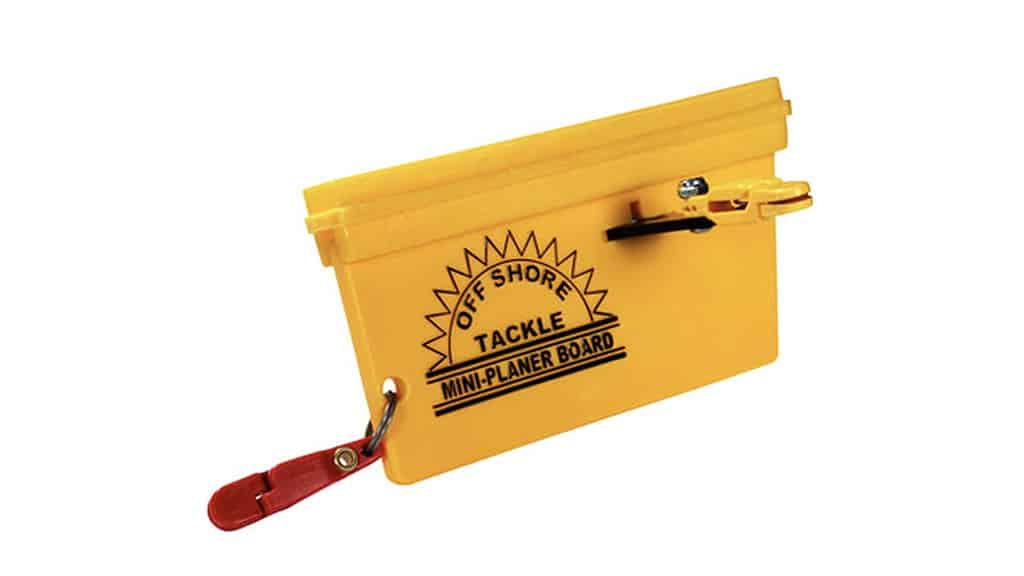
For serious panfish trolling, few tools are as effective—or as purpose-built—as the Off Shore OR38 Awesome Crappie Board. It’s compact, reversible, light-tackle friendly, and specifically designed to let crappie anglers spread lines efficiently and fish undisturbed water away from the boat.
And that “away from the boat” part? That’s the entire key.
Why Planer Boards Matter for Crappies
Crappies are notorious for suspending and roaming. In clear water especially, they’re also boat-shy. When you run baits directly behind the transom, you’re fishing in prop wash, hull shadow, and turbulence. That might work for aggressive fish—but neutral, pressured, or high-sky crappies often slide off to the sides.
The OR38 lets you:
- Spread lines horizontally
- Cover significantly more water
- Present multiple depths simultaneously
- Keep baits tracking clean through open water schools
- Avoid spooking fish directly beneath the boat
In my experience filming for Angling Edge and chasing roaming panfish across Minnesota and Ontario basins, spreading lines out to the sides often doubles—or triples—your effective coverage zone.
The OR38: Built for Light-Tackle Precision
The OR38 measures roughly 6 inches long and just over 3 inches high—compact enough for ultralight and medium-light trolling rods, yet stable enough to track clean at typical crappie speeds.
What makes it especially dialed-in for panfish applications:
- Reversible design (runs either side of the boat by switching bracket orientation)
- OR10 adjustable light-tension release in the front
- OR16 Pro Clip in the rear for secure tracking
- Bright, highly visible body for bite detection
That light-tension release system matters. Crappies don’t always smash a bait. Sometimes they inhale it and swim upward or sideways. A properly adjusted release keeps the board tracking clean but allows you to detect subtle changes in board behavior.
When to Deploy the OR38
I reach for mini boards when:
- Fish are suspended over 15–40 feet of water
- Basin baitfish are scattered
- Weeds top out below active fish
- Bridge pilings or open-water edges hold roaming schools
- Fish show up on electronics but won’t commit vertically
Instead of hovering over them, I’d rather slide off and cover water methodically.
Building an Effective Spread
Here’s a clean, repeatable system that works.
Step 1: Stagger Your Leads
Run three different lead lengths per side:
- Short lead
- Medium lead
- Long lead
This accomplishes two things:
- It finds the preferred depth zone.
- It identifies how far fish want the bait behind the board.
Once a pattern develops—duplicate it on both sides.
Step 2: Dial in Speed
Crappie trolling speeds often fall between 0.8 and 1.6 mph, depending on:
- Water temperature
- Bait style
- Fish mood
Small crankbaits and spinner rigs typically tolerate slightly faster speeds. Lightweight jigs and plastics excel slower.
The OR38 tracks best when the bait itself is running clean and stable. If the board struggles to plane outward, you may be running too much drag for its size.
Best Baits to Run with the OR38
The beauty of this system is versatility. Productive options include:
- Small-profile crankbaits
- Micro spinner harnesses
- Jig-and-plastic combinations
- Finesse swimbaits
- Subtle minnow-style hardbaits
One of the biggest advantages of boards is testing multiple profiles simultaneously. You’re not guessing—you’re experimenting horizontally across the water column.
Boat Control: The Make-or-Break Detail
Turning with boards requires finesse.
When you turn:
- Inside boards slow down and drop slightly.
- Outside boards speed up and rise.
Wide, gradual turns keep your spread clean. Aggressive turns create crossed lines and frustration.
A trick I use often: reel the inside board in slightly before initiating a tighter turn. Once you straighten out, let it back out to position.
Small adjustment. Big difference.
Detecting Crappie Bites
Crappies rarely “rip” a planer board backward like a walleye or salmon might.
Instead, you’re watching for:
- The board sagging back
- The board riding oddly
- Subtle surging or pulsing
- A board that simply stops tracking correctly
Experienced board anglers develop a feel for what “normal” looks like. When that rhythm changes, check it.
Sometimes it’s a fish. Sometimes it’s a leaf. Either way, you don’t want to drag dead water.
Fighting Fish Cleanly
Once hooked:
- Keep steady pressure.
- Avoid pumping the rod aggressively.
- Reel the board in smoothly.
- Unclip efficiently when it reaches rod length.
- Finish the fight with controlled tension.
Light-wire hooks and soft mouths demand discipline.
Common Mistakes
Board slipping backward?
Increase front clip tension slightly.
Constant false trips?
You may be running too little tension for your trolling speed.
Board won’t plane outward?
Too much drag. Either reduce speed, lighten the bait, or shorten the lead.
The Bigger Picture
The OR38 doesn’t just help you catch more crappies.
It changes how you fish them.
Instead of hovering over fish hoping they react, you cover water strategically. You map depth zones in real time. You build patterns instead of guessing. You turn open water into a controlled, systematic grid.
And once you get comfortable running boards, you’ll quickly realize how many fish you were likely driving over before.
For anglers who take basin crappies seriously—who study electronics, track bait migrations, and chase suspended fish—Off Shore’s OR38 mini planer board isn’t a gimmick.
It’s a precision tool.
And like all precision tools, when used correctly, it elevates your entire system.
If you’d like, tell me what waters you’re fishing—depth, clarity, season—and I’ll lay out a starting OR38 spread tailored specifically to your fishery.

Each Yellow OR38 includes:
• One OR10 Release
• One OR16 Clip
• One Black Bracket
• One Split Ring
• One Lock Nut
• One 6/32 x ½” Screw
• Instructions
The OR38 runs directly off of your rod line and works for both port and starboard sides. One Board…Dual Purpose… It’s Reversible – simply reverse the direction of the bracket for the opposite side! This item does NOT come with a flag. Ideal for light tackle fishing.

