




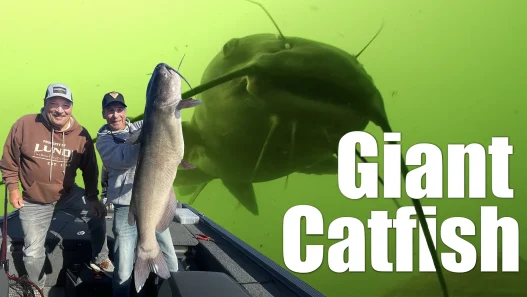






Jeremy Smith and Jeff Simpson spend an afternoon fall walleye fishing on Leech Lake using jigs tipped with live bait.
Fall Walleye Fishing on Minnesota’s Leech Lake
Fall walleye fishing on Leech Lake can be legendary because it’s one of the best times to experience its full potential. Known for its healthy walleye population, as well as muskies, jumbo perch, bluegills, and crappies, Leech transforms into a hotbed of activity in October. In this post, we dive into a detailed look at fall tactics, gear tips, and the power of live bait when targeting Leech Lake walleyes.
Early Action: Walleye on the Jig
Our fall outing on Leech Lake started fast. Within minutes of dropping a jig under the boat, the first walleye hit the net. One angler began the day with artificial baits, while the other opted to “cheat” a little—switching to a tried-and-true jig-and-minnow combo. The difference was immediate. After just three casts, he’d already had multiple bites.
Leech Lake walleyes in the fall are fat and healthy, thanks to the lake’s abundant forage—perch, shiners, and crayfish. These fish are concentrated and aggressive, and the jig-and-minnow technique is hard to beat in mid-to-late October. Whether it’s a rocky reef or a sandy flat, you’re in for a treat if you hit the right spot.
Finding Fish with Side Imaging
Locating fish on Leech’s expansive flats can be a challenge, especially when they’re not holding tight to rocks. But when they’re over mud or sand, side imaging becomes a critical tool. One of the best tips when using side imaging is to continuously adjust your sensitivity settings. For muddy, weedy areas, crank the sensitivity up—often as high as 20—to help spot the “grains of rice” that mark individual fish on your screen.
With good side imaging, you can identify packs of walleyes spread across the flats. Watch for the bright white marks that indicate fish, along with their shadows, to confirm what you’re seeing.
The VMC Sleek Jig: A Fall Favorite
The go-to jig for this outing was the 3/8-ounce VMC Sleek Jig. Its longer shaft is perfect for threading a minnow further down the hook shank—ideal for dragging or snap-jigging presentations where you’re not trying to keep the minnow lively. The jig also features a Techset bend, which helps keep fish pinned once hooked.
The approach was simple and effective: pitch the jig out, drag it slowly, and let the wind provide natural movement. This laid-back yet effective presentation produced a steady stream of chunky fall walleyes.
Fall Fishing = Live Bait Time
While artificial baits can certainly catch walleyes, fall is the season when live bait really shines. As the water cools, fish behavior shifts. A simple jig tipped with a minnow often outperforms everything else.
Some anglers might be tempted to use jigging raps or plastics—and those can work—but day in, day out, a jig and minnow setup is tough to beat in October. The natural scent and subtle movement can make the difference between a slow day and steady action.
Location Strategy: Points, Weeds, and Flats
Throughout summer, walleyes may be scattered in weed beds and across various structures. But in fall, there’s a notable movement of fish toward prominent points and the transition zones between shallow and deep water. These zones are ideal because they give access to multiple forage types—perch in the weeds, shiners in open water, and crayfish on the rocks.
On Leech Lake, areas like Boy Bay, Sucker Bay, and Portage Bay are excellent places to explore. These big flats meet deeper water and are ideal for fish migrating out of the shallows or following baitfish in.
Rod, Reel, and Line Setup for Fall Jigging
For jig fishing, a longer rod can make a big difference. The setup in use was a St. Croix Legend Tournament Walleye rod—specifically, their 7’3″ mid-vertical jig model. The added length helps lob minnows farther from the boat, and the medium power with extra-fast action is ideal for detecting subtle bites and setting the hook effectively.
The reel of choice was the Daiwa Ballistic 2500 MQ. This MQ (Monocoque) design allows for a more compact reel frame while housing a larger, more powerful drive gear. It’s smooth, powerful, and lightweight—everything you want in a finesse walleye setup.
As for line, the anglers used 10-pound Sufix 832 braid in high-visibility yellow or neon green, paired with a 10-pound fluorocarbon leader. This combo offers the perfect balance of sensitivity, visibility, and stealth for jigging presentations.
Boat Control, Bait Choices, and the Beauty of Leech Lake
As the day progressed on Leech Lake, it became clear just how dialed-in our setup had become. With 10-pound fluorocarbon leaders helping manage fish in rough conditions, and precision boat control keeping us in productive water, we were able to stay on active fish all day long. One more beautiful walleye after another found its way to the net.
Boat Control: The Unsung Hero of Walleye Fishing
Fishing in late October often means dealing with wind, waves, and colder water. On this trip, boat control was paramount. With the bow of the boat pointed into the wind, we used the trolling motor in a low, constant thrust to “slip drift” backwards while dragging our jigs slowly. This helped keep the baits near bottom and in the strike zone longer.
An important note for anglers who fish big water: make sure your trolling motor has a long enough shaft. A 60-inch shaft, like the one we were using on a Minn Kota Ultrex, ensures the motor stays in the water even in heavier chop. Paired with 36-volt power and Dakota Lithium 100Ah batteries, the setup delivered all-day performance—even with frequent Spot-Lock use and wave-battling.
The Action Builds
The fishing just kept getting better. Whether pitching jigs over rocks or dragging them under the boat, it seemed like each pass produced another chunky Leech Lake walleye. Light bites required patience—you had to let them take the bait. But when they did commit, the fight was on.
There was plenty of joking and celebration on the boat, with calls for an “office fish fry” and dreams of making it a new fall tradition. Each catch added to the livewell, and it became clear just how fertile and consistent Leech Lake remains—even late in the season.
Leech Lake: A Multi-Species Marvel
While walleyes were our focus on this trip, Leech Lake’s diverse offerings can’t be overstated. From spring through freeze-up, the lake is alive with angling opportunity. It’s not uncommon to catch trophy-class largemouth and smallmouth bass here, along with massive crappies, muskies over 50 inches, and even bonus panfish.
In fact, Bassmaster recently hosted a major event here, highlighting just how special this fishery is. Anglers come from around the country to test their skills on these waters. As locals, we’re fortunate to have Leech in our backyard, and we never take it for granted.
From Structure to Strategy: Shallow Water Surprises
One of the most surprising elements of this fall bite was how shallow the fish were. Earlier in the season, it was hard to get within 60 feet of them. But now, most of our bites came in less than 10 feet of water—often directly beneath the boat.
These late-season patterns seem to contradict the assumption that fall means deep fish. On Leech Lake, especially, transitions from shallow flats to mid-depth points hold forage and attract both predator and bait in surprising concentrations. Side imaging helped tremendously in this process. With solid electronics, we could mark multiple fish in real-time and position the boat accordingly. “Electronics don’t lie,” as Jeff said. The ability to mark fish, stop, and catch them added a precision to our fall strategy that paid off handsomely.

