








Spring White-Bass Tactics: Warm-Water Scouting, Sonar Sleuthing & Shad-Rap Magic
The Allure of White Bass in Early Spring
North America’s sportfish roster is blessedly diverse, and at Angling Edge we’ll happily chase anything with fins. Asked the eternal morning question—“What’s biting?”—our answer is always, “Whatever’s hot.” Every species teaches something: bluegills demand micro-diameter line for their eagle eyes, muskies operate in only two gears (on or off), and smallmouths transition from reckless to finicky with bewildering speed.
Yet when spring finally pries the lid off winter, few fish deliver the sheer numbers and attitude of white bass. These aggressive schoolers flood shallow water in boisterous packs; find one and you’ve likely found dozens. On this outing James Lindner and Jeremy Smith set their sights on South Dakota’s marauding whites—and invite us along for the lesson.
Thermometers & Transducers: Finding Fish Fast
In cold-water spring, the first tool out of the box is still a thermometer. Warmth congregates fish. But modern electronics shave hours off the search. Cruising a broad, dark-bottomed flat, James deploys side-imaging sonar to scan for pods that 2-D sonar can’t expose—the boat spooks them before the cone sees them. On the screen, the “grains of rice” signature of white bass lights up the flat; clusters of bright returns shout “Cast here!” 
“Look at that—one, two, three… it’s loaded.”
When the screen turns peppered, they even pinch down the hook barbs to unhook quicker and spare both fish and fingers from a school-frenzied tangle.
Three Environmental Clues That Trump Everything
Early spring patterns for white bass, walleyes, panfish or bass share three common denominators:
- Largest shallow flats or dark-bottom bays – They warm fastest and draw prey and predators alike.
- Incoming water – Creeks, culverts or small rivers pour sun-warmed flow into the main basin.
- Prevailing wind – Wind can stack warm surface water or chill it if it blows off deeper, colder zones. Even a 2–3 °F bump can flip “dead” water into a feeding circus.
Keep one eye glued to the surface-temp readout; let it steer your trolling-motor decisions.
Lure Choices & Retrieve Tweaks
Once water nudges past 45 °F, moving baits shine. Top producers on this trip include:
- Rapala Shad Raps – buoyant balsa classics that can be snapped, pumped or crawled.
- Jigs with paddle-tail plastics – straight-wind for covering water.
- Hair jigs or Swim-n-Jigs – switch to these when fish get picky.
Jeremy demonstrates how retrieve cadence tailors the same bait to multiple species:
| Species | Retrieve Style | Key Action |
|---|---|---|
| White Bass | Fast snap-and-go with sharp rod twitches | Erratic, high-vibration bursts provoke packs |
| Walleyes | Reel to depth, then pump-and-pause | Short stalls trigger strikes from below |
| Smallmouth | Slow crank to depth, long suspend, slow rise | Imitates a weak baitfish and tempts tentative bronzebacks |
Minor speed changes often double the catch rate when fish mood swings.
Chaos on the Flat: Doubles, Triples & Mixed Bags
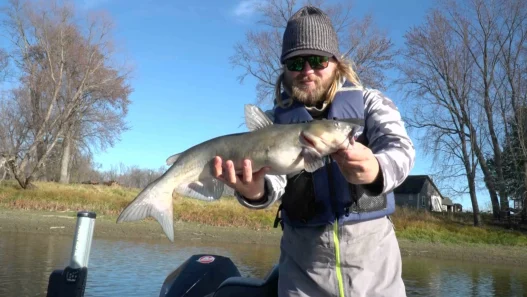
With the pattern dialed in, every cast answers back. Doubles become routine; backup species crash the party—smallmouth, walleyes, even crappies—because everything eats a Shad Rap. White bass in the 14- to 16-inch class punch like fish twice their size, and the smooth rhythm emerges: hook, lift, quick un-pin (thanks, barbless!), and pitch again.
Boat control tech keeps the duo laser-focused:
- 10-ft Talon shallow-water anchor pins the boat when fish roam six to eight feet deep.
- GPS Spot-Lock on the bow mount holds position when the action slides a tad deeper.
No one is chained to a foot-pedal anymore; rods stay in hand and the schooling whites have nowhere to hide.
Why Fiberglass Still Matters
Sharp hooks and feisty schools equal missed swings—unless your rod forgives operator excitement. Both anglers wield 7′ Legend Glass rods from St. Croix. The moderate fiberglass blank:
- Loads deeply for effortless, long casts with light balsa crankbaits.
- Absorbs head-shakes to reduce pull-outs when trebles nick thin mouth tissue.
- Takes abuse—hoisting fish over the gunwale won’t threaten the blank.
High-modulus graphite has its place, but when snapping Shad Raps at manic white bass, glass is still king.
Spring White-Bass Tactics: Warm-Water Scouting, Sonar Sleuthing & Shad-Rap Magic
(Continued)
Selecting the Right Rod and Reel Setup
When fishing lightweight balsa crankbaits like the legendary Rapala Shad Rap, selecting the correct rod is crucial. James Lindner and Jeremy Smith favor a 7’2” medium-power, moderate-action fiberglass rod, specifically the St. Croix Legend Glass series.
Why fiberglass over graphite? Fiberglass flexes deeply under load, providing two essential advantages:
- Longer Casts: The moderate flex generates propulsion, enabling smooth, effortless casts without causing the bait to tumble or foul mid-air—a common issue with stiff graphite rods.
- Better Hookup Ratio: Fiberglass absorbs the fish’s movements, preventing hooks from pulling loose, especially important with fine-wire hooks typical of crankbaits.
Watching these white bass thrash at the boat, you can clearly see how effectively the glass rod cushions their aggressive runs, ensuring a solid hookup despite the fish’s relentless headshakes.
Choosing a Smaller Reel for Greater Control
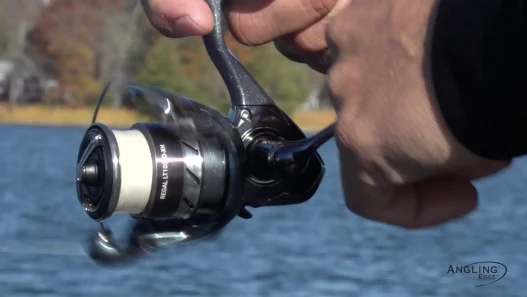
Pairing the rod with an appropriate reel is equally important. Jeremy opts for a smaller-sized reel, specifically a 1000-size Daiwa Ballistic spinning reel. While it might seem undersized for the fish he’s catching, there’s method to this choice:
- Controlled Retrieve Speed: The smaller spool diameter naturally slows the retrieve, helping anglers avoid unintentionally reeling too fast—critical when precise speed control triggers more strikes.
- Improved Casting Performance: A smaller arbor size reduces line slap against the guides, contributing to longer, smoother casts with lighter baits.
These small but deliberate choices significantly enhance presentation effectiveness, resulting in more fish landed.
Line Selection Completes the Setup
No setup is complete without proper line selection. Jeremy prefers Sufix NanoBraid, a super-thin, high-strength line that casts incredibly far and slices easily through water. While originally designed for panfish, it excels with balsa crankbaits for the same reasons:
- Long-Distance Casting: NanoBraid’s thin diameter lets even lightweight lures fly farther.
- Minimal Water Resistance: Helps baits reach desired depths more efficiently.
However, due to its limited shock strength, NanoBraid is best suited for steady retrieves rather than aggressive snap-jigging.
For leader material, Jeremy uses 10-pound Sufix Invisiline fluorocarbon. Although heavier than some might choose for clarity purposes, this weight boosts confidence when fishing rocky or snaggy areas, and given the modest water clarity, it hasn’t negatively impacted the bite.
Experiencing the White Bass Frenzy
As the afternoon progresses, Jeremy and James continue landing exceptional white bass. These fish, with their broad bodies and fierce fighting spirit, embody the excitement of spring fishing. Each catch reinforces the joy of the setup they’ve chosen—from the flexible fiberglass rod to the small spinning reel and meticulously selected lines and leaders.
“Everybody loves crappies, and I do too, but my favorite spring panfish hands down is white bass.”
Their enthusiasm is understandable—white bass are cooperative, feisty, and abundant, making them an ideal species for early-season angling.

