










Fishing Electronics Today
Fishing electronics have become essential equipment for new and seasoned anglers in the modern fishing world. These technical wonders have transformed our search, tracking, and catching of fish. This thorough guide will investigate the most recent developments in fishing electronics for 2024, thereby enabling you to make wise decisions to improve your fishing experience.
Fishing Electronics: Their Development
Fishing electronics have evolved from simple depth finders. The features of today’s tools can greatly increase the likelihood of a good catch. Let’s explore the several kinds of fishing technologies accessible in 2024.
Read Here for Open Water Musky Trolling
Fishfinders: Your Underwater Vision
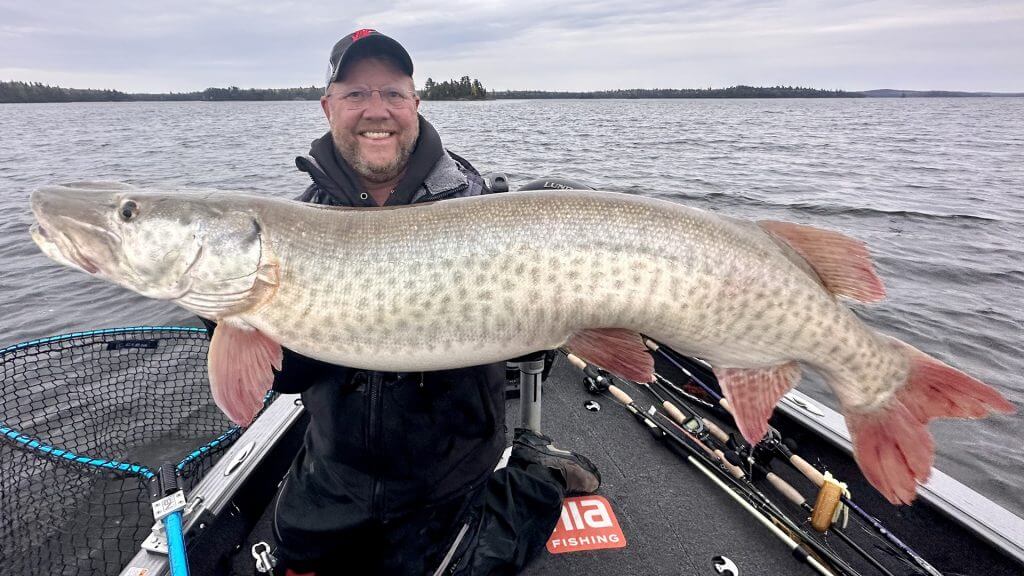
Still, fish finders are the pillar of fishing electronics. These devices give fishermen important information about what lies under the surface since they employ sonar technology to find fish and underwater structures.
Down Imaging and 2D Sonar
Traditional 2D sonar works by emitting a sonar beam that travels directly beneath the boat. Basically, it measures the time it takes for the sound wave to bounce back, creating a visual representation of the underwater terrain, depth changes, submerged structures, and any baitfish or fish in the area you are searching.
A major component of 2D is your interpretation of what the sonar is reading. For instance, because I’ve used traditional sonar (2D) for many years, I know exactly when I see weeds, wood, and rocks. I also know what hard and soft bottom looks like, schools of baitfish, clouds of emerging bugs, and I even have a good educated guess as to the exact species on 2D because of the length, shape, and where they are often positioned in relationship to the bottom.
When there’s any doubt about my interpretation, that’s when Down Imaging comes into play. Down Imaging offers a more detailed, high-resolution view of the area directly below the boat. It utilizes higher-frequency sonar waves and provides clear, photographic-like images of the underwater environment. This technology excels in revealing fine details, such as individual fish, submerged vegetation, rocks, and other structures. Viewed simultaneously, the 2D sonar and down imaging layered approach provides a comprehensive view of the underwater landscape and fish — eliminating much of the guesswork of what’s below.

Side Imaging
Side Imaging employs high-frequency sonar waves to create detailed images of the underwater environment to the port and starboard side of the boat, providing critical information about fish location, structure, and habitat — even spawning beds can be seen using this technology. In many situations, Side Imaging can also show the presence of fish, like schools of panfish and the detailed shapes of bigger species like musky, pike, and sturgeon.
The primary advantage of side imaging is its ability to cover a large area of water with a single pass. Traditional sonar systems primarily focus on what’s directly below the boat, offering a limited view of fish that may spook when your boat passes overhead. In contrast, side imaging allows anglers to scan a vast swath of water up to 200 feet on either side of the boat. This expanded field of vision is invaluable for locating fish on shallow flats to deeper drop-offs and underwater structures like submerged trees, rocks, and reefs.

Forward-Facing
Forward-facing sonar system creates a live, visual representation of the underwater environment by transmitting high-frequency sound waves and interpreting their echoes, providing a clear, real-time view of what lies ahead. This means that anglers can see fish and their movements in real-time. Whether observing the response to a bait presentation or understanding how fish relate to specific structures, this instantaneous feedback is a game-changer in freshwater fishing.
One of the primary advantages of forward-facing sonar is its ability to enhance precision casting. With a clear visual of the underwater environment, anglers can accurately deliver baits or lures right in front of the fish’s nose. Additionally, by observing how fish react to the presentation, anglers can fine-tune their retrieval or presentations to entice strikes.
In addition to its fish-finding capabilities, forward-facing sonar enhances boat control. By providing a clear view of underwater obstacles such as rocks, stumps, or submerged debris, anglers can confidently position their boats in and around structures far more efficiently than ever.

Magnificent Mapping
Today’s mapping is the most valuable tool in my electronics arsenal. The mapping detail and accuracy on most bodies of water are nothing short of incredible. What would take a person their entire lifetime to learn just a few lakes in such intimate detail is now as easy as sliding an SD card into your unit. I know I can go to a lake I’ve never been to, study the map, pinpoint likely locations based on the target species and predictable season calendar locations, start fishing and likely catching. These maps offer comprehensive, high-definition cartography of specific lakes, providing anglers with a wealth of information about underwater terrain, structures, and potential fish-holding areas.
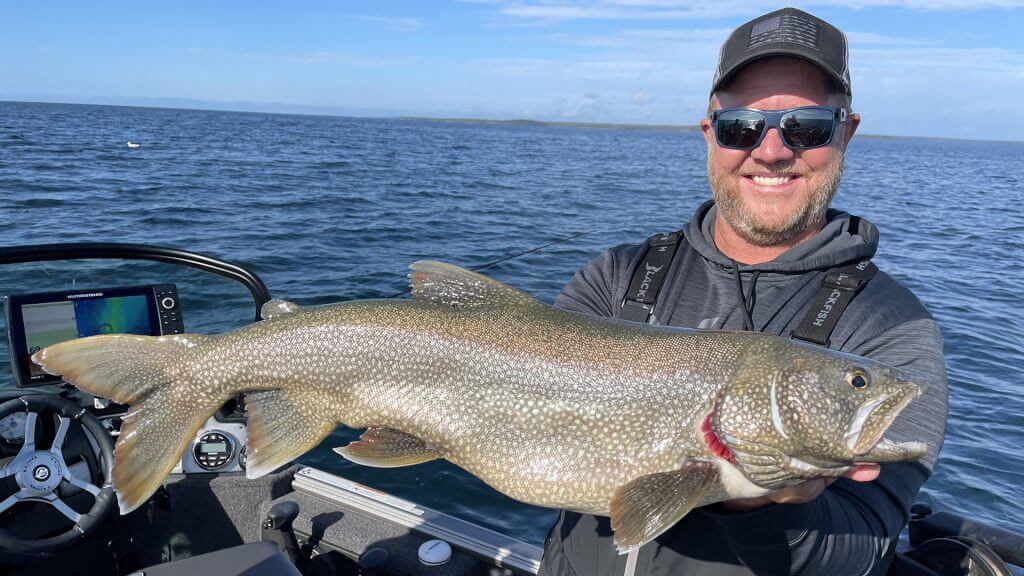
One of the key advantages of LakeMaster maps is their precision and accuracy. These maps are created using advanced sonar technology, which gathers detailed depth and contour data of the lake bottom. With exceptional accuracy, anglers can visualize underwater features such as drop-offs, humps, submerged vegetation, and rocky structures. By understanding the lake’s topography, anglers can strategically position themselves in areas likely to hold a concentration of fish.
Selecting Appropriate Fishing Tools
Given so many choices, choosing the correct fishing equipment can be taxing. Think about the following elements while deciding:
- Larger boats could call for more potent and feature-rich systems.
- Different kinds of fishing ( freshwater vs. saltwater) may profit from particular characteristics.
- Fishing equipment falls from low-cost to high-end professional systems in budget.
- For a flawless experience on your boat, search for equipment that can interface with other technologies.
Installation and maintenance
The perfect functioning of your fishing electronics depends on correct installation and maintenance. Think over these pointers:
- Keep your gadgets clean and free from the elements
- Follow manufacturer recommendations for installation or seek an expert
- Routinely update software to guarantee you have the newest features and improvements.
- As necessary for accurate results, calibrate your equipment.
Fishing Electronics: The Future
The sector of fishing electronics keeps innovating; many fascinating advancements are just waiting for us.
- Artificial intelligence (AI) driven systems can forecast fish behavior and provide ideal fishing locations.
- AR shows overlays of fishing information from your real-world perspective.
- More frictionless data sharing and analysis depends on better interaction with cell phones and cloud services.
Finally
Minn Kota’s Spot-Lock technology revolutionizes the angling experience by providing precise boat positioning and control. Its ability to hold a fixed position, even in challenging conditions, frees up anglers to concentrate on fishing. I fish almost every day during the open water season, and I’m constantly using it to lock my boat into place while landing a fish or dissecting an area with multiple casts. You are absolutely missing out if you’re not using an electric trolling motor equipped with Spot-Lock.
Frequencies of FAQs
Q: In what ways do a fish finder and a chartplotter differ?
A: A Chartplotter concentrates on navigation and charting; a fish finder mainly employs sonar to identify fish and underwater structures, but both can be used for fishing. Many contemporary technologies serve both purposes.
Q: Are the pricey fishing tools worth the money?
A: High-end fishing electronics can significantly increase catch rates and general fishing experience for dedicated anglers or those fishing under challenging circumstances. Casual fishermen also have quality choices at more reasonably priced ranges.
Q: How often should I change my marine GPS charts?
A: If you fish in locations with shifting underwater structures or navigation hazards, you should update your marine GPS charts at least once a year or more.
Q: Could I find fish using my smartphone?
A: Although some smartphone apps are claimed to be fish finders when coupled with a portable transducer, their performance usually needs to improve at that of specialized fish finders. For casual fishermen, they can be a reasonably affordable choice nonetheless.
Q: What benefit exists from live sonar over conventional sonar?
A: Live sonar lets anglers see fish reactions to lures and make quick changes by offering real-time, high-resolution photos of fish and structure, usually offering a historical perspective of what passes under the boat, and traditional sonar.
Choosing the correct tools for your needs and remaining current with the most recent developments in fishing electronics will help you improve your fishing experience and raise your chances of landing that monster catch. Remember, even if technology can provide you with an advantage, your success on the lake finally depends on your ability as a fisherman.

