











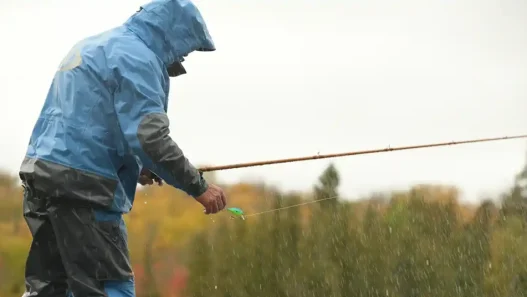

Fishing in the Rain: Tips and Techniques for Wet Weather Angling
While fishing in the rain can be a deterrent for some anglers, rain storms can create a unique set of conditions that make fish more active and likely to bite.
In this article we will explore the various aspects of fishing in the rain. From understanding how rain affects fish behavior, to tips and techniques anglers can use to increase their chances of success on the water.
We will also look at the best types of gear for fishing in the rain, as well as strategies for dealing with the challenges posed by rain, such as visibility, safety, and keeping gear dry.

Having The Right Rain Gear
Having the right rain gear is essential when fishing in the rain. Without the right gear, a heavy rainfall can make your day on the water miserable and cold.
Every angler needs a high-quality, waterproof suit. The suit will consist of a rain jacket, rain pants or bibs, and waterproof boots. A good rain suit will protect you from getting soaked and chilled while simultaneously allowing you to capitalize on the great bites bad weather can produce.
Rain Jackets

There are several great rain jackets out there, but one of the best is the Zephyr Rain Pullover by Blackfish. The Zephyr rain pullover features 3-layer eVent DValpine technology. This technology allows for incredible breathability while maintaining an extremely high waterproof rating.
This allows the angler to stay comfortable and day even in hot, muggy conditions. The Zephyr Rain Pullover has a wide range of features that will keep you dry and comfortable on wet days spent on the water without restricting your movement.
Rain Pants

High quality rain pants are another essential piece of equipment. The Zephyr Rain Pant from Blackfish are lightweight, comfortable, and can handle the rainiest conditions you can find. Like the Zephyr Pullover they are made with eVent technology.
Unlike other pants, frequent washing renews the breathability factor by cleaning the microscopic pores that allow body vapor and heat to escape without harming the waterproof effectiveness.
Waterproof Bibs

While pants are great some anglers prefer to wear bibs, because they are typically warmer. The Rage Rain Bib by Blackfish Gear features eVent fabric for excellent waterproof and breathability.
These bibs will keep you dry from the outside and inside by allowing your body to breathe. These bibs are 100% seam-taped and feature YKK Aquaguard zippers, silicone-lined bib straps, and an adjustable waist belt for comfort. With multiple other features, this rain bib is great for any anglers looking for a dependable bib that they can wear on the rainiest days without worrying about getting wet.
Waterproof Boots

Waterproof boots are another important piece of equipment you need to have as an angler. The Blackfish Rage Boot is the ultimate ankle boot that was designed for fisherman. This waterproof boot is easy to slip on and off and will keep your feet dry and comfortable in the wettest conditions.
Unlike most rubber boots, the Rage boot features a contoured insole that will keep you feeling fresh on your feet and ready to get after it day after day. It has a non-marking high traction sole that is slip-resistant making it a great boot for wearing around the boat or on the dock.
This boot is perfect for wearing whenever the situation calls for a shoe that can handle mother nature’s showers and thunderstorms.
Storing And Maintaining Your Rain Gear
After fishing in rainy conditions it’s important that you let your gear to dry before putting it away. If you were to put your fishing gear away while it’s still wet it will create mold and rust ultimately ruining your equipment.
After fishing in the rain find an area that you can hang up your rain gear for an extended period of time. It’s also wise to open up any compartments in your boat, and open any tackle boxes or other storage bins that may have gotten wet. This will ensure your gear stays in good shape.
When maintaining your rain gear it’s very important that you always follow the instructions on the tags when washing it. Unlike normal clothing, rain gear often needs to be wash on special settings to prevent any damage. It’s crucial you follow the cleaning instructions to ensure your rain gear continues to preform.
Waterproofing Your Gear For Rainy Fishing Conditions
While most of your fishing equipment can get wet, there are some pieces of gear that you need to protect from rainy conditions. For those things that can’t get wet use dry bags or waterproof containers. You can place your phone, tackle, and other equipment that can’t get wet in those containers.
This will help protect your gear from any water damage. While it’s not as good as a waterproof bag, carrying a spare garbage bag in your boat or tackle box can help you out in a pinch.
Fishing tackle is an invest and you want to protect it. If you live in a rainy location it is worth purchasing waterproof tackle boxes to keep your lures, hooks, and baits safe from water exposure. This will prevent your tackle from rusting.
Overtime your rain gear will lose some of its protective waterproof coating. There are several water repellant sprays you can buy at your local outdoor retail store. If you feel like your rain gear is loosing some of it’s waterproofness apply these to help improve it’s effectiveness.

Tactics For Fishing In The Rain
Due to the rains disturbance on the surface of the water, it’s best to use subsurfaces lures. Lures that give off a lot of flash and vibration tend to work best when fishing in the rain.
A few good options include spinnerbaits, chatterbaits, and crankbaits. All three work exceptional well when targeting species like bass, northern pike, and musky in rainy conditions.
When fishing in rainy conditions it’s important to understand the conditions are going to impact your casting and fishing ability. In a heavy downpour shorter, more controlled cast as best. This will allow you to be able to feel and control your presentation better.
It’s also worth experimenting with different retrieval speeds. If you are targeting larger species like bass and northern pike with crankbaits, a quick burst followed by a pause can be a great way to trigger bites in rainy conditions.
Constantly adjust your retrieve and take notes when you get bites so you can continue to replicate what is working.
Understanding How Rainy Weather Can Affect the Bite
Rainy weather has both positive and negative effects on the fishes mood and behavior. One positive aspect of fishing in the rain is that storm fronts can often turn on a bite.
As the front moves in walleyes, musky, and other predatory species actively search for bait and major feeding windows can open up. These feeding windows often continue throughout the rainy weather leading to some awesome action.
One negative aspect of rain anglers need to consider is how fish respond to changes in water clarity. Heavy rainfall can cause runoff, which stirs up sediment, leaves, and other debris in the water, making it murkier. This is especially prominent in rivers.
This reduced visibility forces fish to rely more on their senses of smell rather than sight. The runoff can cause fish like trout and walleye, that rely heavily on their keen vision to feed, to become sluggish and less likely to strike a bait.

Safety Considerations For Fishing In The Rain
There are a number of safety considerations anglers have to take into account when fishing in the rain. The number one safety concern is lightning. Thunderstorms can form quickly. Always check the weather forecast before heading out and keep an eye on the sky while fishing.
If you hear thunder or see lightning, it’s best to leave the water immediately. Lightning strikes can be deadly, especially if you’re fishing from a boat or standing on open ground near the water.
Visibility
Boat travel and the lack of visibility is another thing anglers need to consider. During a rain storm your visibly is decreased. Traveling at high speeds can lead to collusions. If you want to move spots during inclement weather it’s best to travel at slower speeds. You should turn on your boat lights in a rain storm. This will allow other anglers to see your vessel from a distance.
Changing Water Levels
If you’re fishing in a river or stream, a lot of heavy rain can increase the flow and make currents more dangerous. Always be aware of the water’s changing speed and depth. Navigating these changing water levels can be dangerous.
Often times as the water levels rise, floating debris is carried downstream creating new hazards in the water. Always use extreme caution when traveling in rivers and streams during or after a rain storm.
Slippery Terrains
While it may seem elementary many anglers forget how slippery docks, river banks, and shorelines can become while fishing in the rain. Once it begins raining docks, muddy river banks and rocky shorelines become incredibly slick.
Always use caution when moving from spot to spot. It can be beneficial to use stick or trekking pole to give yourself additional support while you move across slippery terrain.

FAQs
Do fish bite when it’s raining?
Yes. Incoming storm fronts can often turn on a bite making it a great time to fish.
What are the best lures to use in rainy fishing conditions?
Lures that cover a lot of water and create noise tend to perform best in the rain. Spinnerbaits, crankbaits, and swimbaits are three great choices when fishing in the rain.
Is it dangerous to fish during a thunderstorm?
Yes. Lightning can be deadly and it is not safe to fish during a thunderstorm. If you see lightning you should leave the water immediately.
Conclusion
While it can poses some challenges fishing in the rain can lead to some amazing bites. The key to success lies in understanding how rain affects fish behavior, preparing with the right rain gear, and adapting your techniques to take advantage of the rainy fishing conditions.
With the right gear and knowledge you can turn a soggy day on the water into a success no matter the species you are chasing.

