








Walleye Tactics using Rapala Jigging Raps and jigs rigged with soft plastics have proven to some of the best bait options for catching walleyes. Watch Jeremy Smith and Ty Sjodin cover lots of water to catch loads of walleyes using the new popular color options.

Reclaiming Canadian Waters: The Long-Awaited Return
After nearly a year and a half of closed borders, the wait is finally over—we’re back in Canada, and the excitement is palpable. Our destination is none other than Sunset Country, a walleye haven that has gone untouched for an entire season. With high hopes and a game plan in hand, we set out to target aggressive summer walleyes on legendary waters like Lac Seul and Perrault Lake.
Armed with high-powered electronics and our favorite summer techniques—jigs and jigging raps—we’re ready for action. This combination has proven efficient and deadly for walleyes, with the occasional surprise appearance from a Sunset Country giant musky. And it didn’t take long for the bonus action to kick in—landing a stunning muskie early in the trip gave us all the more reason to get fired up.
Perrault Lake Revisited: Fishing Against the Forecast
As part of a filming trip for The Ontario Experience, we revisited Perrault Lake—a spot we’ve fished before with great success. However, nature had other plans this time. Our weather prediction was way off, and challenging conditions had us experimenting with a variety of baits. While the bite was consistent, we were struggling to find size—until we tried something different.
Fishing deep had produced lots of smaller fish, so we adjusted our tactics, casting up on top of reefs in hopes of finding larger walleyes lurking in shallower zones. One cast after another confirmed that jigging raps were getting crushed, a clear signal that we were back in the game.
The Power of the Jigging Rap
If there’s a bait that can consistently outfish others day after day, it’s the Jigging Rap. Surprisingly, many anglers are still intimidated by it, unsure of how to present it effectively. But the truth is, it’s almost foolproof—just an erratic snap and drop motion that imitates fleeing prey. Most strikes happen on the fall, and once you hook a few, your confidence skyrockets.
While color can be a factor, especially in specific conditions, it’s usually more important to focus on the bait’s action, depth, and speed. That said, we were eager to test out the new color additions to the jigging rap lineup—shades inspired by the custom crankbait craze on the Great Lakes. These new colors proved productive, but it was clear that finding the right action and depth was more crucial than picking the perfect hue.
Soft Plastics and the Essential Jig
While the Jigging Rap excels in deeper water, its snag-prone design limits its effectiveness around shallow rock. That’s where the trusty jig takes center stage. A quarter-ounce jig paired with a 3–4 inch minnow-profile soft plastic is a timeless tool for any walleye angler. In Sunset Country, this setup is key for shallow water success, especially when working snaggy rock piles.
One standout plastic on this trip was the new scented version from Big Bite Baits. Designed to attract both smallmouth and walleye, it’s a versatile presentation that complements our arsenal beautifully. Casting onto rocky structure and swimming the bait just above bottom with the occasional snap resulted in consistent bites without constant snags.
Gear Talk: Dialing in the Right Rod and Line
A big part of jigging wrap success comes down to having the right rod and line. The new St. Croix Eyecon series rod we used was tailor-made for this technique—lightweight, ergonomic, and perfectly balanced for snap jigging. The 7’1” medium power, moderate-fast action rod offered just the right amount of flex to keep fish pinned while delivering the snap needed to trigger strikes.
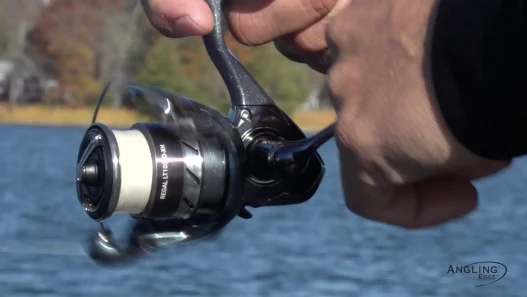
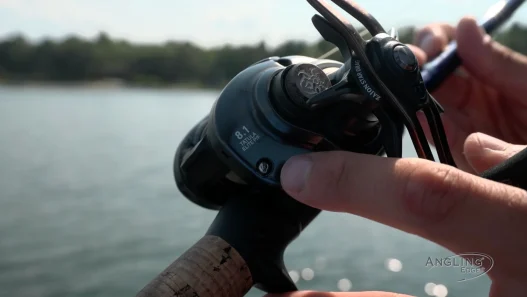
As for line, the debate between braid and mono continues. Traditionalists prefer monofilament for its shock absorption, which helps keep sharp jigging rap hooks from tearing out. But today’s high-end reels—like those from Daiwa—feature buttery-smooth drag systems that allow you to get away with using braid, which provides better bait control and bite detection.
Both options work, especially when paired with high-vis line. Whether using mono or braid, the visibility helps detect subtle bites, especially when fish are hitting on the fall or lifting the bait off the bottom. Around rocks, braid has another advantage: it makes it easier to retrieve snagged baits without losing expensive lures.
Adapting to Harsh Weather with Technology
Upon arrival, we were met with one of the first major cold fronts of August and howling winds exceeding 40 miles per hour. But this is Sunset Country—there’s always somewhere to hide from the wind and still catch fish.
Our on-board technology played a huge role in keeping us on fish. We started by identifying structure with the LakeMaster map, recently updated for Ontario, and refined our spots using 2D and side imaging. In rock-heavy Canadian lakes, side imaging is vital for locating transitions like rock to gravel, while 2D sonar reveals fish location.
Once we found a pod of walleyes, we marked the waypoint, dropped the trolling motor, and used Mega Live—forward-facing real-time sonar—to zero in. Instead of blind casting, we could literally see our lure fall and watch fish react in real time. This was game-changing technology at its finest.
The Muskies Join the Party
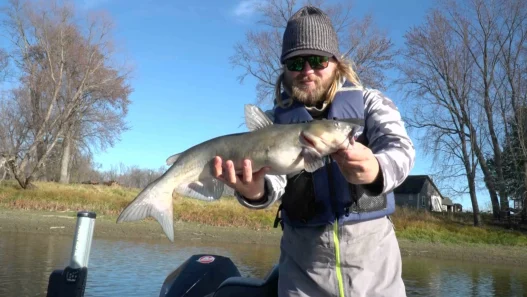
A massive muskie hit during one of our sessions, and after a heart-pounding fight and a textbook net job, we had it in the boat. These bonus encounters are what make Sunset Country so magical—one minute you’re chasing eaters, the next you’re holding a toothy giant.
The non-stop action didn’t stop there. While some fish got away, others hit like freight trains. With every drop, we were connecting with more quality fish and enjoying every minute of it.

