










A Peep into the History
The crew Lindner’s Angling Edge have been capturing fish swimming underwater for more than 40 years. Decades ago, the process was super labor intensive.
It require large tapes, heavy camera, bulky waterproof camera housing, and heavy and expensive diving equipment. Bill Lindner, one of the pioneers of high-quality fish photography and video, had to physically go into the water to chase fish with a camera encased in a bulky waterproof shell.
Technological Progress in the Film Industry
The meths of getting good underwater footage have changes for the better. Advancements eventually came with smaller tape and digital cameras, followed by the invention of GoPro cameras — which made it simpler to record. It’s a much less cumbersome said to capture high-quality imagery by simply attaching them to a pole.

The Underwater Filming Era in Modern Times
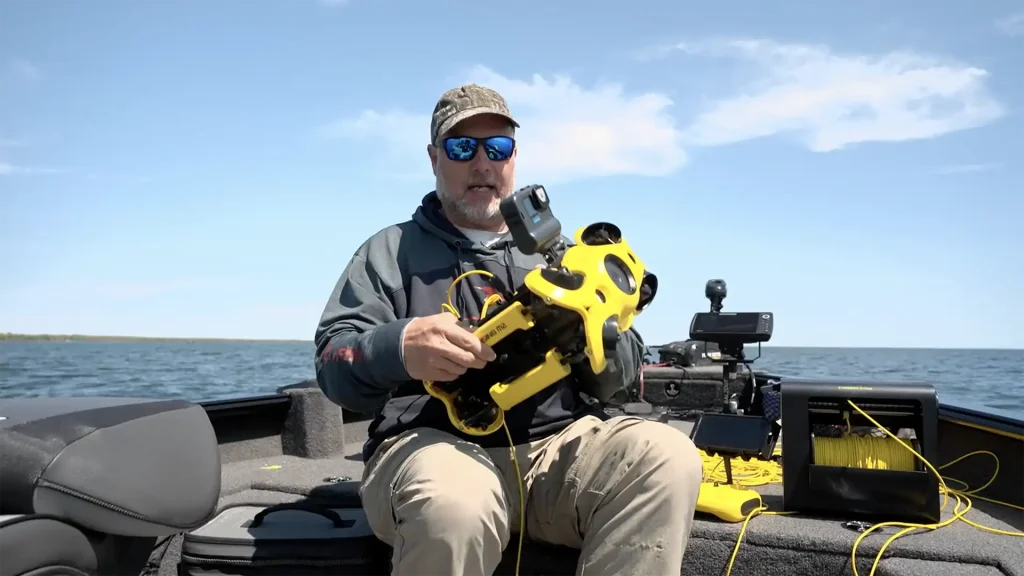
The invention of underwater Remotely Operated Vehicles (ROVs), also known as underwater drones, has changed how we capture fish swimming.
- ROVs, which are outfitted with 4K cameras, produce incredibly clear images.
- Dual Camera System: A lot of models, including the one our team uses, have the ability to attach a GoPro, plus the camera that is built into the drone. This ensure you don’t miss a good image due to any technical problems.
- Remote Operation: The drone can be operated using a smartphone, making it relatively easy to navigate underwater.
Using ROVs Underwater
Improving our fishing shows for the view is the main reason we take the time to and make the effort, however, it also helps us understand fish behavior. Observing how fish are behaving in the spring, summer, fall and winter in relation are very interesting and insightful.
Interesting Findings
- Panfish and bass in particular are very curious about the underwater camera and frequently swim up to investigate
- Walleyes are more wary and frequently retreat after only a brief contact.
- Surprisingly, despite northern pikes aggressive behavior, they are a little camera shy.
The Modern Era of Underwater Filming
Underwater Filming Through Ice
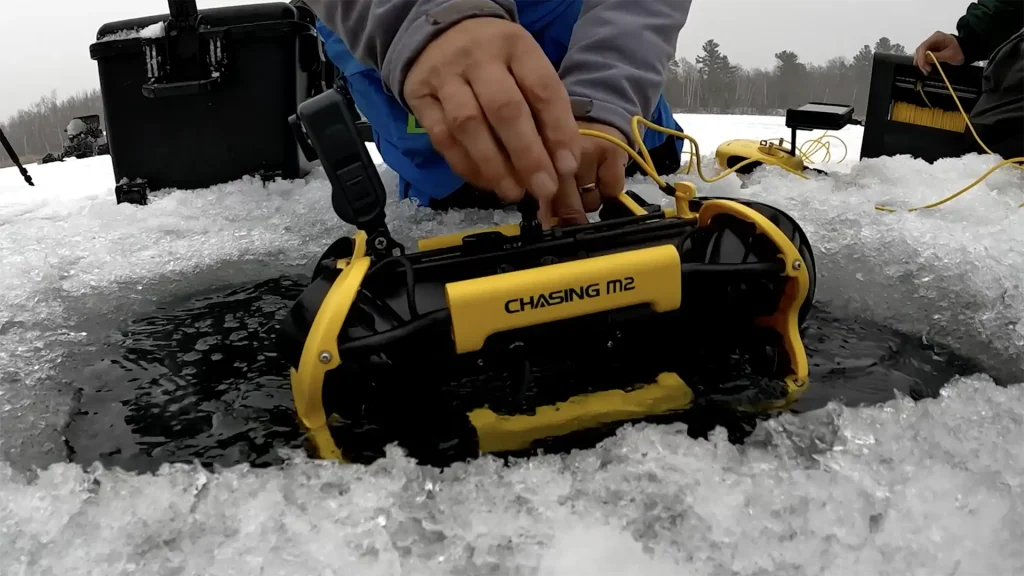
The versatility of underwater drones extends beyond open water into the icy realms of winter fishing. Drilling a hole and deploying an ROV beneath the ice has proven to be an effective method for locating fish in winter, mirroring the challenges faced by ice anglers above the surface.
Ice Fishing Revelations
- Locating Fish: The underwater drone has demonstrated its ability to find fish congregations beneath the ice, which can often be a hit-or-miss scenario when drilling multiple holes.
- Observing Winter Behavior: Particularly with smallmouth bass, the drone has captured their less active, wintering behavior in deep water, providing a rare look at how these fish group and interact during the colder months.
Conclusion: The Impact of Technological Innovation on Angling
The journey from bulky, invasive equipment to sleek, sophisticated underwater drones has changed how we film aquatic life and deepened our understanding of fish behavior. This technological evolution has provided both anglers and viewers with a more intimate, less disruptive view of the underwater world, making fishing shows more engaging and informative.
As we continue to embrace these advancements, the future of fishing and underwater exploration looks brighter than ever. With each dive and every hour of footage captured, we learn more about the mysterious lives of fish, enhancing our respect and appreciation for these fascinating creatures.
Whether you’re an avid angler or a casual viewer, the insights gained from underwater filming are invaluable, offering a closer look at the natural behaviors and environments of fish. It’s a vivid reminder of the beauty and complexity of life beneath the surface, brought into our living rooms through the lens of cutting-edge technology.
For more insights into the world of fishing and the latest in angling technology, stay tuned to our blog. We’re always on the lookout for the next big thing in fishing, aiming to bring you closer to the action and the underwater wonders that await.

