




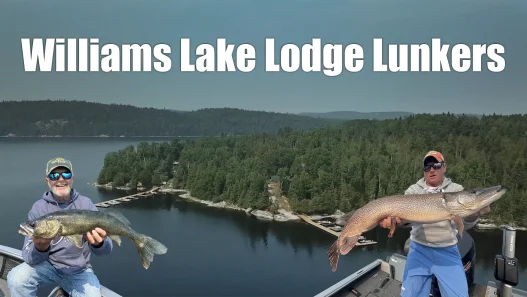






Jeremy Smith and Luke Ronnestrand use Jerkbaits for Walleyes on beautiful Lake Vermilion.
A Promising Start on the Water
The crisp air and changing leaves set the scene for an exciting fishing trip on Lake Vermilion. As we set out, the action was immediate—hooking into fish left and right.
Switching to a jerkbait proved to be a game-changer, and the effectiveness of the PXR Deep Mavrik® 110 lure was undeniable. Running at the perfect depth, it drew strikes consistently, making for an exhilarating start to our adventure.
Jerkbaits for Walleyes — Get the Net
It wasn’t long before a solid walleye hit. “Luke, grab the net!” The anticipation was high as we reeled in a hefty fish that had crushed the bait. Moments like these remind us why we love fishing—when everything comes together just right. The first few catches of the day set a high bar, and the excitement was only beginning.
Exploring Lake Vermilion’s Fishing Potential
Lake Vermilion is a haven for multi-species fishing, but on this trip, the primary target was walleye. The lake’s vast waters have consistently provided outstanding fishing experiences; this outing was no exception.
As we worked the shallows, it became clear that the walleyes were incredibly active, responding well to artificial lures like jerkbaits and Rigging Raps. Historically, trolling in the evening had been effective, but artificial presentations were more than enough to entice aggressive strikes this time of year.
Walleye Behavior and Fishing Strategies
Fall fishing on Lake Vermilion reveals fascinating behavior in walleyes. Unlike their deep-water tendencies in other lakes, these fish held in 8 to 12 feet of water, often near weed edges. The shallower flats were teeming with perch, creating a prime feeding ground. Fishing with jerkbaits proved effective and provided an exhilarating alternative to the traditional jig-and-crawler method. The aggressive nature of these walleyes made every catch feel like a battle, resembling the fight of a northern pike rather than the usual walleye struggle.
Understanding Lake Vermilion’s Unique Features
Covering 42,000 acres and boasting roughly 380 islands, Lake Vermilion offers a diverse fishing experience. The east end of the lake, with its deeper, more open waters, resembles Lake Superior, while the west end is shallower, weedier, and more structured.
Water clarity also varies, with the east end murkier and the west end increasingly clear. The lake’s forage base shifts accordingly—ciscos dominate in the east, while perch become the primary prey in the west.
This diversity makes the lake an excellent fishery for multiple species, including muskies, smallmouth bass, and largemouth bass, with each end of the lake offering unique opportunities.
The Role of Technology in Locating Fish
Utilizing side imaging technology made a significant difference in locating productive fishing spots. Rather than blindly casting in seemingly promising areas, we scanned for distinct bottom transitions—where weeds broke into softer bottoms or sand spits extended outward.
We could maximize our time on the water by identifying high-percentage areas before fishing. Spots, where we marked a dozen fish, resulted in immediate bites, whereas areas with little visible activity often yielded nothing.
This strategic approach ensured that our efforts were focused on prime locations, increasing our success rate dramatically.
The Power of the Right Bait
One of the standout aspects of this trip was the undeniable effectiveness of the PXR Deep Mavrik 110 jerkbait. Designed with a long-casting mechanism, side-to-side hunting action, and a head-down suspension, this lure perfectly mimicked the perch that walleyes were actively feeding on.
Running at an ideal depth of 8 to 9 feet, the bait’s subtle yet flashy movements triggered aggressive strikes. It quickly became clear that this lure was the key to unlocking consistent success on the water.
Dialing in the Perfect Setup
The success of our approach wasn’t just about the lure—it was also about the right gear. Fishing jerkbaits on a braided line setup made all the difference.
Using 10-pound Sufix 832 braid in high-visibility yellow with a 14-pound fluorocarbon leader provided superior depth control and reduced bait fouling. This heavier leader also helped maintain lure action while preventing excessive wear.
Rod selection was just as critical. A 6’10” medium power, extra-fast action rod allowed for precise lure control, making the bait hunt and dance effectively. This setup, paired with a Daiwa 3000 reel, offered smooth casting and excellent drag performance, making long casts effortless and keeping the bait in the strike zone for longer periods.
Midday Success and the Unexpected Bite
It was remarkable how well the fish were biting despite bright midday conditions and light winds—typically tough conditions for walleye fishing.
Yet, the jerkbait technique continued to produce, proving that the right presentation could defy conventional fishing wisdom. Every spot we targeted produced fish, confirming that we were onto a pattern that was not just working but thriving.
As the afternoon progressed, the bites remained consistent. The walleyes were completely inhaling the bait, a testament to its effectiveness. Even when switching colors or adjusting retrieval speeds, the fish continued to strike aggressively. This trip was turning into a masterclass in walleye fishing with artificial lures.
The Ultimate Reward
Just as the day was winding down, one final fish put an exclamation point on the trip. The rod bent sharply, and the fight was on. The telltale head shakes signaled a larger walleye, and as it surfaced, we knew it was the one we had been waiting for. A quick net job secured the trophy—a perfect way to wrap up an incredible day on the water.
As we released the walleye back into the lake, we couldn’t help but reflect on how special this place is. With its endless structure, abundant forage, and cooperative fish, Lake Vermilion had once again delivered an unforgettable fishing experience.
With the sun setting behind the treetops and the crisp autumn air settling in, we knew one thing for sure—this would not be our last trip to this remarkable fishery.

