









Gaining knowledge about the seasonal change
One of the most predictable elements of fishing is change, especially as seasons change. Like largemouth bass, cold-blooded fish are quite sensitive to cover, water temperature, and food supplies. These fish move to find stability as late fall arrives and water tempers drop.
Particularly largemouth bass avoid shallow flats and settle into deeper, warmer zones with sharp drop-offs. They eat less often during this change, which helps to save energy and turns into opportunistic eating. For anglers, success depends on changing techniques to fit the slow-paced movement of the bass.
Targeting Late Fall Bass from Natural Lakes
Al and James Lindner get ready in this episode of The Edge for a late-season largemouth trip on a Midwestern natural lake. Prime conditions for locating northern-strain largemouths gathering and feeding heavily before winter are 45 to 47 degrees, the water temperature is hovering about there.
These fish can be caught right up until ice-up despite the cold; just change your methods. The wonders of this time of year? Minimalism. All it takes to find and catch bass is a small assortment of really powerful baits.
The Value of Simplicity: Late Fall Bait Selection
Early fall taper off in aggressive reaction as water temps drop. Bass start to lose confidence and their strike zones get much smaller. Presentations have to be slower and more deliberate. Bass were smashing spinnerbaits and rattlebaits on shallow flats two weeks earlier. Today, though? Rule the game jigs and jerkbaits.
Bass groups tightly and moves down deeper at about 45 degrees. Effective strategies consist in exact, slow-moving lures that remain in the strike zone for long stretches. Especially good are lures with a slow fall or neutral buoyancy.
Perfecting the Right Gear and Methods
Jim and Al show that depending on the lure and intended depth, baitcasting and spinning configurations can both be successful. To get his jerkbait deeper, Jim moves to a spinning arrangement with 10-pound braid and a fluorocarbon leader—a little change with a big pay-off.
Among their best cold-water bass presentations are:
Combining terminator finesse jig with big bite swimming claw provides enough profile and a controlled drop speed to appeal to lethargic bass. Keeping the jig light helps fish to stay bottom contact free from spooking.
Counted down to particular depths, the slow-sinking jerkbait Rapala Shadow Rap (Deep/Shallow) can then be fished with subdued twitching. In cold water, where the objective is to keep the bait in the limited strike zone as long as feasible, it is lethal.
When fish are tightly clinging to cover or structure, this delicate arrangement—VMC Spin Shot + Big Bite Shaky Squirrel—excels in maintaining the soft plastic in one spot.
Rod and Reel Choices
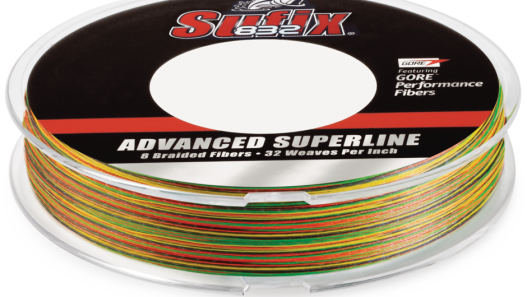
Jim’s setup is a 7’1″ St. Croix Legend Tournament Series rod coupled with a 2500 Daiwa Ballistic spinning reel and 8 lb Sufix 832 braid (white for visibility), with a 10 lb fluorocarbon leader.
Al’s setup consists of a 6.3:1 Daiwa Tatula baitcasting reel on a 6’10” St. Croix Legend Elite using 10 lb Sufix fluorocarbon line.
Both configurations have sensitivity, control, and the subdued presentation required in cold water. These rigs guarantee your bait stays in the crucial strike zone whether your fishing vertically or using long casts and slow retrieves.
Drifting under Control with Jerkbaits
One especially useful technique shown is controlled drifting using the trolling motor. Anglers can gently present the bait in a natural, inviting manner by casting jerkbaits behind the boat and gradually letting them glide over deeper water. This method moves the bait at the proper speed and maintains its depth to induce bites from cold, slow bass.
Deep: Novel Approaches for Cold Water Largemouth
Al and James Lindner delve deeper— literally and metaphorically—into the art of late fall bass fishing as the episode of The Ehttps://anglingedge.com/dge runs. Years ago, jerkbaits were not widely available and usually only useful in shallow, clean water. But with slow-sinking models, contemporary anglers can now effectively present these baits at depths of 14 to 16 feet, even targeting suspended or bottom-oriented fish with surgical accuracy.
Traditionally used in walleye fishing, slip-drifting is applied here to bass. They cover a large swath of depth maximizing their chances of intercepting cold-holding bass with one angler positioned toward the front of the boat in roughly 11–12 feet of water and the other in 14–16 feet.
Strategic Boat Positioning and controlled drifting
The Lindners gently move their lures across effective ledges as they deftly control their drift along a defined breakline using the wind and the trolling motor in tandem. The cold water calls for a more subdued approach than sharply jerky motions; soft pulls and long pauses extend the bait in the strike zone longer and replicate lethargic forage.
Steady action highlights the efficiency of this approach since fish after fish is brought to the boat. The main framework? Particularly in rocky areas, breaks that taper gently from five to ten feet before plunging into deeper water. Year after year, these deep, rock-filled slides become dependable hot sites.
Precision fishing using sonar and spot lock serves a purpose.
Cold water fishing is now transformed by modern technology. Unmatched control is obtained from Minn Kota’s Ultrex trolling motor using Spot-Lock and Humminbird sonar. Al casts to obvious schools of bass while holding the boat over important structures with exacting accuracy.
Spot-Lock lets the boat remain stationary while the anglers fan-cast to designated coordinates and snaps jerkbaits down 10 to 14 feet. The sonar indicates exactly where the fish are holding, and the white braided line detects minute strikes. Big bass gather in an invisible sweet spot in open water created by this mix.

