




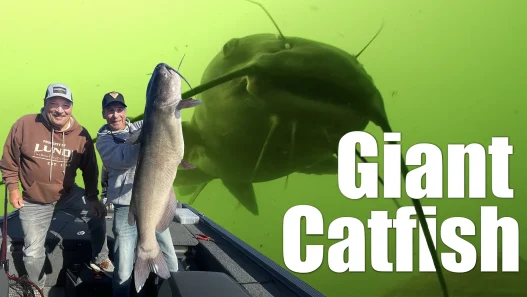






Title: Mastering the Art of Fall Muskie Fishing with Live Bait
A Return to Tradition: Live Bait for Muskie
Live bait fishing for muskies has undergone a transformation. Once frowned upon in the muskie angling community, this traditional approach is now being refined and accepted, particularly through the use of quick-strike systems inspired by European techniques. These modern setups allow anglers to set the hook quickly and minimize deep hooking, offering a humane and highly effective way to target these apex predators.
On this particular outing, seasoned angler Jim Lindner joins Jeremy Smith and Jim’s son Nick Lindnder to explore the ins and outs of live bait muskie fishing during the fall—an exciting time to chase these toothy giants across lakes and rivers.
Rigging for Success: The Live Bait Setup
The team starts by selecting healthy, lively sucker minnows, the preferred bait for fall muskies. Jim demonstrates a meticulous rigging process: the nose hook and trailer hook are skin-hooked lightly to minimize stress on the bait and allow quick hooksets. Using floats (large bobbers), anglers can detect when the sucker is distressed—a telltale sign that a muskie may be near.
When muskies are close, the sucker goes wild, and the bobber’s movement gives vital information about the fish’s direction. This helps the angler make an accurate hookset without the muskie swimming toward the boat—an undesirable angle for striking.
Hookups, Strikes, and Lessons Learned
The action begins quickly. Nick has a hit—a baby muskie nibbles at the bait but slips off at the boat. Even though the fish was small, the rig did its job, hooking the muskie without harm. Moments later, Jim shares insights into a hook-free rigging technique that uses a bridle system involving a rubber band and snap connection. This setup keeps the sucker healthy and avoids embedding hooks until the moment of the strike, at which point the rig breaks free cleanly.
Jim explains that this method results in more bites and healthier bait, which in turn leads to more muskie encounters. Once a fish bites, the angler simply reels and pulls—minimal resistance is enough to drive the hook into the muskie’s mouth.
Hooked Up on the River
With rigs deployed and expectations high, the team moves into a river situation. Jim sets up downstream and soon hooks into a heavy fish. The tension builds as the muskie powers through the current. After a solid fight, they bring in a “really big one”—a true trophy. The fight ends with a safe release and high fives all around.
One of the key advantages of live bait fishing, Jim notes, is that it results in minimal damage to the fish. Unlike bucktails or large plastics that often lead to deep hooking, the quick-strike rig ensures most hookups occur at the edge of the mouth, making for easier releases and healthier fish.
Strategic Location and Boat Positioning
Fall muskie fishing demands a sharp understanding of fish location. In rivers, muskies congregate in deep holes with slow or slack current once water temperatures drop into the low 50s. Here, the team trolls suckers around current breaks, adjusting their strategy for lakes where muskies shift toward structure and sharper drop-offs.
As the water cools to the mid-40s, tulabies begin spawning—making them a key food source for muskies, particularly at night on reef systems. This seasonal pattern makes it possible to catch muskies surprisingly shallow during late fall.
While Jim casts soft plastics and hard baits along the edges, Jeremy and Nick drag suckers using planer boards to keep the bait tight to structural edges. Precision placement is key, especially when working along main lake points lined with large boulders. Using side imaging, they can track both structure and fish location in real time.
Technology: A Game Changer in Modern Muskie Fishing
Advanced electronics play a pivotal role in today’s muskie fishing. From mapping to side and down imaging, technology allows anglers to pinpoint muskie locations with unprecedented accuracy. Hummingbird’s Mega Imaging, for example, enables anglers to mark fish without needing a follow. Hardcore muskie anglers now drop waypoints on fish seen electronically and revisit those spots during peak feeding times.
The boat itself is also a technological asset. With a Minn Kota Ultrex and iPilot Link, Jeremy can control the boat from anywhere on board using a handheld remote. Features like contour-following and cruise control allow precise boat positioning, which is critical when working tight along breaklines or structure.
The Rewards of Fall Muskie Fishing
Fall is undoubtedly prime time for muskie fishing. The fish are bulked up, aggressive, and ready to feed. For those willing to brave the colder temperatures, the payoff is often giant fish—and unforgettable memories. Whether you’re using soft plastics, hard baits, or the highly effective sucker rigs, fall muskie fishing offers some of the most thrilling moments of the angling year.
Closing Out the Fall Muskie Season with a Bang
One of the most exciting moments in any angler’s career is when everything comes together perfectly—and that’s exactly what happened as Nick demonstrated the speed and precision of a well-rigged quick-strike system. With the muskie turning away from the boat, he executed a smooth sweep set and connected solidly. What followed was sheer chaos in the best way: a rare double hookup with both 50-inch class muskies landing in the same net. A once-in-a-lifetime moment.
Fine-Tuning with Planer Boards
An essential tool in the live bait muskie arsenal is the planer board. Though often associated with species like crappie or walleye, planer boards shine in muskie fishing when baits need to be spread out from the boat to cover more water or present in precise areas. The team used three different sizes of offshore boards:
- Small Planer Board – Ideal for subtle presentations with smaller baits, often used for crappie or trout but surprisingly effective here with suckers.
- Medium Planer Board – Most common among walleye anglers; used here by Nick to pull suckers farther from the boat.
- Mag Planer (Large) – The choice for trolling large crankbaits, especially when running big gear for muskies.
Matching the board size to the bait and water conditions allowed for strategic, effective coverage.
Gear Up: Rods and Reels for the Task
Targeting fall muskies demands purpose-built gear. For casting massive soft plastics like Medusas and Bulldogs, a St. Croix Big Plastics Rod, 9-foot, extra-heavy, fast-action, paired with a Daiwa Lexa 400, delivers the power and leverage needed to throw and retrieve oversized lures all day.
Live bait setups, however, require a more finesse-oriented approach. Jim highlighted his go-to: the St. Croix Downsizer, a 9-foot medium-light, fast-action rod. This rod’s softer tip offers the sensitivity needed to track the sucker’s behavior, while its forgiving action helps apply steady pressure when the muskie strikes. Paired with a Daiwa Lexa 300 Line Counter Reel, this combo allows precise bait placement and smooth hooksets—critical when running boards or fishing at depth.
Technology Meets Trophies
Muskie fishing today is as much about electronics as it is instinct. Using side imaging sonar, the team could literally spot muskies sitting in rock slides and boulder fields. This pinpoint accuracy allowed them to guide their baits directly over fish-holding spots.
It paid off again as another muskie crushed the bait after the board rolled right over a cluster of rocks. The strike was explosive, and the fish—another massive specimen—was safely landed thanks to the careful live bait rig. With boards and live bait, big muskies came boat-side again and again.
And it wasn’t just effective—it was ethical. The rigs used left minimal damage, with nearly every muskie hooked neatly in the mouth and released unharmed.

