




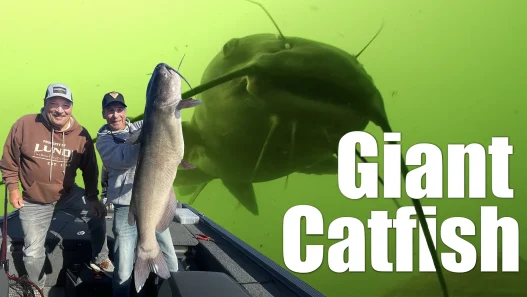






Al Lindner and James Lindner hunt low water largemouth bass. They discuss their preferred tackle, which might be tungsten jigs and a specific kind of plastic that consistently produces bass under these conditions. They also talk on the need of using specialist tools and provide guidance on how to fish under strong cover. By applying their knowledge and experience, anglers can raise their chances of success when chasing bass in like circumstances.
Low Water Largemouth Strict Cover Fishing
James advises, “Letting the bait fall on the slackline is one of the keys to fishing in heavy cover.” He emphasizes that the bait has to drop vertically if one is to reach the area the fish are in. Should the bait land at an angle, it will become caught in the weeds and fail to reach the fish. “Keep your rod tip angle up if you want work the bait back effectively,” he advises.
Al continues by saying that knowing where the targets are calls for the use of electronics, like the Humminbird Mega 360. Thanks to the 360-degree technologies, he claims he can see waypoints and precisely where the fish and cover are in every direction. This helps him to make correct casts and land exactly on different fish pods.
Low Water Largemouth Tungsten Jigs Made of Superior Tackle
James like to use a three-quarter-ounce tungsten jig when fishing in low water. He underlines that once you start fishing with tungsten, it’s difficult to go back to lead since it gives you a better sense of what’s happening underwater, so justifying the higher cost. Choosing the right jig size is vital, and he counsels choosing one that fits the depth at which you’re fishing. He combines, for instance, his tungsten jig with a 4/0 Extra Heavy VMC Extra Wide Gap Hook. To hold the plastic bait in place, he slices the tag and places a stopper on the hook.
Plastic baits for low water conditions
James says he prefers a craw tube as his plastic bait for low water because of its strong profile and rather good penetration of the cover. He would rather use the extra wide gap hook with the craw tube since it enables better hook penetration. Al enjoys rigering the Big Bite Baits BFE (Best Flippin Bait Ever) with bait on a flipping hook in heavy cover. He says he has to restock his supply since he has been catching a lot of fish with this bait and it is so efficient.
The Advantage of Specific Tools
James and Al stress the need of using particular equipment when fishing in heavy cover. Al describes his St. Croix Legend Xtreme Casting rod, which he thinks to be the best in the collection since it has carbon guides, a premium graphite mix, and unmatched sensitivity.
James describes a specialty reel he uses, the Daiwa Tatula Elite PF. He notes the pitch and flip buttons on the reel, which make changing easy following casting. He also emphasizes the shallow spool and 100-millimeter handle, which provide extra torque and a low trajectory to the water and would be perfect for pitching and flipping.
They also stress the need of using the correct line while fishing under heavy cover. James recommends running Suffix 832 braid in 30-to 40-pound tests for stained water conditions. He makes clear that fluorocarbon or clear lines are useless in these conditions and that the fish have no concern for line visibility. Al says fluorocarbon can be used in clear water for a more covert approach.
Regarding bait color, James counsels selecting nearly always successful green pumpkin varieties. He also discusses how well dark baits—black or black and blue—work in lakes with darker tones. These baits attract bass since they contrast with the water and stand out.
As they wrap up, they highlight the excitement and thrills of bass fishing in thick cover. Al says it never gets old, and James agrees, saying he loves this type of fishing especially since the fish are aggressive and focused.
Tools for Specialization
James and Al stress the need of using some tools when fishing in thick cover. Al says his favorite rod is the Saint Croix Legend Extreme, which he thinks to be the best on the lineup. He praises its technologies, premium graphite mix, and carbon guides for unparalleled sensitivity.
James describes a specialty reel he uses, the Daiwa Tatula Elite PF. He notes the pitch and flip buttons on the reel, which make changing easy following casting. He also emphasizes the shallow spool and 100-millimeter handle, which provide extra torque and a low trajectory to the water and would be perfect for pitching and flipping.
They also stress the need of using the correct line while fishing under heavy cover. James recommends running Suffix 832 braid in 30-to 40-pound tests for stained water conditions. He clarifies that under these conditions fluorocarbon or clear lines are not needed and the fish are not bothered with the visibility of the line. Al says fluorocarbon can be used in clear water for a more covert approach.
Regarding bait color, James counsels selecting nearly always successful green pumpkin varieties. He also discusses how well dark baits—black or black and blue—work in lakes with darker tones. These baits attract bass since they contrast with the water and stand out.
As they wrap up, they highlight the excitement and thrills of bass fishing in thick cover. Al says it never gets old, and James agrees, saying he loves this type of fishing especially since the fish are aggressive and focused.
Under heavy cover, largemouth bass fishing is Their preferred tackle is discussed, which comprises tungsten jigs and some plastic baits. They also go over the need of using specialized tools and provide guidance on how to fish under strong cover. By applying their knowledge and experience, anglers can raise their chances of success when chasing bass in like circumstances. ## Tungsten

