










Modern Catfishing: Tradition Meets Technology on the River
Catfish have long held a storied place in angling history. Once primarily targeted as a convenient and abundant food source, catfish are now gaining recognition as a legitimate sport fish, worthy of catch-and-release conservation and competitive tournaments. Today, more anglers are embracing catfishing not just for the frying pan, but for the sheer fun and thrill of battling big whiskered bruisers from both shore and boat.
The Rise of Sport of Modern Catfishing
Although many still enjoy smaller “fryers,” the trend is shifting toward selective harvest and catch-and-release of trophy-class catfish. This change in mindset is fueled by growing interest in professional catfish tournaments, as well as catfish’s status as America’s third most popular fish—trailing only bass and panfish. Their broad distribution across lakes, rivers, and reservoirs makes them accessible to just about anyone, and you don’t need a fancy rig to catch one. In fact, catfish and shore fishing go together like moonshine in a mason jar.
Bait, Tackle, and the Modern Catfishing Playbook
At its core, catfishing remains simple: hook, line, and sinker. But within that simplicity lies a rich tradition of bait experimentation. From homemade stink baits and doughs to unconventional offerings like hot dogs, grapes, and even bars of soap, there’s no limit to what anglers will try. Still, when it comes to channel cats, few baits outperform fresh cut bait—goldeye, sucker, carp, smelt, or skipjack herring.
These bottom dwellers are highly sophisticated predators. With taste buds distributed across their entire bodies, they often bump and brush against potential meals before actually committing to a bite. It’s one of the reasons understanding their sensory behavior is key to success.
High-Tech Meets Old School
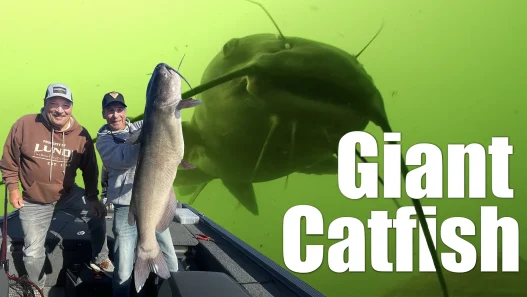
In this episode of The Edge, Jeremy Smith and Dave Sanda blend traditional catfish techniques with modern advancements in tackle and technology. While the core setup—hook, line, sinker—hasn’t changed much, tools like advanced sonar and mapping systems have transformed the game. Today’s anglers can now pinpoint fish in stained water with incredible precision, using live imaging and real-time depth contour mapping.
As Jeremy and Dave demonstrate, catfishing offers the perfect balance of relaxation and adrenaline. Within minutes of wetting lines, they hook into their first channel cats—solid fish that put up a serious fight. “That was on goldeye,” Jeremy notes, referencing one of their go-to baits.
The River Breakdown: Riffles, Runs, and Holes
Catfishing rivers effectively starts with identifying structure. Most river systems can be broken down into three key areas:
- Riffles: shallow, fast-moving water
- Runs: straighter, moderate-depth sections
- Holes: deeper pockets where catfish often stage
On this trip, the holes average 8 to 10 feet deep, while the runs sit in the 4 to 6 foot range. Interestingly, the cats aren’t holding in the deepest parts of the holes. Instead, they’re stacked up on the transitions—where holes slope into shallower runs—especially if wood cover is nearby.
Fighting the Whiskered Giants
As the session progresses, the duo lands several big fish, with one specimen topping the 20-pound mark. “That’s about as big as they get,” Jeremy says, admiring the brute. It’s a rewarding outcome, made even sweeter by the right tools for the job.
While baitcasting gear is traditionally used for catfish, Jeremy makes a strong case for spinning gear, citing its ergonomic advantages and simpler single-hand operation. Paired with a quality spinning reel featuring a bait-runner or clicker feature (like Daiwa’s saltwater models), it’s a highly effective setup. When the clicker goes off, a simple turn of the handle engages the drag and sets the stage for a battle.
The Importance of Cool Bait
One often-overlooked detail in successful catfishing? Cold bait. Jeremy emphasizes the need to keep dead bait cool and firm. He stores whole suckers in Ziplocs packed on block ice—keeping the bait intact, fresh, and on the hook longer. “Keep your bait cold, and you’ll catch more fish,” he advises.
Mapping the Bite with AutoChart Live
The river they’re fishing isn’t charted, but that doesn’t stop them. Jeremy’s Humminbird Onyx unit features AutoChart Live, allowing them to drive and record real-time bottom contours onto their own custom map. This high-tech solution is a game-changer for exploring uncharted waters and honing in on productive zones.
“Spending the time looking at spots using the technology that’s available today can make a huge difference in how many fish come in the boat—not only the numbers, but the size of fish like that.”
High-Tech Tools for Targeting Trophy Cats
Back on the river, Jeremy and Dave continue blending time-tested fishing methods with cutting-edge technology to pinpoint catfish with incredible precision. One standout tool is AutoChart Live, a feature on their Humminbird sonar unit. As Jeremy explains, simply driving the boat over areas of the river allows the system to record depth and bottom contour data, gradually building a detailed map of the riverbed. Over time, this mapping becomes increasingly refined, highlighting key variations in bottom structure that are otherwise difficult to see.
The color-coded depth chart allows the anglers to visually distinguish shallower zones (marked in red) from deeper ones (shown in darker hues). Even in rivers where the depth change may only range from two to ten feet, identifying those subtle transitions—like where a flat turns into a deeper pocket—can be the key to locating fish.
Finding the Hidden Cover
In waters with limited visibility, relying on your eyes is rarely effective. That’s where side imaging truly shines. Jeremy and Dave use side-imaging sonar to detect submerged wood, gouges along the riverbank, and bottom undulations—features that often serve as prime ambush spots for channel cats. One particularly productive location included a series of underwater gouges—formed by current erosion—that extend beneath the surface, providing just enough depth and protection for catfish to stage.
“Some of those gouges are a foot or two deeper,” Jeremy explains. “And that’s where the cats have been lying—right along those subtle depressions between us and the shore.”
Anchoring with Precision
To fish these high-potential spots effectively, Jeremy and Dave deploy a clever anchoring strategy. They drop a traditional anchor off the bow to hold their position in the current, and then deploy a shallow-water anchor (a Minn Kota Talon) off the stern. This dual-anchor system locks the boat in place and eliminates the swaying effect of wind, keeping their lines positioned exactly where they need to be.
Rods Designed for Cats
Once they’re locked into a productive spot, it doesn’t take long to connect. As they wrestle in another “tank,” Jeremy praises the gear: “These rods are just amazing for fighting these fish.” The St. Croix Mojo Cat rods they’re using are specifically designed for the species, with a perfect balance of soft tip sensitivity and backbone strength to handle the power of a surging channel catfish.
He’s fishing with an 8-foot, two-piece model that delivers exactly the flex and control needed to absorb the rolls and head shakes of a trophy-class fish. “You want that tip to detect bites and that backbone to control the fish,” Jeremy says. “These rods are just awesome.”
Mapping Success to a Monster Catch
As Dave lands another brute, they reflect on the full-circle success of their system: “We just drove around, mapped this area, looked at the side imaging, and said, ‘That looks like channel cats down in those ditches.’ And sure enough—it was.”
These moments highlight how merging sonar data with structural interpretation pays off big time. This fish, in particular, is a true trophy—a heavyweight that any cat angler would be thrilled to catch.
The Nuts and Bolts of a Simple, Deadly Setup
Though catfishing is often described as a simple sport, there’s room for technical refinement in your rigging. Jeremy and Dave walk through their gear in detail:
- Sinkers: They use flat river sinkers, which are ideal for staying put in moving current. These designs prevent rolling and keep the bait anchored in the strike zone.
- Hooks: Their assortment includes classic octopus (J-style) hooks up to size 6/0—plenty stout for handling large cats. They also favor Tournament Circle Hooks, which perform best when the rod is in a holder, allowing the fish to hook itself.
- Rigs: Spin-and-glow rigs add flash and vibration for extra attraction, especially helpful in murky water.
- Mainline: They spool up with Sufix Siege 25-lb test in high-visibility Neon Tangerine for easy tracking in low light.
Spinning Rods: A Viable Option
Though baitcasting gear is still the standard, spinning gear has its place in the catfishing world, too. As Dave puts a serious bend in his spinning setup, Jeremy points out, “You can’t quite crank down like with casting gear, but it’s still a lot of fun—and powerful enough to handle big fish.”
Whether you’re new to the sport or a seasoned catman, spinning gear offers a lightweight, accessible, and efficient way to enjoy catfishing—especially when paired with the right rods and drag systems.
Giant Fish, Small Effort
As the guys bring another two-hander into the net, they reflect on the relaxing, fulfilling nature of chasing channel cats. “Compared to running around after muskies or walleyes, this is a nice, easy pace,” Jeremy says. “You get your R&R in between battling giants.”
Tackle Box Simplicity, Tactical Precision
Catfishing doesn’t require a boatload of tackle—just smart selections. With a small assortment of quality hooks, sinkers, a few leader components, and fresh bait, anyone can get in on the action. The key is understanding the river and using technology to read its subtle features. With that knowledge, even a basic setup becomes a deadly system for pulling in pound after pound of whiskered muscle.

