





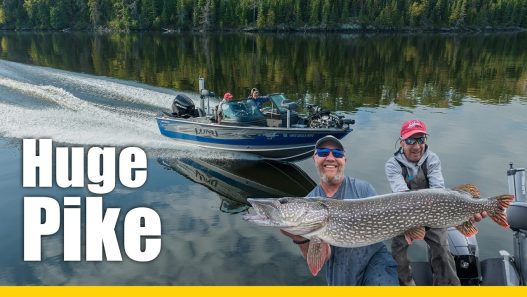




Al and Troy Lindner fish walleyes in the sunlight zone on Ute Reservoir, New Mexico. Jigging tactics intercept post-spawn fish moving from spawning sites near the dam, along shallow mainlake flats with rock and gravel cover.
A Bucket‑List Detour on the Road Home
Sliding south across the high plains, my dad and I had passed Ute Lake in New Mexico more times than either of us can count, wondering about New Mexico walleyes. Each trip north from wintering on Lake Havasu ended the same way: “Next year we’ll stop.” This year the promise finally stuck. With Troy at the wheel and a brisk March wind bending the mesquites, we wheeled into Logan, New Mexico, and launched onto the 8,200‑acre reservoir that has quietly become a walleye sleeper in the Southwest.
Within minutes the decision paid off. A hard thump echoed up my St. Croix as the jig settled along a broken rock wall. The rod loaded, pulsing with that unmistakable “big‑eyeball” headshake, and a thick, post‑spawn female slid boatside—our first New Mexico walleye and the start of a father‑and‑son adventure I’ve had on my bucket list for decades.
Why Chase New Mexico Walleyes in the Desert?
Mention “walleye country” and most anglers picture the Dakotas, Minnesota, or Ontario. Yet New Mexico’s major impoundments—Abiquiu, Conchas, Caballo, Elephant Butte, Clayton, Santa Rosa, and Ute—have held stocked populations for years.
Warm water pushes these fish to grow fast and, yes, die young, but that same metabolism produces respectable numbers of 4‑to‑8‑pounders and the occasional giant (the state record is a healthy 16 lb 9 oz). Add trophy smallmouth, white bass blitzes, and channel cats the size of fence posts, and a snowbird headed for Arizona can quickly find a reason to linger.
Doing Your Homework Before You Launch
Because we were brand‑new to the lake, homework mattered. In the hotel room the night before, we pored over:
• State wildlife reports and stocking data – to confirm walleye density and size structure.
• Marina and resort websites – for seasonal patterns and rough launch conditions.
• Angler‑generated YouTube clips – nothing beats watching where locals set the hook.
A quick scan showed that late‑March water temps hover between 57 °F and 60 °F. Males linger shallow and milting, while big females finish spawning and slide straight into feed mode—prime jig‑bite conditions.
Reading the Reservoir: Flats over Cliffs
Reservoir walleyes don’t behave like their natural‑lake cousins. They spawn on wind‑swept rip‑rap, dam faces, bridge pilings—anywhere hard bottom meets current. Post‑spawn, rather than dropping deep, they fan out across expansive sand‑and‑gravel flats, shadowing threadfin shad in water often less than 12 feet deep.
Key areas share three traits:
1 Broad, gently tapering points that reach well into the main basin.
2 Mixed substrate—broken rock, pea gravel, scattered brush.
3 Quick access to depth where the old river channel swings near shore.
Studying the map chip, one contour caught my eye: a tight dip pinching into a flat, then sliding out onto a point. “That’s our funnel,” I told Troy. Thirty minutes later the jig thumped and another golden walleye hit the deck—proof enough.
Tackling the Wind—and the Fish
Spring on the High Plains means wind, often 30–35 mph. Precision boat control becomes a workout, but a ½‑oz swinging‑head ugby jig kept our plastics pinned to bottom even in heavy chop. Bites were classic reservoir “pounds”—two fast taps followed by the rod loading like wet plywood.
• Presentation: short casts uptide, then a slow drag‑and‑hop to keep contact.
• Gear: medium‑power, fast‑tip rods (forging backbone yet enough cushion to hand‑land fish when, as today, you forget the net).
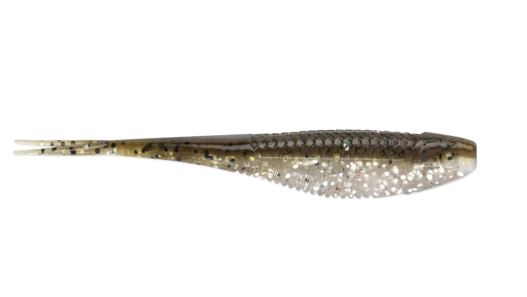
• Plastics: 3.5‑ to 4‑inch paddle‑tailed minnows in smelt or green pumpkin—something subtle against the amber water.
A Mid‑March Pattern Worth the Miles
By afternoon we had a half‑dozen quality fish, all pulled from those gravel saddle points on the windward side of the lake. Locals say the action peaks mid‑April as water climbs into the low‑60s, but for traveling anglers bound north, late March fits perfectly—one last warm‑weather jig‑bite before the Minnesota opener.
And so our first day on Ute ends without a net, but with sore thumbs and grins to match the New Mexico horizon. Tomorrow the plan is simple: run more flats, chase more “big eyeballs,” and keep knocking pins off that ever‑growing bucket list.
Run‑and‑Gun Across the Gravel Points
Morning two began with a simple pattern: hopscotch the long, flat main‑lake points that radiate from Ute’s clay bluffs. We quickly learned that productivity is streaky—one point might spit out two fish in as many casts, while the next three sit barren.
When the action dries up, Troy drops the trolling motor, I stay deck‑side with rod in hand, and he noses the boat with the outboard to the next target 200 yards away. Efficiency is everything; the fish are clustered, and the clusters live on gravel sprinkled across otherwise featureless flats.
“Push me to the next point—one, two, three, four of them in a row,” I told him while the graph still scrolled. We never even lifted the trolling motor; the key is covering water until the rod goes boom‑boom‑boom again.
A Three‑Species Carousel
Few reservoirs reward exploration the way Ute does. One cast might clank a white bass, the next a bronzed smallmouth, and the third a marble‑eyed walleye. Because all three species prowl the same breaks and chew the same 3½‑ to 4‑inch paddletails, you spend more time setting hooks than tying knots—exactly how an April road‑trip detour should feel.
Wrestling the Prairie Wind
Western impoundments share a reputation: if the wind isn’t merely blowing, it’s howling. That reality demands a seaworthy rig and horsepower to match. Our 20‑foot Lund rides high enough to tame the rollers, while a Minn Kota Fortrex on the bow lets us feather drifts along each point tip. Today’s breeze stayed “modest” by local standards—still 15‑plus mph—but the big tiller held us in casting range without back‑trolling heroics.
Proven Jig Choices for Shallow Boulders
When the bite is shallow and visual, we lean on two standby heads:
• VMC Mooneye (Muni) Jig – An aspirin‑shaped nose that slices current and keeps the paddletail tracking true on twitch‑and‑pause retrieves. The molded keeper clip stops plastics from sliding during violent hook‑sets.
• VMC Hot Skirt Jig – Same oversized hook gap but with a silicone collar that bulks the silhouette for stained water or low light.
Both pair perfectly with 3‑ to 4‑inch minnow plastics in smelt, green pumpkin, or white. Forty‑eight hours in, every walleye in the photo roll ate some version of that package.
The Southern Edge of Walleye Country
Local bait‑shop talk confirmed what we witnessed: Ute may be the southernmost reservoir on the continent with a truly robust walleye fishery. The Texas Walleye Association even hosts events across New Mexico and Oklahoma, and their members pointed us here first. Regular stockings have built a lake teeming with 16‑ to 19‑inch eaters and the occasional 6‑ to 8‑pound brute.
Need proof the region embraces the species? The convenience store in Logan sells leeches—in March. In 85 °F sunshine. That alone would make any Midwesterner grin.
Boat, Motor & Fuel Tips
• Sea‑worthy hull: A deep‑V Lund provides the stability to hold on open points when whitecaps build.
• Trolling‑motor muscle: A 24‑ or 36‑volt bow‑mount (Fortrex, Ultrex, or Altera) offers the thrust to pin you on a spot lock or slide the contour while casting.
• Fuel care: Prairie dust and temperature swings invite vapor lock. A splash of SeaFoam keeps the Mercury four‑stroke humming, especially when you idle from point to point a hundred times a day.
A Final Evening Flurry—and a Thought to Ponder
Late afternoon, wind cresting and sun dropping, we doubled—two walleyes on back‑to‑back casts, mine a thick 19‑incher, Troy’s a carbon copy. With whitecaps smacking the hull we agreed to call it and promise a fall return when the smallmouth wear bronze football jerseys.
Driving back to town, Dad shared a newspaper clipping he’d tucked into the glove box—a 1954 note that Congress added “under God” to the Pledge of Allegiance, followed by an NBC poll showing 86 percent of Americans still want those words retained. “Doesn’t matter where you live,” he said, “people cling to ideas that anchor them—just like walleyes cling to gravel flats.”
The windshield framed the Sangre de Cristo Mountains glowing ember‑red and Ute Lake white‑capping in the rear‑view mirror. Tomorrow brings another stretch of highway, but for now the bucket list feels a little lighter.
Reflections Beyond the Water
Back at the ramp—with rods stowed, sunscreen half‑worn off, and fillet knives silent—Dad raised a broader point that had bubbled up during windshield time on U.S. 54. A recent national poll found that 86 percent of Americans favor keeping the words “In God We Trust” on our currency and “under God” in the Pledge of Allegiance, while only 14 percent would remove them. “So why,” he asked, “do we so often cater to the 14 percent?”
As a Vietnam veteran, he still receives American Legion magazine each month; the cover has carried the motto “For God and Country” since 1919. That continuity, he says, anchors him the same way a gravel point anchors a school of spring walleyes—steady, familiar, and worth protecting. Whether you agree or not, it’s food for thought when the ice chest is packed, the outboard cools, and the desert stars start punching holes in the New Mexico night.
Planning Your Own Desert Walleye Detour
If Ute Lake (or any Southwest impoundment) is calling your name, remember these takeaways:
1 Timing: Late March through mid‑April delivers post‑spawn jig bites in 57–60 °F water—and T‑shirt weather while the North still shivers.
2 Structure: Target broad, gravel‑topped points nearest the old river channel; roam until you hit a pod of fish, then work the area thoroughly.
3 Gear: A deep‑V hull, a 24‑ or 36‑volt bow‑mount, and ½‑oz aspirin‑head jigs tipped with 3½–4‑inch paddletails cover 90 percent of scenarios.
4 Species Mix: Expect bonus smallmouth and white bass; keep an ultralight handy if you want to sample everything the flat supports.
5 Logistics: Local bait shops stock leeches, minnows, and up‑to‑date stocking intel, and Logan, NM, offers full‑service marinas and affordable motels.
If a dusty detour to Ute Lake wasn’t on your list before, maybe it is now. Who knows—you might just cross paths with a pair of Minnesotans hopping gravel points, checking another adventure off the bucket list.

