




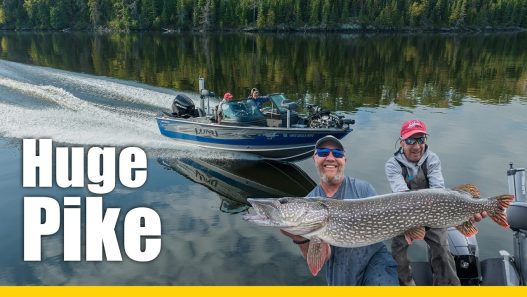






Canada is an absolute favorite fishing destination for many anglers. Whether you love walleye, trout, bass, musky, big pike, or a combination of multiple species, there’s no better place to capitalize on amazing fishing opportunities than in beautiful Sunset Country in Ontario.
Fall Multi-Species Adventure on Eagle Lake, Ontario
Autumn Returns to Sunset Country
Few destinations rival northwest Ontario’s Sunset Country once the maples flare crimson and the nights turn crisp. Our basecamp for this trip is Birchdale Lodge, tucked mid-lake on legendary Eagle Lake. From here we plan to sample everything fall has to offer: trophy muskies, fat walleyes, acrobatic smallmouth—and even a walk for ruffed grouse when the winds settle.
First Strike: Walleyes on the Rocks
Moments after slipping away from the dock, the first walleye of the trip demolishes a jig and puts an exclamation mark on our plan. The fish is thick-backed and barely hooked, a perfect early-morning reminder of why anglers travel north each October.
We’re working classic Canadian Shield structure—submerged rock humps that rise to 25–35 feet—and letting electronics dictate the pace. On the screen, scattered marks become tight arcs, then solid clouds: the unmistakable sign of a feeding school.
Deep-Water Ace: The Jigging Rap Pattern
Nothing probes these depths faster than a No. 7 Rapala Jigging Rap. Rather than fishing it vertically as you might through the ice, we pitch the lure toward the up-current edge, let it crash bottom, then rip it sharply: bang—slack—bang—slack. Most strikes come mid-drop, signaled only by a twitch in the high-visibility braid.
Tackle Breakdown
| Component | Spec | Why It Matters |
|---|---|---|
| Rod | St. Croix Eyecon 7’1″ M, Moderate-Fast (“Jigging Rap” model) | Length and parabolic bend cushion the violent snap and drive hooks home without tearing free. |
| Reel | Daiwa Regal LT 2500 | A large-arbor spool gathers slack instantly to beat fish that hit on the drop. |
| Main line | 10 lb Sufix 832, hi-vis yellow | Zero-stretch sensitivity plus line visibility for detecting subtle jumps. |
| Leader | 12 lb Sufix Advanced Fluorocarbon | Abrasion resistance against granite and toothy critters. |
| Terminal | Size-0 swivel between braid and leader | Eliminates line twist caused by the lure’s tight circles. |
Grip is crucial for a full day of snapping: palm forward of the reel seat, rod butt braced under the forearm for leverage without wrist fatigue.
Slot Wisdom and Fall Conditioning
Eagle Lake’s 18″–23″ protected slot has paid dividends; nearly every fish is thick and healthy. Even after a stiff cold front, the walleyes are chewing hard, stocking up calories for the long winter ahead. In a half-hour flurry we cycle through eaters, slot fish, and a couple of true upper-20-inch brutes.
From Deserts to Dinner Bells
Autumn fishing can be feast or famine—vast stretches of empty water followed by bursts of multiple hookups. Electronics keep us honest: no marks, no casts. When the screen lights up, it’s “bang-bang-bang” until the school drifts or our arms tire first.
Switching Gears: Trolling for Muskies
With north wind building and fingertips numbing, we stow the jig sticks and set trolling lines for muskellunge. Covering water at 3–4 mph does double duty—mapping new structure while presenting lures efficiently through prime zones. On big, complex lakes like Eagle, trolling is often the fastest path to confidence.
Cold-Front Giant
Five minutes into the pass, a rod loads hard. At first the fish feels average—until it planes out beneath the surface, revealing girth that steals our breath. The hooks hold by a thread as the muskie surges beside the boat, green flanks mottled against slate-gray chop. Cameras roll, nets ready, adrenaline spiking…
Trophy Muskies and Fall Smallmouth: Eagle Lake Delivers
As the muskie surged boatside, the crew’s excitement turned into celebration. A true Eagle Lake magnum—broad-shouldered, heavy, and exactly what fall trolling dreams are made of. When the cold front rolled in, so did the decision to troll big baits—an old, trusted tactic for this lake, and one that delivered again in dramatic fashion.
Jared and I have a long history here, and each October we return for this kind of magic. If you’re looking for giant muskies in Sunset Country, fall is the time, and Eagle Lake is the place.
Double Trouble: Smallmouth Bass Bonanza
No sooner had the muskie been released than the sonar lit up again—this time with the unmistakable signature of a smallmouth stack. Within moments, it was a double hook-up, and the celebration continued.
Smallmouth in the fall behave differently. They tend to roam in dense pods over big, isolated boulders, often near rocky points and shoals. Once found, the action is intense. We kept our presentation simple: a 3/8- or 1/4-ounce jighead paired with a 3- to 4-inch soft plastic, dragged slowly across the bottom.
Rather than snapping or hopping the jig, the trick was to simply pull it slowly, keep it close to bottom, and let it glide over the boulders where these bass were stacked. Strike detection was visual or subtle—just tension on the line or a steady “mush” feel.
Versatility in Simplicity: Gear for the North
What’s impressive about a trip like this is how much ground you can cover—and how many species you can catch—with minimal gear. A single spinning setup—a 7-foot medium power, fast action rod with a 2500-size reel, 10-pound braid, and a short fluorocarbon leader—can be used for jigging walleyes, dragging smallmouth plastics, and casting smaller muskie baits in the right situations. Add a few jigging raps, some jigheads, and a small selection of plastics, and you’re set for nearly everything in the lake.
Grouse Trails and Ontario Traditions
It’s not just about the water. Jeremy Smith and I also took some time to walk backcountry trails in search of ruffed grouse, continuing a tradition we’ve shared for years. Sunset Country offers not just angling—but genuine wilderness hunting opportunity on vast public lands.
The experience of walking these remote trails, seeing the vibrant fall colors, and flushing birds from the forest floor is every bit as fulfilling as boating a big fish. It’s a chance to step away from the electronics and reconnect with the land. And at the end of the trail? A delicious wild meal waiting to be shared.
The Final Tally
As the trip wound down, the action showed no signs of letting up. Walleyes continued to bite, smallmouth stayed thick on the rocks, and every now and then, a muskie rod bent deeply. The beauty of Eagle Lake in October is not only in the trophy-caliber fish, but in the consistent quality and quantity of every species.
One of the great benefits of drive-to lodges like Birchdale is that you can bring your own boat, your full tackle selection, and truly explore this fishery the way you want to. Compared to a fly-in, you get all the multi-species potential with none of the limitations.
A Trip to Remember
Our time on Eagle Lake—anchored at Birchdale Lodge—delivered everything a fall trip should: big walleyes, a trophy muskie, schools of smallmouth, crisp days in the woods, and the deep satisfaction that comes with living fully in the season. If you’re looking to build a tradition or start a new one, northwest Ontario in October might just be the best place on Earth to do it.
Catch fish. Chase birds. Make memories. That’s what fall in Sunset Country is all about.

