




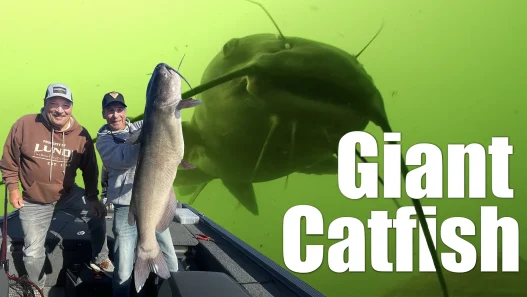






The Shift from Froggin’ to Feeder Rivers
Upon reading water conditions, what started as a search for a topwater largemouth frog bite quickly turned into a textbook smallmouth adventure. With water levels abnormally high, the largemouth weren’t playing. The decision was made to pivot, and that shift led to some of the best smallmouth fishing of the season.
High water conditions forced smallmouth bass out of the main channels and into narrow feeder creeks, often in surprisingly skinny water. As the water level began to drop, those same fish filtered back downstream, settling in transitional zones where smaller rivers empty into larger systems. It’s here—where the clear water of the feeder meets the chocolate milk of the main river—that schools of fish congregate in droves.
Understanding High Water: A Blessing in Disguise
To the untrained eye, conditions might have looked bleak. The main river was five feet above normal, leaving the banks flooded and the water a murky mess. But experienced anglers know that high, dirty water doesn’t necessarily mean bad fishing—it just means you have to move with the fish. The secret? Follow the clear water.
These high water events occur across a variety of river systems, and the behavior is consistent whether you’re targeting smallmouth, walleye, muskie, or catfish. As water clarity becomes more important, fish will instinctively search for cleaner conditions—often leading to the mouths of tributaries.
Sight Feeders Seek the Sun
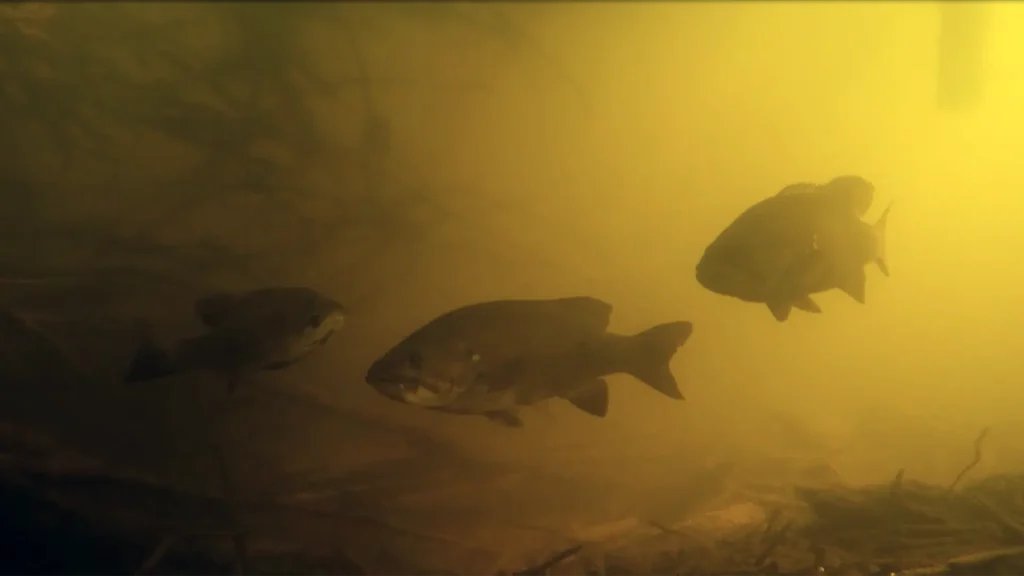
Smallmouth bass are primarily sight feeders. While largemouth may still feed in muddy conditions, smallmouth actively avoid it. These fish will find the clearest water available and stack up in predictable locations: current seams, slack water behind obstructions, and areas with plenty of sunlight. Yes—sunlight. Unlike many freshwater species, smallmouth prefer sunny, midday feeding windows.
As the sun climbed, so did the action. The afternoon bite came alive with aggressive strikes and acrobatic leaps. “They like sun. They like to bite in the middle of the day. And they love topwater,” the anglers observed. That preference for sunshine and heat makes humid, high-sky afternoons one of the best times to target river bronzebacks.
The Skitter Prop: A Topwater Favorite
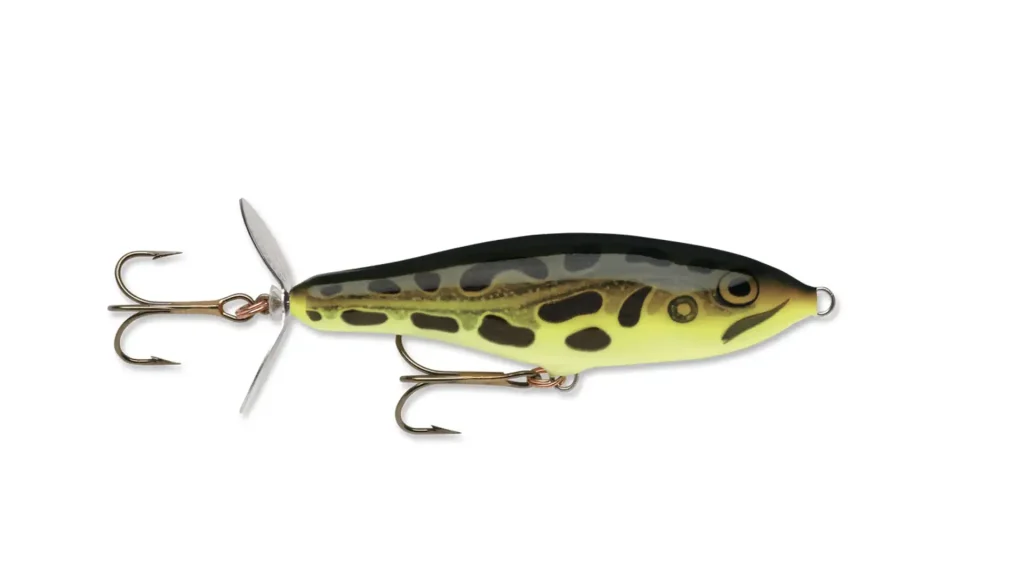
The bait of choice was the Rapala Skitter Prop, a propeller-style topwater lure that excels in river conditions. Fished on 14-pound monofilament for better surface buoyancy, the bait produces enticing plops and spins that drive smallmouth wild. Even as it drifts downstream, the spinning rear blade continues to churn, making it a deadly tool for both active retrieves and passive presentations.
Using a fast 8.1:1 Tatula SV baitcaster reel, drag was set light to accommodate the powerful runs smallmouth are known for. The goal: let the fish grab the bait, drop back slightly, and then gently lift into them rather than setting hard. This method resulted in consistent hookups and minimized lost fish.
Boat Positioning: A Crucial Element
Effective river fishing isn’t just about what bait you throw—it’s about how you position the boat. Casting to current breaks and slack-water zones behind logjams, the anglers used Minn Kota Talon shallow-water anchors to silently pin themselves in key locations. In just three to four feet of sandy-bottomed water, they were able to dissect current seams, cover edges, and ambush points without spooking fish.
Precision, Versatility, and a Big Finish
With the fish on the move and water levels continuing to drop, the team made full use of every tool at their disposal—particularly the shallow-water anchors like the Minn Kota Talons. These anchoring systems allowed them to stop and hold the boat in fast current instantly. Whether targeting smallmouth, walleye, muskies, or even catfish, these shallow-water anchors proved invaluable for precise boat control in river environments.
The anglers adapted to the fish’s behavior throughout the day. As water dropped, smallmouths moved slightly off the banks and into nearby current seams. By dragging a light tube jig just off these edges, they found excellent success. Tubes proved deadly when swept in front of deeper logjams and wood cover, especially when the fish weren’t hugging the banks like they had been earlier.
Gear That Gets It Done
From topwater skitter props to tube jigs, and from spinning setups to baitcasters, versatility ruled the day. Despite starting with largemouth gear, the crew had plenty of backups on deck thanks to a boat full of St. Croix rods and Daiwa reels, including classics like the Legend Elite and high-performance options like the Tatula SV and Zillion.
When targeting mixed cover—sand, wood, and rock—bait selection varied accordingly:
- Topwaters like the Skitter Prop were universally effective.
- Spinnerbaits shined in wood-heavy areas.
- Swimbaits and crankbaits like the Rapala Rocko worked best over rocky flats.
- And the tube jig remained a reliable option for finesse presentations in clear seams.
Double Trouble and Tournament-Caliber Fish
The action peaked in true river smallmouth fashion: chaotic, exciting, and doubled up. In one unforgettable moment, both anglers hooked fish from the same pod, resulting in a tangle of lines, lures stuck in the net, and laughter over a full-blown smallmouth-induced fiasco. Despite the mess, the result was worth it—a couple of solid fish, one of them possibly the biggest of the day.
It was also a reminder of the strength and stubbornness of river smallmouths. Unlike largemouths, they don’t roll over easily. They pull hard, use the current to their advantage, and refuse to come quietly. Landing one big fish turned into a battle, with adrenaline-pumping tension as the anglers worked the fish in and avoided disaster.

