


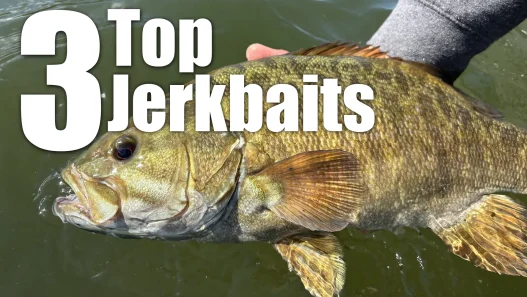








Using a range of river smallmouth fishing lures, James Lindner and Jake Wallace spend the day capturing large river smallmouth bass.
River Bass in the Mid-Summer: A Playground for anglers
The rivers of Minnesota, the renowned state with 10,000 lakes, are another angler’s secret. Despite being frequently overlooked due to the large number of lakes in the state, Minnesota’s river systems provide excellent smallmouth bass fishing, especially during the summer.
Anglers Jake Wallace and James Lindner explore the subtleties of pursuing summer smallmouth in moving waters in this river expedition, offering their knowledge, best practices, and enthusiasm for river fishing.

Mid-Summer Conditions and Topwater Magic
Midsummer fishing offers some of the best chances to catch smallmouth bass. Bass have moved from feeder creeks back into the main river channels this season following a spring that was characterized by high water levels and a lot of rainfall.
These fish concentrate in main river locations, which are ideal for topwater action, and become extremely predictable as the water levels stabilize.
Anglers can keep lures in the strike zone for longer with topwater baits, especially poppers and prop baits. These lures have the ability to elicit forceful surface strikes with the correct retrieve and perseverance. With early success, Jake and James show how effective and enjoyable this technique can be by landing multiple doubles.
Recognizing River Structure and Smallmouth Movement
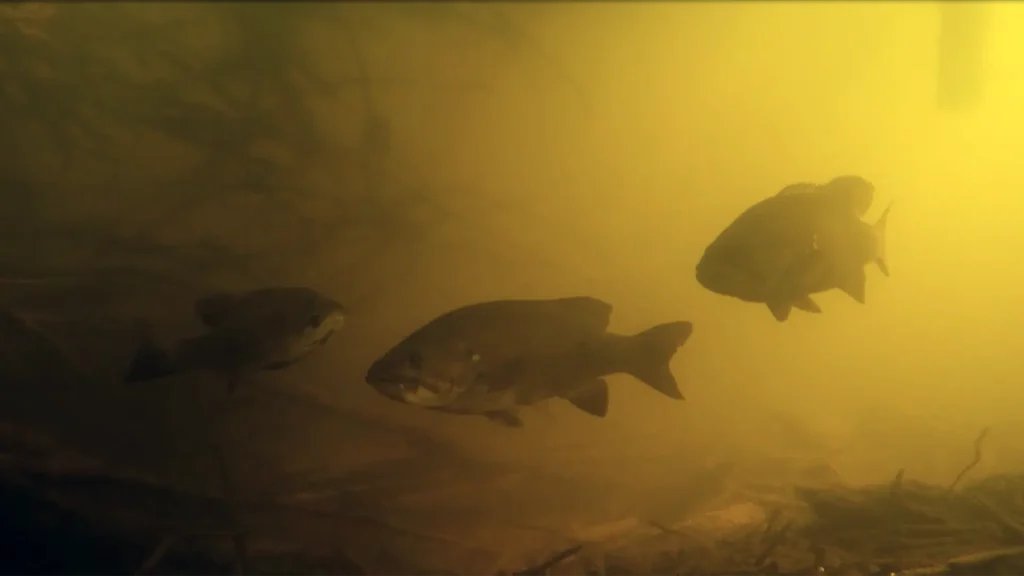
Knowing the smallmouth bass’s seasonal movements is essential to successful river fishing. Throughout the year, these highly mobile fish frequently travel 20 to 30 miles within a river system. They store in deep pools above or below dams during the winter.
They are forced into backwaters and tributaries by spawning desires and rising water levels in the spring. Attracted by oxygen, food, and current, they return to swift, shallow sections of the main river by midsummer.
Current seams, eddies, rocks, woodpiles, and other structural features that disrupt the water’s flow must be closely observed by anglers. These are strategic feeding locations as well as holding areas. Large sections of the river may contain few or no fish, but certain, high-percentage locations are where fish gather.
Prepare: Crucial Rods, Reels, and Lines
Equipment is important for a successful river smallmouth landing. James stresses the use of a baitcasting setup with a Daiwa Tatula 150 high-speed reel and 17-pound Sufix monofilament line for topwater fishing.
Longer casts are made possible by the larger spool, which is essential for covering broad, shallow areas. His preferred rod? The 7’1″, medium-heavy, quick-acting St. Croix Mojo Bass is perfect for handling aggressive fish and long-range hooksets.
In order to handle the powerful runs and dynamic strikes of river smallmouth, topwater presentations require the proper equipment, especially when employing larger lures with heavy treble hooks.
Identifying Feeding Zones by Reading the River
It is extremely valuable to be able to interpret the river visually. According to Jake and James, reading the water involves more than just identifying areas that “look fishy.” It’s about comprehending the relationship between current and structure. Food is pushed downstream by fast current, and predators can ambush at flow breaks. Seek out spots where the flow slows, such as at the mouth of side channels or behind logs or rocks.
Smallmouth will move to the front of these structures to feed during times of high activity. They frequently fall farther downstream or slide into slack water when dormant. Bass are not the only fish that follow this pattern; walleye, trout, and steelhead all do the same.
Comparable Attractions to Cover
Although topwater is thrilling and efficient, it is not a universally applicable solution. Certain lures work better on different types of cover, such as wood, rocks, or weeds.
Because of their snag-resistant construction, spinnerbaits are particularly effective in wooded areas. Swimbaits and tubes provide versatility for probing eddies and seams, while crankbaits are best suited for deeper rock formations.
Jake and James alternate between a number of presentations during the day. Using a 2.5″ tube provides instant success when the topwater bite slows, particularly along deeper current seams. This tactical change is based on the location and behavior of the fish.
Power and Finesse
Jake displays a sophisticated finesse setup that strikes a balance between strength and sensitivity. He uses a Daiwa Procyon 3000 series reel in conjunction with a St. Croix Legend Xtreme 7’10” medium-light power, extra-fast action rod. When fish are bulldogging in current, the rod’s length and action offer superior control and shock absorption.
His line setup consists of a 12 lb. Sufix Advance fluorocarbon leader, which is heavier than usual for smallmouth fishing, coupled to a 10 lb. Sufix 832 braided main line. The additional strength required to turn strong fish in strong current is provided by this upgrade.
Founded on Innovation: Instruments That Change the World
As the action on the water gets more intense, it’s important to remember that technology plays a vital supporting role and that skill and instinct are not the only factors that lead to success. Surprisingly, the Talon shallow water anchors and the Minn Kota trolling motor with Spot-Lock are two of the most crucial pieces of equipment in the boat. Depending on the circumstance, these tools are frequently and interchangeably used.
Whether holding a precise position over a productive current seam or drifting slowly downriver, the ability to “pin” the boat with the push of a button has fundamentally changed the way many anglers fish. Their importance may not be immediately apparent at first, but after fishing with them, you will quickly see how essential they are.
The landing of a very remarkable smallmouth bass is one of the day’s highlights, and in this instance, they have contributed to the setup for it. The angler exclaims, “Oh wow, she’s a whopper!” and it’s obvious that this is a fish to remember from the battle to the last net scoop. He remarks, “That’s what you call a fun day on the water.”
The Secrets of the River: Displays and Trends
The proper lures, careful presentation, and an accurate knowledge of current breaks—those crucial locations where fish hold to ambush prey—are all necessary for river smallmouth fishing. It can make all the difference to know how fish position themselves in flowing water and adjust your cast and retrieve accordingly.
Boat control, retrieval speed, casting angle, and bait selection are all important factors. It all comes down to reading the water, reacting to subtle cues, and remaining flexible throughout the day. When it all comes together, it’s an exhilarating experience. It’s a dynamic, cerebral style of fishing that offers continuous engagement.

