








Shallow Water Walleyes on Lake Vermilion’s Rock Humps
Catching shallow water walleyes is a viable option throughout the seasons. Utilizing the depth highlight feature of the Hummingbird’s Lake Master DX chip to locate prime shallow water walleye structures makes it that much easier to find fish. It’s often as easy as setting your unity to show anything between five and ten feet as green on their fish finder. Then simply move from spot to spot, looking for the highlighted areas to find fish.
Early-Summer Walleye Tactics on Lake Vermilion’s Rock Humps
A Classic North-Woods Scene
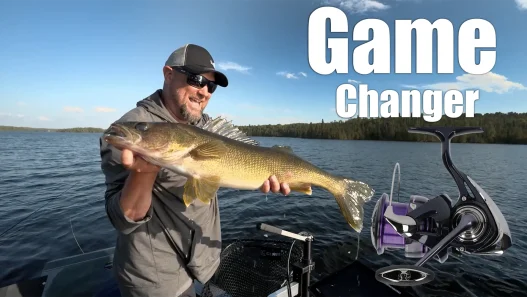
The slip-bobber twitched, paused, and plunged beneath the surface—a telltale sign that another Lake Vermilion walleye had found our bait. Seconds earlier we had watched the fish glide up the 6-foot crown of an isolated rock hump on forward-facing sonar, slide toward the dangling leech, and commit. That visual confirmation, followed by the heavy head-shakes of a “sporty model” in the net, set the tone for a day of textbook structure fishing on one of Minnesota’s most dynamic walleye factories.
Why Lake Vermilion Shines
Carved by glaciers and peppered with hundreds of islands, Vermilion offers every imaginable form of walleye habitat—weed-lined bays, expansive sand and mud flats, main-lake points, and, most importantly for this outing, untold numbers of mid-lake rock humps. Many of these humps top out in less than 10 feet of water yet are surrounded by 20–30 foot basins, creating perfect ambush points as post-spawn fish filter out of adjacent bays.
The Electronics Advantage
Today’s success hinged on pairing forward-facing sonar with 360-degree imaging:
- Forward-facing sonar let us pinpoint individual fish up to 50 feet ahead of the boat, so we could cast without driving over and spooking them.
- 360 imaging revealed how key boulders and spines were arranged on each hump, allowing precision casts to high-percentage spots such as the inside corner of a rock ridge.
Seeing a bright mark materialize on the screen, pitching a jig or slip-float directly to it, and watching the bobber disappear moments later never gets old.
Mapping: Color-Coding the Sweet Spots
With a Humminbird LakeMaster VX chip we shaded the 5- to 10-foot band in bright green. That simple depth highlight turned a maze of reefs into an efficient milk-run—hop from one green crown to the next, scan for fish, cast, and move on. If a hump looked barren, we slid to the next; when we spotted arches, we stayed and went to work.
Presentations for a Cold-Front Morning
A hard north wind the night before dropped surface temps and pushed walleyes tight to the tops of the humps. Finesse was the answer:
- Slip-bobber & leech: A 1⁄16-oz Moon-Eye jig beneath a float let the bait hover naturally.
- Crawler chunk on a light jig: Halving a nightcrawler slowed the fall and tempted skittish fish in 6 feet of water.
The result was a steady parade of “edible models” and the occasional brute—thick-bodied gold bars pushing well past the slot.
Big-Fish Moments
One heavyweight inhaled a half-crawler and surged boat-side before revealing itself—a Vermilion mule with the broad shoulders and beer-can girth the lake is famous for. Fish like that, common enough here to keep anglers optimistic yet rare enough to make every encounter special, illustrate why Vermilion belongs on every walleye angler’s bucket list.
Seasonal Movements on the Humps
Early in the season, the first outer humps adjacent to spawning bays are prime. As summer progresses, expect fish to slide to deeper crowns and eventually to the hard-to-soft transitions ringing each hump’s base. Knowing when—and how—to adjust from slip-floats to crankbaits, or from shallow jigging to deep bottom-bouncers, is the key to staying on active schools.
Following the Migration: Seasonal Strategy on Vermilion’s Rock Humps
As the seasons shift, so too does the positioning of fish in Lake Vermilion. In early June, walleyes stage on the shallow crowns of rock humps near the mouths of bays—essentially the first stop after spawning. But as summer progresses, the fish migrate in waves, pushing toward deeper offshore humps surrounded by 25 to 40 feet of water. Once you identify the right depth range and structural profile, you can replicate the pattern lake-wide. It’s a roaming game, but a predictable one.
And it’s not just walleyes. This seasonal progression also applies to muskies, smallmouth, and even bluegills. Lake Vermilion fishes like a mini Lake of the Woods—thousands of islands, complex structure, and a depth-fueled ecosystem that supports multi-species abundance. As one angler said from experience: “I’ve caught oodles of big fish out of this lake—walleyes, smallmouth, muskies—even some dandy ‘gills today.”
Tackle Breakdown: A Proven Slip-Float Setup
One of the standout rigs for this kind of early-season, shallow structure fishing is the St. Croix Icon Drift and Float rod. At 8 feet, it’s ideal for casting floats away from the boat while maintaining the leverage needed for solid hooksets. The rod is paired with a Daiwa Ballistic 2500 reel, which offers a buttery smooth drag—perfect for handling everything from eater-sized ‘eyes to rogue pike.
The rest of the setup includes:
- Sufix 832 braid (10 lb) as mainline
- A small bullet weight and swivel
- 4 feet of 10 lb fluorocarbon leader
- A 1/16 oz VMC Moon Eye Jig
- And, of course, a live leech
This setup not only tempts walleyes, but also brings in panfish, pike, and smallmouth bass. It’s been a versatile, go-to combination all summer long.
A Perfect Day—and a Perfect Ending
Fish after fish rolled into the net, from healthy slot-sized keepers to slab-sided Vermilion mules. The day produced a pile of quality walleyes—many caught visually thanks to sonar—and reinforced why these reefs are year-round producers. Over time, anglers return to the same rock piles, boulder lines, and soft-to-hard transitions, because structure doesn’t change—and fish behavior, if you understand it, is reliable.
The lake’s diversity is part of the magic. These same reefs will soon hold bronzebacks and muskies. And every piece of structure has its own identity—cups, spines, sand fingers, boulder clusters. Learn them once, and they’ll reward you year after year.

