




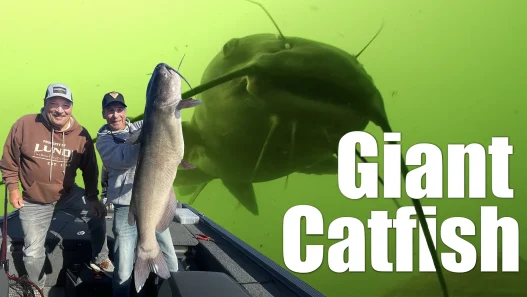






Al, James, and Nick Lindner disclose spring catfishing techniques sure to put pounds of pot-bellied channel cats in the boat!
Channel Catfish: America’s Unsung Sport Fishing Hero
Baseball, hot dogs, mom’s apple pie—and channel cats? It might sound surprising, but channel catfish are one of the most widespread and beloved sport fish across American waters. Found in everything from creeks and ponds to sprawling reservoirs and mighty rivers, the channel catfish has become an iconic species for anglers nationwide. According to surveys, catfish rank as the third most popular species among American anglers, and for good reason.
While their whiskered faces and shovel-like heads may not win beauty contests, don’t be fooled—channel catfish are a powerhouse combination of sport and table fare. They deliver drag-screaming runs and rod-bending power that can rival any freshwater game fish, all without the need for specialized gear or expensive tackle.
Simplicity Meets Sport: Getting Started with Channel Cats
One of the best things about chasing channel cats is its accessibility. All it takes to get started is a hook, line, sinker, and a bait with a scent that can knock you off your feet. Whether it’s classic stink bait, chunks of sucker or smelt, or even unorthodox choices like bubblegum or Spam, there’s no bait too pungent for a channel cat. In fact, the stinkier, the better.
Channel catfishing can be tailored to suit any angler’s style—plant a rod in a piece of driftwood and wait, or use high-tech electronics to run and gun. Either way, there’s no wrong approach. And when it comes time to eat? Smaller channels are prime for the pan—soak them in milk, dredge in cornmeal, and fry to golden perfection.
Big Fighters and Good Friars: A Win-Win
Al James and Nick Linder shine a spotlight on exciting channel catfish opportunities. As the action kicks off, the duo proves that good catfishing might be closer to home than you think—especially if you live near a river.
Within minutes, the rods are bending. “Got him already?” “Whoa!” The excitement is palpable. The misconception that catfish are sluggish bottom dwellers quickly fades as the anglers wrestle with aggressive strikes in fast-moving water. These fish aren’t nibbling—they’re attacking.
The Spring Bite: Finding Cats in the Current
Early season channel cats have a tendency to congregate in predictable spots. Barriers like dams are magnets, but so are other river features where current breaks and fish can gather. “Boy, this current is just ripping in here,” Al observes. In these conditions, cats are there for one reason—feeding. And they do so with gusto.
While wrangling one particularly stubborn male, Al notes how rapidly the fish hit the bait in fast water. Unlike the slow, tentative bites often associated with catfishing, these river cats hit hard and fast.
Northern Catfishing on the Rise
Traditionally, catfishing has been a staple pastime in the southern and midwestern United States, where anglers have pursued channels, blues, and flatheads for generations. But interest is growing rapidly in the northern states. Thanks to increasing media coverage—magazines, newspapers, and television shows—catfishing is gaining well-deserved recognition.
The growth of bass fishing was driven by exposure and storytelling. Now, the same is happening with catfish. As more people share their passion and experiences, the excitement continues to spread—and it’s a win for everyone in the angling community.
Tools of the Trade: Hooks, Rigs, and River Spots
On this outing, Al and Nick are using VMC Tournament Circle Hooks. These hooks shine in snaggy environments like submerged wood, thanks to their shape which helps avoid hang-ups. “They work really nice,” Al says, praising their effectiveness and practicality.
As the action heats up, Nick takes on the role of bait cutter and net man—occupational hazards for the youngest guy on the boat. But it’s all in good fun, and the bites keep coming fast.
The duo positions the boat in about 20 feet of water, using heavy sinkers to drop their baits straight down. Interestingly, the water level has risen by two feet since their last trip, shifting the fish from a 35-foot deep current seam to their current location. It’s a clear lesson: current speed is everything. Cats avoid the chaotic “washing machine” turbulence and favor stable, fast-moving water with nearby slack areas—eddies and current seams are the hot zones.
Tailwater Hotspots and Easy Access
As far as location goes, tailwaters below dams offer some of the most consistent catfishing bites year-round. Even when seasonal patterns shift, there are always fish holding in these areas. “You can bank fish a lot,” Al notes, pointing out how these spots provide opportunities even for anglers without boats.
A Love Letter to Channel Cats
Whether it’s the fight, the fry, or the fun of being outdoors, channel catfish have a special place in the hearts of anglers like Nick, who quips, “I love them so much that I went to Grand Forks for college.”
The beauty of chasing channel cats lies in its simplicity, accessibility, and the sheer fun of the experience. And as we’ve just begun to see, there’s a lot more catfishing action to come.
Essential Gear and Tactics for Catfishing in Fast Currents
One of the most important aspects of targeting catfish—especially in rivers like the Red River—is choosing the right bait and gear.
As the hosts explain, natural baits like sucker minnows or “munis” are most effective, particularly in the fall when frog migration triggers a spike in big catfish feeding activity. Frogging during this seasonal shift can produce some incredible bites.
Rod, Reel, and Line Setup
The recommended gear is both straightforward and reliable. Paired with it is a Daiwa 300 size reel, which is critical due to its larger line capacity. While 25-pound monofilament is one option, both Jimmy and Nick prefer heavy braid, which also works well. Ultimately, the choice between mono and braid comes down to personal preference, as both can handle the fight from hefty blues or flathead.
Pinpointing the Bite Zone: Reading River Currents
A recurring theme in this episode is the critical role that current seams play in river fishing. Success depends heavily on boat positioning. Even being just 25 to 30 feet off the key seam can mean the difference between a productive outing and a fishless one.
Catfish tend to sit right along the seam where fast current meets slack water, hugging the bottom. Presenting your bait directly in this transition zone can yield one bite after another.
Anchoring, Spot-Locking, and Boat Control
Traditionally, many catfish anglers anchor in rivers. But with the Minn Kota Ultrex trolling motor, that’s no longer necessary.
This powerful motor, particularly with its Spot-Lock feature, allows anglers to maintain a fixed position in heavy current without physically anchoring. With speeds exceeding five to six miles per hour, the ability to hold steady over a productive seam is a game-changer. It’s become an indispensable tool for these anglers, useful across many species and fishing situations.
Rigging for Results
When it comes to catfish rigging, options like spinner rigs, spinning glows, and the classic Santee Cooper rig are all effective. The Santee Cooper setup—featuring a float and a three-way rig—is popular for its simplicity and ability to present bait enticingly in heavy current.
However, one often overlooked factor is sinker weight. In fast-moving water, a heavier sinker—around five ounces—can dramatically improve results by keeping bait pinned tightly to the bottom. A lighter sinker might drift too much, missing the strike zone where catfish are tightly hunkered down.
Leveraging Advanced Sonar Technology
As the crew transitions into exploring a new stretch of river, sonar becomes a critical tool. The area features a classic catfish-holding structure: a shallow flat dumping into a deeper hole.
Using three different types of sonar—2D, down imaging, and side imaging— the team scans both fish and underwater cover. The Humminbird Helix 10 with Mega Imaging offers unparalleled clarity, allowing them to see boulders, bridge abutments, and fish hunkered in current breaks with stunning detail.
Hooking Up and Hooked In
Their detailed strategy pays off quickly. With perfect boat positioning and precise bait placement, a strong catfish hits, rolling and thrashing on the surface. The joy in the fight is palpable—these fish are tough, and landing one brings both satisfaction and excitement.
As the adrenaline settles, the host offers a friendly challenge: “Most of you have never gone catfishing on purpose. Admit it.” But the truth is, great catfishing opportunities are often close to home, especially if you live near a river.
Catfish Tactics and Technology: Getting the Edge on the Water
Bait, Gear, and the Simplicity of a Proven Setup
When targeting big channel cats in river systems, choosing the right bait and rig setup is essential. While various baits can be effective, the team emphasizes the consistent success they’ve found with cut bait, specifically suckers or “muni” (likely a regional term for a type of baitfish).
In fall, the seasonal frog migration presents an outstanding opportunity—frogs become a dynamite bait choice for catching large catfish.
As for the tackle, simplicity and durability are key. The preferred rod in this scenario is the St. Croix Mojo Catfish Rod, paired with a Daiwa 300-size reel.
That 300-size reel is crucial—it holds plenty of line, which is important when fishing for large cats or even transitioning to flatheads or blue cats in southern waters.
Whether you’re using 25-pound mono or a braid, the important thing is to have gear that can handle big fish and strong current. The setup may be straightforward, but it’s highly effective.
Boat Positioning and Current Seams: The Critical Details
Success in river catfishing hinges not just on bait and gear but also on boat positioning. As highlighted in the show, fishing just 25–30 feet off the right current seam can mean catching nothing—while sitting on the seam can produce consistent bites. Fish often hold tight to the line between fast current and slick water, and that’s where your bait must be placed—pinned to the bottom.
To help maintain pinpoint positioning, the crew relies on the Minn Kota Ultrex trolling motor with Spot-Lock functionality. In fast-moving water, this feature proves invaluable. The Ultrex keeps the boat locked in place regardless of current strength—essential when precise placement is the difference between action and silence.
Rigging Options and the Power of a Sinker
Various rigs can be used for river cats, including spinner rigs, spinning glows, and the classic Santee Cooper rig. The Santee Cooper is simply a three-way rig with a float and the bait suspended behind it. But one of the most critical elements—often overlooked—is the weight of your sinker.
In strong currents, if your sinker doesn’t keep the bait locked on the bottom, you won’t catch fish. A five-ounce sinker made all the difference during a recent outing—lighter weights weren’t holding, and no bites came until the adjustment was made. Sometimes, such subtle tweaks in presentation result in dramatic improvements in success.
Technology That Changes the Game
Tools like Humminbird’s Mega Imaging bring an entirely new level of clarity to understanding the riverbed. In this trip, the team used 2D sonar, down imaging, and side imaging on the Helix 10 to identify fish, structure, and cover.
Side imaging in particular revealed bridge abutments, isolated boulders, and even individual fish holding in current breaks—likely catfish, carp, and suckers. The clarity and accuracy of the sonar allows anglers to position with confidence, knowing they are fishing where the fish are.
Hooking a big channel cat is more than just a tug—it’s a battle. The team relished every second of the powerful runs and surface rolls of hefty catfish. The fish were thick, strong, and gave a great account of themselves. Sharing the moment with fishing partners added to the excitement, as fish were lip-locked and admired before being released or added to the livewell.

