




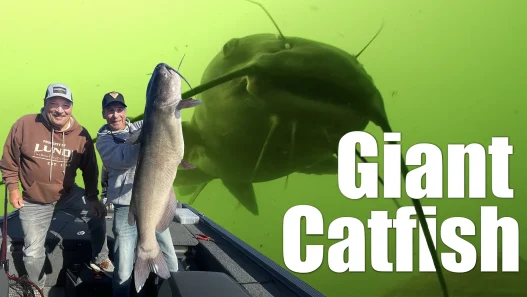






Jim Lindner and Jeremy Smith go on the hunt structure fishing musky by utilizing a combination of today’s electronics and no-nonsense presentations.
Unlocking the Secrets of Perrault Lake: A Multi-Species Adventure in Sunset Country
Discovering an Untapped Gem in Northwestern Ontario
Nestled deep within the heart of northwestern Ontario’s iconic Sunset Country lies a hidden gem that’s starting to turn heads—Perrault Lake. Tucked just off the beaten path, this lesser-known Canadian Shield lake boasts impressive populations of three of the region’s most sought-after gamefish: smallmouth bass, walleyes, and of course, muskies.
In mid-August, our team set up camp at Manotak Lodge, strategically located to take full advantage of the lake’s multi-species bounty. From the get-go, it was clear: this lake is a structure angler’s dream and a must-visit for any serious northern fisherman.
Breaking Down the Water: Keys to Unlocking the Bite
Perrault Lake, like many Canadian Shield waters, can appear overwhelming at first glance. With endless points, weed beds, islands, saddles, and humps, not all “fishy” looking spots are created equal. Success hinges on investing time with quality electronics and understanding the lake’s layout.
The most effective way to maximize your trip? Drive the lake. Use your electronics to identify prime habitat and food sources before wetting a line. As we explored, we used Humminbird’s Helix units paired with a Zero Lines SD card to map uncharted areas using AutoChart Live. This tech allowed us to build real-time maps while scanning for key features—broadleaf cabbage beds, food-rich saddles, and mid-depth flats.
And then—bam! Fish on. First it was a chunky little muskie lurking in a cabbage patch, then a blitz of multiple species each time we returned to productive structures.
The Prime Time Pattern: Weed Beds, Flats, and Food
August in Sunset Country means the ecosystem is relatively stable: smallmouth and muskies tend to relate to water 15 feet and shallower, while walleyes typically hold a bit deeper, around the 15–25 foot mark. That said, the real game changer is identifying “food shelves”—expansive flats loaded with baitfish and rich in vegetation like cabbage, especially when interspersed with rock.
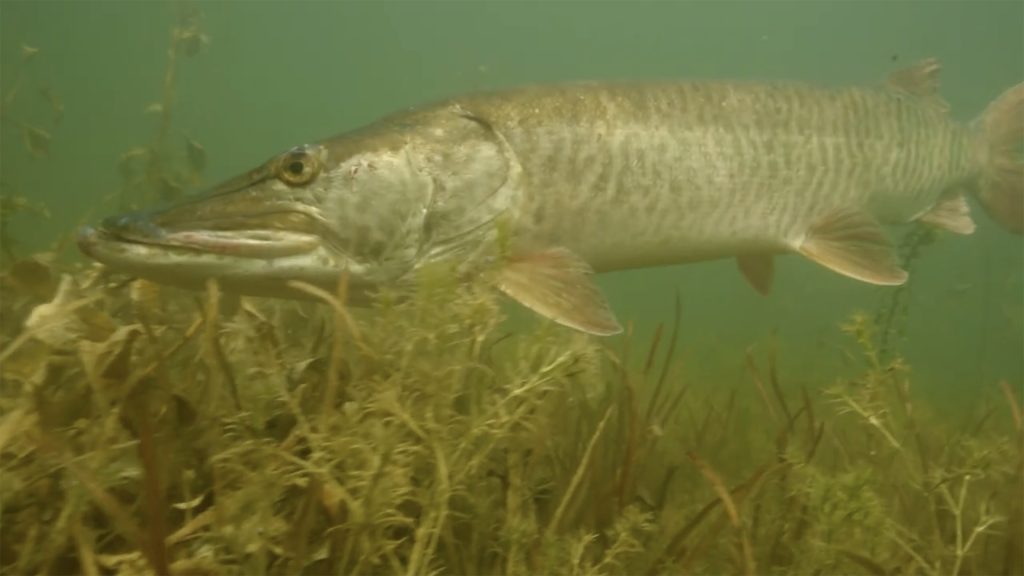
Our go-to musky zones were 8–12 foot deep cabbage beds. These “forests” of aquatic vegetation act as smorgasbords for predator fish. In some of these beds, we saw four or five muskies stacked up—an angler’s dream.
And when it comes to triggering strikes? Speed kills. We burned Blue Fox bucktails across the tops of these weed beds with near-reckless speed. The result: vicious reaction bites from hungry muskies. Even smaller fish hit with an attitude.
The Importance of Structure and Cover
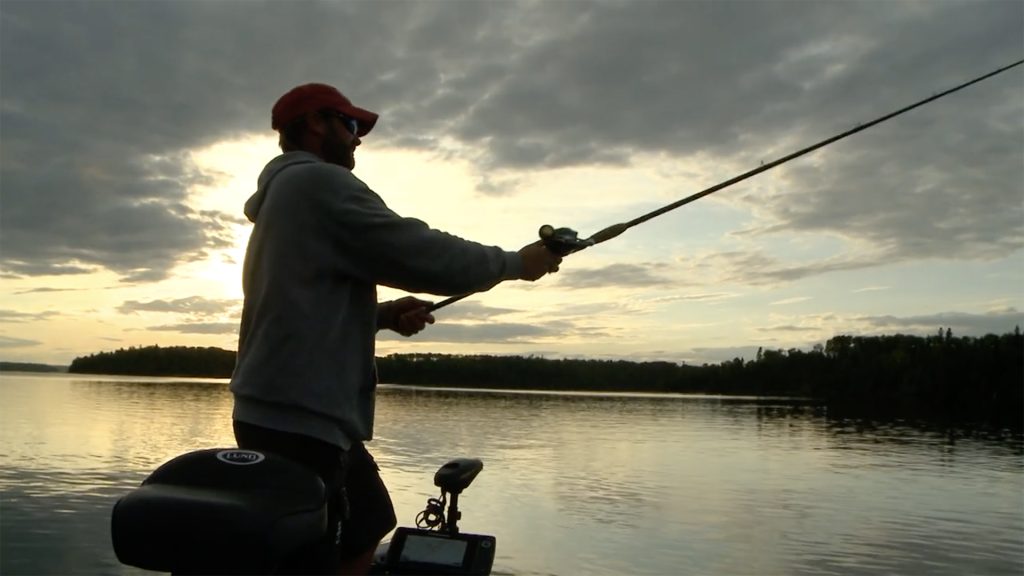
To clarify for newer anglers: structure refers to the underwater shape of the lake bottom—points, flats, saddles, sunken islands. Cover, on the other hand, is what sits on the structure—weeds, rocks, or wood. In the Shield, structure fishing isn’t just a tactic, it’s a necessity. Learning to visually and electronically dissect structure to assess its cover is the key to consistent success.
Case in point: One of our top-producing spots was a rock tabletop saddle, flanked by weed beds and teeming with bait. The first time we fished it, we encountered a muskie. During a second pass at moonset, another muskie crushed a burning bucktail.
Multi-Species Mayhem: Timing is Everything
To get the most out of our five-day adventure, we fished smart. When the lake was flat, calm, and sunny, we chased smallmouth along the rocky shorelines and mid-depth flats. When clouds rolled in and a classic “walleye chop” formed, we targeted deep breaks with jigging baits like the Jigging Rap.
This mobile strategy paid off in a big way. We pulled up on a walleye spot, checked the electronics, and hooked into a giant within a minute—a thick, golden specimen that defines the Ontario experience. And there were plenty more where that came from.
From chunky muskies and deepwater walleyes to high-octane smallmouth, Perrault Lake delivered on all fronts—and we were only getting started.

Mastering the Search-and-Destroy Approach: Finding and Catching Big Fish Fast
The process of finding productive water on a new lake like Perrault isn’t just about dumb luck—it’s about strategy, technology, and efficiency. When you’re dealing with vast expanses of Canadian Shield water, dialing in on fish quickly requires what we call “search-and-destroy” techniques.
One of our most effective tools in this arsenal was the Jigging Rap—a highly efficient bait that allows you to cover a wide range of depth in a short amount of time. For deep-water walleyes, nothing beats it. In shallower areas, bottom bouncer rigs or crankbaits can be used just as effectively, allowing you to explore different zones without wasting time.
With only one rod per angler and the boat gliding over key depth contours, we were able to cast immediately when the electronics lit up. And when the bite came, it often came big.
Encountering a True Giant
It wasn’t long before the electronics revealed a prime area. One cast, one thump—and then all hell broke loose.
“This is a huge walleye. Huge, huge, huge one.”
The fish that surfaced was nothing short of jaw-dropping. A massive trophy walleye that dwarfed our net and stunned us with its sheer size. It popped off just as it hit the cradle, but the experience was unforgettable. Easily one of the largest walleyes we’ve ever caught, proving that Perrault Lake isn’t just about numbers—it’s about quality.
And it wasn’t a fluke. Moments later, another monster walleye was boated. Big fish on top of big fish. A pattern was developing, and it was clear—this lake holds a serious population of trophy-caliber walleyes.
Fish the Spot Thoroughly—It’s Worth It
Whether targeting walleyes or muskies, one key takeaway from Perrault Lake is this: good spots hold multiple fish.
A common misconception is that big muskies are solitary giants guarding their territory. But the truth is, the presence of a big fish often indicates that the area is rich in the resources—cover, structure, baitfish—that grow big fish in the first place.
We had numerous encounters in a single weed saddle, including a heartbreaker: a huge muskie lost boatside after a solid hookset. But perseverance paid off. Another muskie came soon after—a powerful, healthy fish that hit with a vengeance.
Conservation First
Whether you’re fishing pressured waters or the pristine lakes of the Ontario wilderness, it’s critical to treat every muskie with care. While it’s tempting to net every fish for photos, unnecessary handling or rough landings can harm these delicate apex predators. Use a net only when needed, keep them wet, minimize time out of the water, and release quickly.
A Day to Remember: 30 Muskie Encounters
By day’s end, we were reflecting on a milestone that few anglers ever experience:
“This was the 19th muskie encounter we’ve had today.”
When the dust settled, that number had climbed to 30 muskie encounters in a single day—including several fish in the 25- to 40-pound class. It was nothing short of phenomenal. These results didn’t happen by chance. They were the outcome of extensive scouting, reading the water, and trusting our electronics and instincts.
Tools of the Trade: Downsizing for Success
Modern muskie fishing is shifting. While big baits still have their place, the trend toward finesse and downsized gear is opening new doors—especially for covering water efficiently without fatigue. The St. Croix Legend Tournament Downsizer Series is purpose-built for smaller muskie presentations like small bucktails, crankbaits, and jerkbaits.
Matched with a Daiwa Lexa 300HD and 65-pound Sufix braid, this setup allows for long, accurate casts and all-day comfort—perfect for executing the high-volume casting needed in today’s muskie game.
Moonrise Magic
Timing is everything in muskie fishing, and that couldn’t have been more evident than during our final moonrise session of the day. Despite clouds of mosquitoes, we stayed on the water and were rewarded with a ferocious strike at the end of a cast—followed by a rare follow-up strike on a figure-eight.
That moment was special. Not just because it was another muskie in the net, but because it was a clear example of what happens when preparation meets opportunity.
“That fish wanted it. It bit three times.”
That kind of persistence—both from the angler and the fish—is what makes muskie fishing so unique and addictive.


