









Fish When You Can, Not Just When It’s Easy
One of the most valuable pieces of advice seasoned anglers give—especially to beginners—is simple but powerful: go fishing every chance you get. Whether it’s sunny, stormy, windy, or calm, putting your boat in the water teaches lessons you can’t learn from the dock. Fishing in a variety of conditions pushes you to experiment with different lures, techniques, and parts of the lake. On days when others stay home due to “post-frontal” conditions or high winds, you just might stumble upon an incredible bite. Consistent time on the water builds instinct, insight, and confidence.
When Plan A Fails, Improvise
On this particular trip, the original plan was to film a frog fishing show. But with wind gusts hitting 30–40 mph, launching at the first two lakes was impossible. Rather than packing it in, the team pivoted. Jim suggested a different nearby lake with protected back bays, shallow wood, and prime conditions for frog-style fishing. While it wasn’t the original destination, the willingness to adjust on the fly proved invaluable. That’s fishing—adapting to real-time weather and water variables.
Learning From Tough Conditions
Fishing a lake in less-than-ideal conditions can force you into a mindset shift. You’re pushed to explore areas and use techniques you wouldn’t under perfect circumstances, and in doing so, you become a more versatile and intuitive angler. New tactics get tested. Unexpected patterns emerge. And sometimes, fish hit when all logic says they shouldn’t.
Live Imaging & Locating Fish
In shallow, stump-filled water, today’s live imaging technology offers a major advantage. With tools like MEGA Live, 2D sonar, and MEGA 360, anglers can not only identify cover but also spot fish moving around it. That’s exactly what happened here. A fish showed up on live sonar, the jig dropped in, and the hookset followed moments later. This kind of visual feedback sharpens precision and builds confidence in your presentation.
Jigs for Post-Spawn Bass
After the spawn, largemouth bass often become selective and sluggish. A high-speed, heavy jig might be too aggressive. Instead, a lightweight jig with a slower fall can be the key to more bites. On this trip, a Terminator Pro Series jig paired with a Big Bite Baits Flappin’ Craw in green pumpkin proved effective. The slow fall kept the bait in the strike zone longer—an important detail when fish are wary or in recovery mode.
Target Fishing on Shallow Flats
Working shallow flats filled with isolated stumps, anglers focused on precision target fishing—flipping jigs to visible pieces of cover. This hands-on technique is as exciting as it is effective. Watching a bass blow up on your bait near structure never gets old. It’s about picking apart the best habitat—whether it’s isolated logs or patches of emerging weed growth—and putting the bait exactly where it needs to be.
Switch It Up: Neko Rigs and Ned Rigs
After working the flats with jigs, the team doubled back over the same areas with finesse tactics. This included a Neko rig—a simple but deadly system using a nose-weighted soft plastic with a wacky hook—and a Ned rig with a Big Bite Baits Trick Stick. Slowing down and presenting these more subtle baits triggered additional strikes from bass that passed on the jig. Changing lures and tempos often reactivates water that seems “fished out.”
Technology as a Game Changer
Using multiple sonar systems—MEGA Live, MEGA 360, and 2D sonar—helped uncover active bluegill beds and isolated bass-holding cover. Not long ago, anglers relied on basic sonar with far less clarity or range. Today’s tech provides a wide-angle understanding of the underwater landscape, guiding cast placement and increasing efficiency.
The Power of a Stick Bait
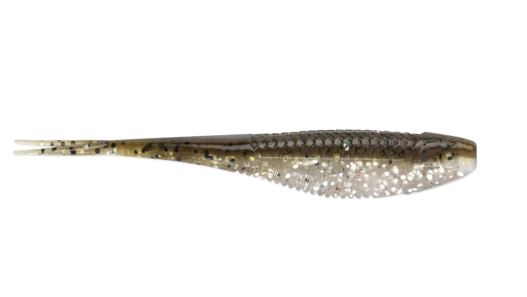
Few soft plastics are more universally effective than a stick bait. The Trick Stick, in particular, shines during post-spawn when fish are moody. Whether Texas-rigged, wacky-rigged, or on a Ned head, this unassuming bait gets results. Its slow, seductive fall and subtle movement make it irresistible to bass in a neutral mood.
ChatGPT said:
Frogging Finale and the Power of Matched Gear
As the winds continued to howl and conditions remained challenging, the team pushed deeper into protected bays, looking for one last bite. The reward came quickly—a double hookup and the first frog fish of the year. Despite 30–35 mph winds, the anglers broke out Terminator frogs, including newly released colors like the popping frog, and found success in less than a foot of water among scattered weed clumps. It’s a reminder that even in adversity, persistence and versatility pay off.
Frog fishing, like many techniques today, is highly presentation-specific. Al relied on a 7’6″ St. Croix Legend Tournament flipping rod, tailored precisely for heavy jig work. These rods—famous for their craftsmanship—have been re-engineered with new materials and actions to match modern fishing styles, offering 18 baitcasting and 8 spinning models for every imaginable scenario.
Alongside the rod, the Daiwa Pitchin’ & Flippin’ Elite reel, with its high-speed 8.1 gear ratio and narrow spool, enabled flawless line control with minimal backlash. Matched equipment like this isn’t just a luxury—it’s a tool that improves efficiency, accuracy, and ultimately, success.
Turning a Tough Day into a Great One
What began as a day threatened by high winds and blown-out lakes turned into a masterclass in fishing adaptation. From flipping jigs in shallow cover to slowing down with finesse presentations, and finally to topwater frog action, the day underscored the importance of flexibility. As Al aptly put it, “Making a tough day a good day” became the theme.
The team fished a new lake—only briefly explored in the past—and turned it into a learning opportunity and a productive trip. They caught bass, dialed in new tackle, and explored untouched backwaters. The key? Being open to change, staying positive, and fishing smart.

