








On this midsummer evening, a team of board fishing anglers—Ty, Jeremy, and James Lindner—set their sights on a thrilling challenge: catching trophy-class walleyes and possibly encountering other apex predators like muskies and pike.
The tools of choice are as diverse as the tactics. One angler kicks things off with a BX Swimmer 12, an imitation of the local forage. Another relies on the timeless appeal of the Rapala Original Number 18 Floater, while the third opts for a battle-worn Flat Rap, dubbed a “big fish killer” thanks to its scarred history.
Chasing Giants: Midsummer Open Water Board Fishing Big Walleyes and Muskies
They’re not interested in numbers tonight. The goal is quality—monster walleyes cruising the depths in search of big prey. It’s a calculated gamble, fishing deep over 70 to 120 feet of water, far from the shoreline, targeting fish that might only bite once or twice over the evening—but when they do, it’ll be worth the wait.
The Strategy Behind the Board Fishing Spread
Trolling in this open water environment isn’t just about casting and hoping. It’s a meticulous method. The crew uses line counter reels, like the Lexa 300, spooled with a setup of 30 feet of 10-lb monofilament tied to 30-lb 832 braid. They deploy planer boards to get multiple lines out to the sides of the boat, creating a broad spread across the water column. This approach maximizes their chances of encountering fish moving up from the depths.
Drag settings are intentionally light, providing just enough resistance without risking a pullout. And while regulations in Minnesota limit each angler to a single line, the use of planer boards helps create the illusion of a small army of rods in the water.
One unique tweak to their approach includes using an 8.5-foot steelhead rod for flatlining. This medium-moderate action spinning rod offers flexibility and speed—perfect for quick deployments and swift retrievals, especially if the captain needs to jump in to net a big fish.
Understanding the Bite Window
Midsummer fishing over deep water is all about timing. The team is matching the hatch, targeting big baitfish like ciscoes—also known as tulibees or lake herring—that rise in the water column as evening approaches. These cold-water fish typically dwell deep, but as tiny invertebrates start to ascend toward the surface in a diurnal migration, the ciscoes follow, and so do the predators.
Walleye typically hold in 40 feet or less but will venture higher when the buffet rises. That’s why these anglers are running large baits no deeper than 10 feet—above 100+ feet of water—knowing the fish will meet them there.
The twilight window is prime: the hour before sunset through the first few hours after dark is when everything aligns.
And where are the big walleyes during the day? Suspended over deep water, waiting. They don’t typically feed in the cold depths but rise when the food does, along with other top predators like muskies, pike, and smallmouth bass.
Fine-Tuning the Troll
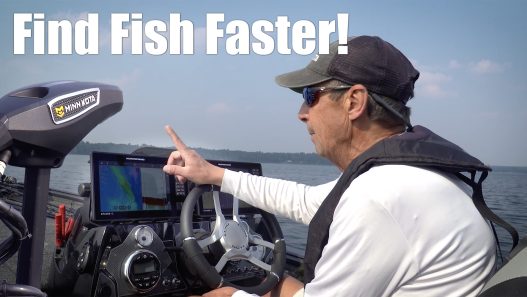
Boat speed is critical. The crew uses a 90-hp Mercury engine outfitted with SmartCraft controls to dial in their trolling speed. But with a strong tailwind pushing them faster than desired, a second layer of control is added: a Minn Kota Vantage motor, deployed in reverse, offering fine adjustments down to tenths of a mile per hour. This precise speed management makes a massive difference, whether trolling crankbaits or spinner rigs.
As the sun dips low, nature signals it’s go time. Loons gather, ciscoes break the surface, and insects swarm upward from the deep. The witching hour has arrived.
Hooked into Giants
Suddenly, the silence is broken. “Fish on.” A massive run follows. The rod bends under the weight of a freight train heading in one direction—away.
“It’s too big. We’ve gotta reel everything in. Break the spread.”
The fish demands full attention. Rods are cleared. The team works seamlessly to handle what turns out to be a muskie—an apex predator and a spectacular bonus catch.
Caught with a parabolic-action rod and a setup of 30-foot mono backed by braid, it’s a masterclass in soft drag management. No pumping, just steady pressure and skillful reeling.
It’s a tense moment. The net is too small for the muskie, so the decision is made to hand-land it by the tail. The fish is beautifully hooked—textbook. After some careful maneuvering and hook clipping, the muskie is released back to the depths, a stunning specimen of open-water predator life.
The Bite Continues
With the adrenaline still high, another rod bounces—another hookup. The environment is electric. Bait is thick both on the sonar and at the surface, and the predators are clearly taking advantage. As Ty reels in, it’s confirmed—a hefty walleye. The specialized St. Croix trolling rods absorb every head shake, protecting the hooks and the fish.
Then, another surprise: a second walleye strikes the remaining line. It’s a beautiful double, and one of them heads to the live well for a quick photo op before being released.
What’s happening here is the magic of open-water trolling during the cisco rise: massive walleyes, bonus muskies, coordinated teamwork, and razor-sharp strategy.
Big Water, Big Rewards
As the day progressed, the crew took extra care in managing the fish they brought in. One important tip they shared: fill your live well with water ahead of time.
Not only does this reduce the mess when handling fish, but it also helps reduce stress on the catch. With multiple rods in the water and the chaos of open-water trolling, a safe, wet holding area is a critical part of fish care.
And the fish? Stunning. Thick-bodied, deep-backed walleye that looked like they’d been feeding well on the open-water baitfish schools. These weren’t just any fish—they were mature adults, the kind you hope for when targeting giants.
Fish of a Lifetime—or Just Another Tank?
Even though some of these fish would be considered trophies anywhere else, in this style of open-water basin trolling, they were simply “another nice one.” As Ty noted, he’d caught one the day before that made today’s fish look like a runt—just underscoring how exceptional the fishing can be when you dial in this pattern.
Tackle Talk: Tools of the Trade
A key piece of gear mentioned was the Off Shore planer board—particularly the standard size used for walleye fishing. It features a simple release system using soft pads and an alligator clip. Letting them out 65 to 70 feet from the boat creates effective spread, covering more water and reducing tangles.
Also critical: line counter reels. These allow you to precisely replicate productive lead lengths and often come with clicker mechanisms, which are essential for detecting strikes—especially at night or when running multiple lines.
Dialing In Electronics for Open-Water Success
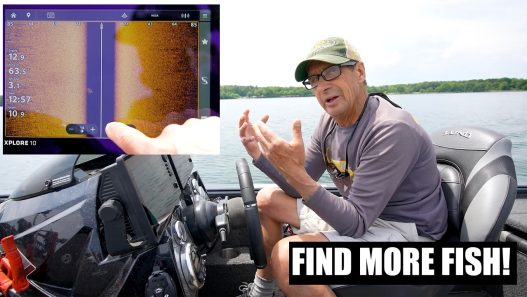
Electronics were another cornerstone of the strategy. When fishing deep water, the key isn’t just seeing fish—it’s finding the food, especially small baitfish. The tip here is to tune your sonar, especially sensitivity, to pick up those smaller marks in the deep.
During high bug activity, particularly in the evening, switching from high-frequency imaging like Mega to a lower frequency (such as 455 kHz) can help cut through surface clutter and provide a clearer view of fish-holding zones.
It’s All About the Transitions
One of the most insightful takeaways was this: featureless-looking basins can be full of life. Simple bottom transitions—say, from gravel to mud—are key areas where zooplankton and other forage gather. And where the food is, the fish follow.
This is especially true for walleye. While traditional structure holds fish, many of the biggest specimens are found roaming these subtle mid-lake transitions. It’s a pattern that requires confidence and patience, but the rewards are clear.
Equipment Reminders: Rods, Reels, and Rigs
The rods used featured moderate tips, ideal for absorbing the shock of big hits without ripping out hooks. Combine that with braided mainline and a monofilament leader, and you’ve got a setup that offers both sensitivity and forgiveness.
Setting the drag loosely is also emphasized—these open-water fish hit hard and move fast. A tight drag is a recipe for pulled hooks and heartbreak.
Wrapping Up on a High Note
As the final fish of the day came in—a true slab of a walleye—it was met with cheers and high-fives. The netting duties were taken seriously, underscoring the team aspect of this style of fishing. “If I’m not reeling them in, I might as well be netting them,” one angler joked, reflecting the collaborative spirit that defined the outing.
Each fish was treated with care, released safely, and celebrated as part of an incredible day on the water. As they put it, “those are precious fish,” and deserve the same respect as muskies or any other prized gamefish.

