








Al and Troy Lindner spend the day using smaller baits —like the Rapala OG Tiny 4 and VMC Neg jigs — to catch bass during the early season.
Mastering the Art of Downsizing for Bass: Tactics, Tools, and Trend
In the ever-evolving world of sport fishing, modern electronics like 2D sonar, side imaging, forward-facing sonar, and detailed digital mapping have revolutionized the way we locate fish. These tools are essential for narrowing down areas with active fish, but that’s only the beginning. Once located, an angler must also decode the right lure size, depth, color, speed, and action to truly capitalize on the opportunity. That’s the second—and often most critical—part of the puzzle.
Whether you’re fishing for bass, walleye, crappies, or muskies, the principle remains the same: subtle presentation tweaks can make or break your day. 

Small Adjustments, Big Results
During warmer months, aggressive, fast-paced techniques may draw reaction bites, but when conditions change—such as after a cold front, heavy boat pressure, or in clear water—a more finesse-driven approach often wins. This is where downsizing becomes a key strategy.
The willingness to adapt and experiment with different bait styles and sizes frequently separates the casual weekend angler from those who consistently find success.
On the Water with Al and Troy Lindner
As Al and Troy Lindner demonstrate in their latest outing, the strategy of downsizing lures proves its worth almost immediately. Fishing along a stretch of shallow water filled with scattered boulders—visible both above the waterline and through their Humminbird 360 sonar—the father-son duo target largemouth bass in just three feet of water.
Their success begins with subtle retrieves using small crankbaits. These baits shine in shallow, clear, rocky environments. The OG Slim 4, for example, quickly becomes the hero bait. Its compact profile and muted, balsa-bodied design help trigger bass that might shy away from louder, more aggressive offerings.
Hooking Up with Downsized Power
The action is immediate. A few cranks of the reel and they’re into solid largemouth bass, with fish absolutely choking the downsized crankbait. “These hooks are so sharp,” Al notes, emphasizing the effectiveness of the design. The fish were pinned with a single point—proof of a solid bite and good hook placement.
Downsizing doesn’t just mean using smaller baits. It also demands a slower presentation. Smaller lures can’t be ripped through the water like heavier ones. Patience, precision, and an understanding of the structure beneath you are essential.
The Industry’s Shift Toward Both Extremes
There’s a noticeable trend in the lure manufacturing world: everything is either much bigger or much smaller than before. As pressure increases on fisheries—thanks to advanced electronics and more skilled anglers—fish are getting warier. Downsizing, especially when bites get tough, can trigger more consistent results.
The OG Slim 4 is a prime example. Following the explosive success of the deeper-diving OG Slim 6, this newer, shallower, and smaller model has become a go-to finesse crankbait. It’s especially effective for negative or pressured fish, with no rattles and a natural wobble that isn’t intimidating.
Swimbaits, Spinnerbaits, and Jigs: Downsizing Across the Board
Downsizing isn’t limited to crankbaits. Swimbaits, too, benefit from subtle adjustments. Despite appearing nearly identical to the untrained eye, slight differences in size, tail shape, or swimming action can drastically affect results. More often than not, scaling down swimbaits in size produces more bites—especially during tough bites or in post-frontal conditions.
The same holds true for spinnerbaits. When fish shut down, downsizing from a half-ounce model with large blades to a lighter version with smaller blades can re-trigger feeding. It’s not about changing categories—it’s about changing profiles.
Jigs also follow this pattern. When fish aren’t fully committing to larger skirted jigs, switching to a lighter jig with a more compact trailer can make all the difference. Adjusting fall rate and profile can convert short strikes into hook-ups.
A Universal Principle in Lure Selection
The concept of downsizing is universal and applies across species and lure types. While big baits do catch big fish, smaller lures often get more bites overall, especially when fish are pressured or inactive. The Lindners prove this again and again as they pull quality largemouth and smallmouth bass from rock-laden flats using downsized gear.
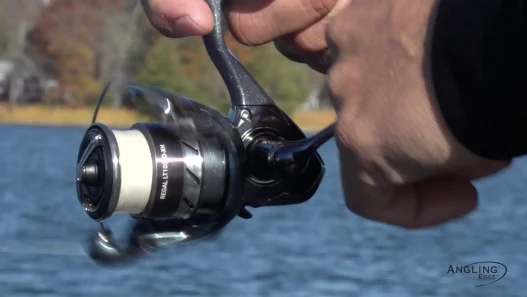
Fishing smaller baits like the OG Slim 4 also requires the right gear. Troy highlights the advantages of his setup—a Daiwa Kage 3000 spinning reel paired with a lightweight rod. This gear combo ensures balance and sensitivity, critical elements when fishing slower and with subtle lures.
Precision, Presentation, and Performance
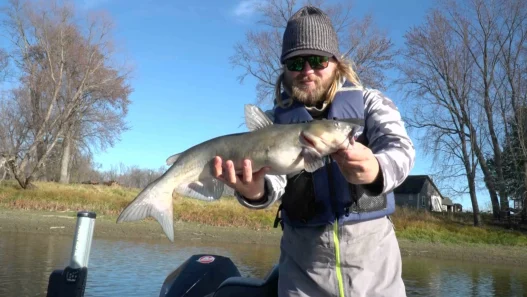
Downsizing doesn’t mean sacrificing fun or fish size. With the right tools and tactics, even small baits can produce big bites. In the Lindners’ case, multiple fish—including a few doubles—hammer the finesse crankbait. On one occasion, a quality smallmouth follows a hooked fish to the boat, trying to steal the bait right out of its mouth.
As Troy notes, it’s not just about catching one fish. When conditions are right and the presentation is dialed in, downsizing can open the door to a whole school of fish in a single spot.
Precision Gear for Downsized Lures
Downsizing baits isn’t just about choosing a smaller lure—it’s also about using the right gear to make that bait perform. Lighter, more compact baits are highly sensitive to rod, reel, and line setup. For example, casting a #5 Shad Rap on a heavy power rod spooled with 20 lb fluorocarbon simply won’t work. The bait won’t cast properly and won’t run correctly either.
That’s why a balanced, matched setup is essential for downsized fishing.
Al’s Setup for the OG Tiny 4 Crankbait:
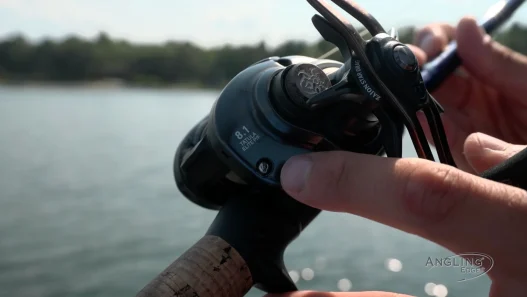
- Reel: Daiwa Tatula SV (6.3:1 gear ratio). The SV spool and braking system are tuned for casting lightweight baits with accuracy and minimal backlash—even in the wind.
- Rod: St. Croix Mojo Glass, 7’2” medium power, moderate action. The glass blank loads deeply on the cast, allowing energy to build and release for long throws with light lures. The moderate action also ensures fish stay pinned when they fight, a crucial factor with light-wire hooks.
- Lure: Rapala OG Tiny 4—a balsa-bodied, no-rattle crankbait ideal for subtle presentations.
This bait can be fished with either spinning or casting gear, but using a setup tailored to its size and action drastically increases efficiency and hookup ratio. The payoff? More fish and more fun.
Spot Lock, Schools of Bass, and Versatility in Presentation
Throughout their session, Al and Troy consistently returned to one key theme: adapting to conditions. Whether it was spot-locking on a school of bass or switching tactics mid-day, they showed how being flexible and prepared with finesse gear makes a difference.
The day delivered multiple doubles, especially when schools of smallmouth piled into rocky flats. Troy used a finesse Ned rig to match the bite when crankbaits slowed, and Al took advantage of his baitcaster setup with the Tiny 4 to coax in largemouth along the edges. With smart electronics, great casting angles, and high-end polarized sunglasses for spotting submerged cover, they were able to pinpoint and repeatedly catch active fish.
Even simple things like long casting with braid, especially with the wind at your back, made the difference in presenting baits naturally and covering more productive water. “Nice one,” Al exclaimed repeatedly as they boated chunk after chunk.
From the importance of matching your gear to your lure, to the power of subtlety in pressured waters, this session with the Lindners was a masterclass in downsized fishing. The Rapala OG Tiny 4 proved once again that finesse and simplicity often outperform flash and aggression—especially when bass are moody or pressured.
Whether you’re fishing from the bow with a baitcaster or slinging small baits from the stern with a spinning rod, matching your presentation to the conditions and fish behavior is the cornerstone of success.

