












Fall bass fishing is on the minds of every bass angler after a hot summer. Dedicated bass fishermen also anticipate fall as the bass bite often improves as water temperatures fall. This peak inactivity is a widely known phenomenon, but the reasons behind it are less clear. As warmwater species, the metabolisms of largemouth and smallmouth bass are affected by water temperature. The colder the water, the less active they become and the less they need to eat. On the other hand, there seems to be another factor at work that spurs bass to feed before water temperatures plummet into the frigid range. They seem to know what’s coming, though we don’t know the mechanism behind this shift. Big bass seem particularly active as winter approaches. In northern waters, the tough northern strain of bass tolerates frigid waters, though it drastically curtails their feeding. Before its arrival, they take advantage of reduced vegetation and denser aggregations of preyfish. In shad-based reservoir systems further south, there isn’t such a metabolic spur to feed, but the vast congregations of shad, both in feeder creeks and deep channel turns of impoundments bring added feeding opportunities.
Lure selection in fall depends somewhat on the phase of the season—early, mid-fall, or what we call pre-winter. During the milder months, fast retrieves with horizontal lures seem to turn on fall bass. As the water cools, fish move slower and presentations should slow accordingly. Finally, before ice-up, great patience is required, as dead-sticking and ultra-slow retrieves with down-sized lures can be the only way to get bites.
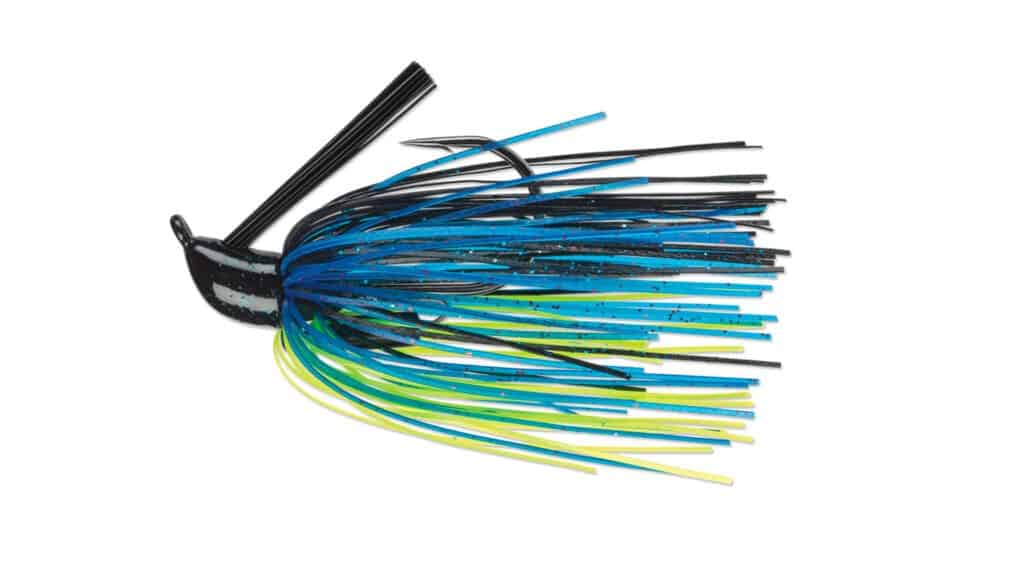
Jigs
We typically have a jig on deck during all seasons of the year; they’re just that good. But in fall, their compact and meaty profile and ability to fish through cover at all depths make them a key choice. For most applications, a standard skirted jig with a weedguard is versatile and effective. Over the years, our staff has doubtless caught thousands of nice bass on Terminator Pro Jigs. It’s balanced to come through vegetation as well as brush and it’s available in weights from 1/4 on up to a full ounce, so you can match its fall rate to bass depth, positioning, and aggressive. That’s particularly important as lakes cool. A fast fall rate works early, but in colder water, slow movements generally work better. Pro Jigs come in colors to imitate crawfish, as well as preyfish and have color-matched weedguards. Put a chunk or craw trailer like Big Bite’s Chunk, Fighting Frog, or College Craw on the back and get to work. The Chunk, shaped like a traditional pork chunk, gives a jig a more subtle gliding action that scoots into cover. The Fighting Frog has a bulky body and thinner claws so it matches a heavy jig to punch through thick vegetation. Finally, the College Craw is more lifelike, with claws that flap as the lure falls or is pulled ahead, with tempting action and vibration. Pick your spots carefully and jigs will show you what they can do.

Craw Baits
In northern lakes and many reservoirs, crayfish make up the bulk of a bass’ diet, especially in fall. Across the country, there are hundreds of different crayfish species of various colors and habitat niches. But bass like ‘em all. Texas-rigging a crawfish imitator like Big Bite Baits’ realistic College Craw lets you fish it through thick vegetation. Match the slip sinker weight to the thickness of the cover, and wind factors, but 1/4-ounce works for many fall situations. Another of our favorites is the Craw Tube, as it’s ribbed and soft so bass tend to hang on until you can set the hook.

Crankbaits
As autumn advances, vegetation in lakes and reservoirs thins out, so crankbaits shine, enabling anglers to scour weedlines and work across flats that had been choked with vegetation all summer. In early fall, you can cover water and find active bass fast with them, since you can change models to explore various depth ranges. Working close to grass, the lures may momentarily hang up, but a sharp snap of the rod frees them of the stalks and often triggers a strike. It also pays to include pauses in your retrieve, as the change of speed and direction incite bass to attack. Along deeper edges, divers like Rapala’s DT-10 are deadly with their tight wobble and slight hunting action. For working shallower, try Rapala’s Rippin’ Rap or the Storm Arashi Vibe across the flats. Where rocks and vegetation meet, fall bass tend to gather, both largemouths and smallmouths. Here, the classic Storm Wiggle Wart is deadly, along with square-bills like Storm’s Arashi Silent Square. Let them deflect off rocks, them pound them back into the cover.
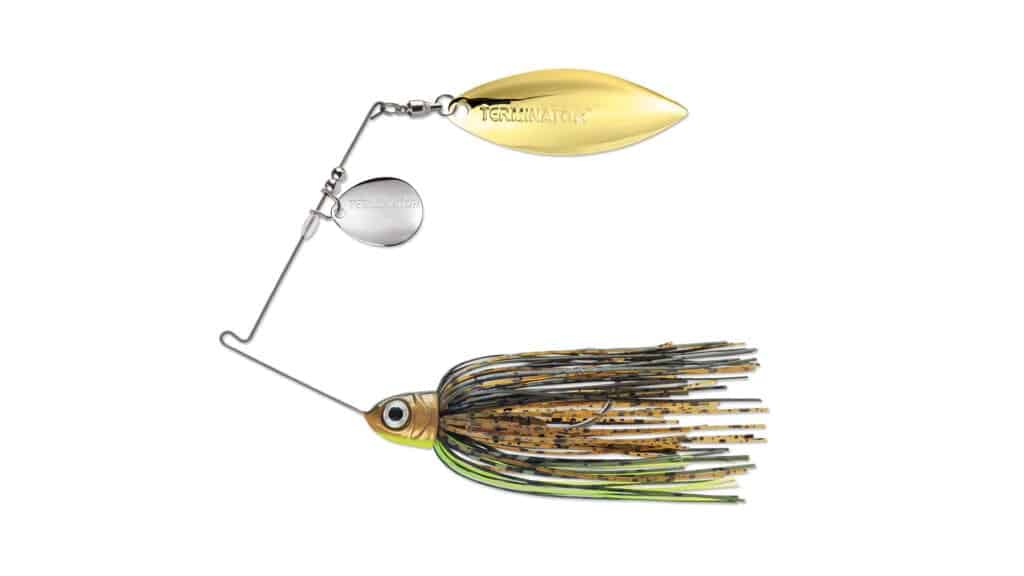
Spinnerbaits
Wire baits continue to fool bass, and fall is prime time, as lakes often turn a bit darker, which makes it easier to fool fish with flashy blades. Terminator’s new Pro Series Spinnerbait has been designed with lots of input from the pro staff of top tournament anglers and we’ve been highly impressed with them. They’re built on a frame of fine stainless-steel wire that allows an ideal balance of strength and vibration. When you consider the different lure weights and blade styles available, you have lures that are effective in cover from just inches of water to as deep as want to fish. In fall, bass often respond to increased vibration, so big Colorado blades are deadly when worked through clumps of grass that remain green into late fall. Work them slowly and occasionally let the lure helicopter down in open pockets, and be ready for your line to jump!

Buzzbaits
While some anglers consider the buzzbait a top choice in summer, they work as well or better once waters cool and more bass move shallow. They squeal across weed flats and around clumps of vegetation where big bass hold. Where bass feed heavily on gizzard shad in fall, buzzers such as Terminator’s Super Stainless Buzzbait, turn the heads of prowling lunkers that roam shallow rock areas. In these milder regions, buzzbaits may produce into early winter. Work them slowly across the surface and don’t set the hook until you feel the weight of the fish.
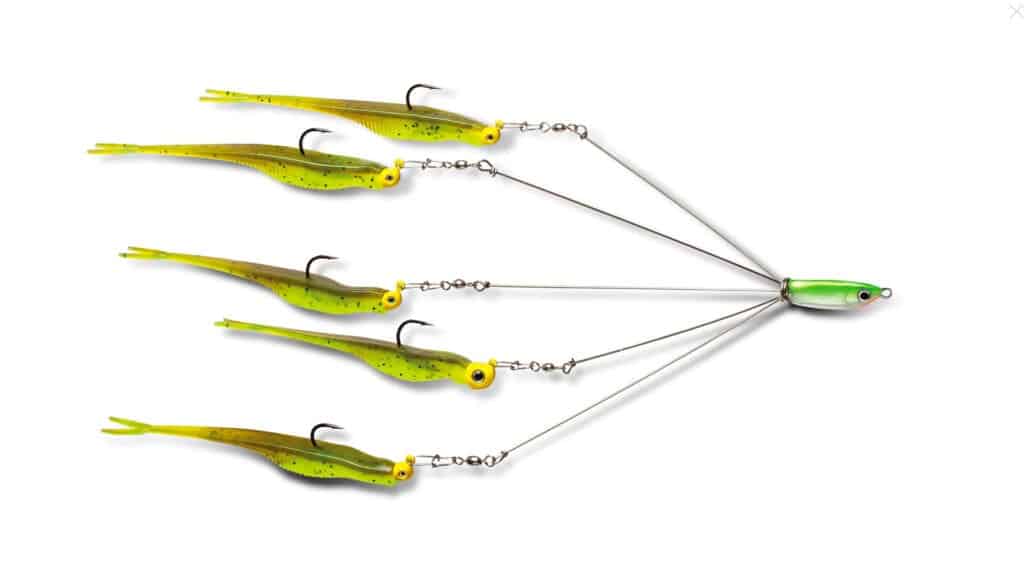
Umbrella Rigs
Another deadly option is the umbrella rig, particularly where schooling baitfish such as shad, smelt, cisco, or perch are common. When the water temperature drops, their effectiveness rises, and they often out fish any other presentation in rivers and lakes. Both largemouths and smallmouths are suckers for umbrella rigs, and at times you catch more than one fish at a time. Terminator’s Stainless Steel Rig is available in three sizes—5, 8, and 10 inches, for various rigging setups. They come with 5 wires, including a longer central wire. Where regulations don’t allow 5 hooked lures, place dummies on the outside, with a larger lure with a hook in the middle and farther back. Day in and day out, 3- to 4-inch swimsbaits such as Big Bite Baits’ Finesse Swimmer or Pro Swimmer fill the bill. For a larger central lure, try a Big Kicker. Work the rig in any depth, from 4-foot flats or down onto breaklines and ledges from 10 to 18 feet deep. A slow and steady retrieve gets it done. To toss this hefty setup and to wind in the lunkers it attracts, choose a 7.5 to 8-foot rod with heavy power and a reel with large spool capacity.
Why are finesse jigs particularly effective during post-frontal conditions in late fall?
Finesse jigs are especially effective during post-frontal conditions in late fall due to their versatility in adaptability to various weather and water conditions. When a cold front moves in and calm, bluebird skies prevail, slowly crawling a finesse jig along wood cover or docks can mimic the movement of natural prey, enticing inactive bass to bite. The choice of a finesse jig paired with a magnum-sized plastic chunk creates a bait with a slow-falling action, making it an ideal option to tempt bass in such conditions. Overall, finesse jigs offer anglers the flexibility to adjust their retrieve style, whether it be crawling, hopping, or swimming, to effectively target and entice bass during post-frontal conditions in late fall.
What are the key techniques for fishing with suspending jerkbaits in late fall?
In late fall, when fishing with suspending jerkbaits, it is crucial to adjust your techniques to accommodate the behavior of the fish during this time of the year. To effectively fish with suspending jerkbaits in the late fall season, anglers should focus on elongating pauses between each rip and twitch of the rod tip. This strategy is especially important because fish tend to be more lethargic in the late fall months and may prefer a slower presentation. By allowing for longer pauses, you give the bait more hangtime in the water, which can entice hesitant fish to strike. Therefore, anglers should aim to cast their suspending jerkbaits far and then utilize a series of deliberate twitches and pauses, giving fish ample opportunity to observe and react to the bait. By incorporating these techniques, anglers can increase their chances of success when fishing with suspending jerkbaits in late fall.
How can spinnerbaits be effectively used in stained water during late fall?
Spinnerbaits can be effectively used in stained water during late fall by selecting a 1/2-ounce chartreuse-and-white spinnerbait with tandem willow-leaf blades. This type of spinnerbait is particularly useful on both sunny and cloudy days when there is wind blowing. A successful technique involves slow-rolling the spinnerbait in stained water, focusing on the backs of pockets near docks, logs, and laydowns that are typically 7 to 10 feet deep. By employing this method, anglers can increase their chances of attracting fish and achieve better results in late fall conditions.
How can anglers adjust their presentation techniques for late fall bass fishing?
In late fall, anglers need to adjust their presentation techniques for bass fishing to account for the changing behaviors of the fish as water temperatures drop. As baitfish move to deeper waters and bass become less aggressive, it is essential to slow down presentation tactics to entice strikes from the fish. While lures that imitate baitfish remain effective, the key lies in adapting to the moodier nature of the bass due to colder water and weather conditions.
One effective technique for late fall bass fishing is to use flat-sided square bill crankbaits. These lures can be productive in stained water and should be retrieved at a moderate pace, with pauses to trigger strikes by deflecting off obstructions. Spinnerbaits, especially those with tandem willow-leaf blades, are ideal for sunny or cloudy days with wind. Slow-rolling these baits in stained water around structures at moderate depths can yield good results.
Another successful option for late fall bass fishing is suspending jerkbaits. By employing a technique that involves long casts, twitching the rod tip to create darting movements, and longer pauses between actions, anglers can capitalize on the lethargic nature of bass during this period. Finesse jigs are also recommended, particularly during post-frontal conditions. Crawling, hopping, or swimming the jig slowly along cover can be effective in enticing inactive bass to bite.
Ultimately, adjusting presentation techniques for late fall bass fishing involves a combination of using lures that imitate baitfish, slowing down retrieval speeds, and incorporating pauses to trigger strikes from the more reserved bass in colder water conditions.
What are some productive lures for bass fishing in late fall?
Productive lures for bass fishing in late fall include flat-sided square bill crankbaits, spinnerbaits, suspending jerkbaits, and finesse jigs.
Flat-sided square bill crankbaits are effective in stained water during late fall. These crankbaits can trigger reaction strikes from bass when deflected off of stumps, logs, and rocks in shallower waters.
Spinnerbaits with tandem willow-leaf blades work well on sunny or cloudy days with wind in the late fall. Slow-rolling these baits in stained water near docks, logs, and laydowns at a depth of 7 to 10 feet can attract bass.
Suspending jerkbaits, such as those in a sexy shad pattern, are great for late fall bass fishing. By twitching the rod tip to make the lure dart through the water and then pausing, anglers can entice lethargic fish to strike.
Finesse jigs are versatile in late fall conditions. These jigs can be retrieved by crawling, hopping, or swimming them, with slow crawling along wood cover or docks being particularly effective post-frontal conditions. Matching a 3/8-ounce jig with a magnum-sized plastic chunk creates a slow-falling bait that can trick inactive bass into biting during the late fall season.
What are the characteristics and recommended usage of flat-sided square bill crankbaits?
Flat-sided square bill crankbaits are a popular choice for fishing in various weather conditions, particularly during late fall in stained water. These types of crankbaits are designed with a flat side that allows them to produce a unique swimming action in the water. They are ideal for targeting bass in shallow waters less than 5 feet deep, where they can effectively deflect off obstacles like stumps, logs, and rocks.
One key characteristic of flat-sided square bill crankbaits is their ability to trigger reaction strikes from bass, especially when retrieved at a moderate pace and then paused to mimic the baitfish’s behavior. This stopping-and-starting action can entice bass to strike when the crankbait bangs into an object, simulating a wounded or disoriented prey. The design of these crankbaits makes them suitable for use in challenging conditions, making them versatile tools for anglers looking to catch bass during the late fall season.
Overall, flat-sided square bill crankbaits excel in their ability to elicit strikes from bass in shallow, cluttered waters, making them a valuable addition to any angler’s tackle box, particularly when targeting bass in stained water during the late fall season.
How do weather conditions influence the behavior of bass in late fall?
Weather conditions play a significant role in shaping the behavior of bass in late fall. Colder weather, combined with dropping water temperatures, causes bass to become moodier and less active, requiring anglers to adjust their fishing techniques and strategies to effectively target these fish during this period.
How do baitfish moving to deeper water affect the behavior of bass in late fall?
The movement of baitfish to deeper water in late fall influences the behavior of bass. As baitfish migrate to deeper areas, bass follow suit and adjust their feeding patterns, becoming less aggressive and more selective in their feeding as the water temperature decreases.
What impact does colder water have on the mood and aggressiveness of bass in late fall?
With colder water temperatures in late fall, bass become moodier and less aggressive. The drop in water temperature affects the behavior of bass, making them less active and more sluggish in their movements and feeding habits.
How does the behavior of bass change in late fall with colder water temperatures?
The behavior of bass changes in late fall due to colder water temperatures. As the water temperature drops, baitfish move out of the shallows to deeper water, leading bass to lose some of their aggressiveness and become moodier with the colder water and weather conditions.
In late fall, the behavior of bass undergoes significant changes attributed to the colder water temperatures. As warmwater species, the metabolisms of largemouth and smallmouth bass are profoundly influenced by the temperature of the water they inhabit. The lower the water temperature drops, the less active these bass species become, resulting in a decreased need for food consumption. Furthermore, as winter approaches, the larger bass exhibit heightened activity levels, strategically exploiting the reduction in vegetation and the denser concentrations of preyfish before the water temperatures plummet. It is imperative for anglers to adapt their lure selection and presentation techniques accordingly as the water cools, emphasizing the necessity of employing patience and employing slower movements to effectively entice bites from bass during the late fall season.<

