









Live Bait tactics for muskies? James Lindner, Nick Lindner and Jeremy Smith explore methods, equipment, and strategies for musky live bait tactics for muskie in both rivers and lakes.
Live Bait in Muskie Fishing
Many anglers disapproved of live bait muskie fishing for years. However, things have changed. Many fishermen are adopting live bait as an efficient technique, especially during the fall, as quick-strike systems influenced by European models have gained popularity.
With the help of these quick-strike rigs, anglers can set the hook quickly, decreasing the possibility of deeply hooking the fish and improving the likelihood of a clean release.
Muskie anglers James Jeremy Smith and Nick Lindner are venturing into live bait muskie fishing on this excursion, investigating lake and river habitats. They intend to test different systems and demonstrate the effectiveness of live baiting, especially in the winter.
Choosing and Setting Up the Ideal Bait
We start the day by examining the minnows, which are actual, healthy suckers that are perfect for muskie. The method used to prepare bait is gentle.
When a muskie hits, the nose hook can be easily detached because it is slipped just beneath the skin. The same is true of a trailer hook. This configuration keeps the bait active while causing the least amount of stress possible, which is crucial for success.
Muskies and other large predators typically attack the bait’s head. Anglers can observe the behavior of the sucker minnow by using a large float when fishing. A muskie is usually nearby if the sucker begins to go crazy. These “tattletale” baits are great ways to find out about potential predators in the area.
Setting the hook correctly requires being able to see the fish’s movement direction, which is made easier with the use of a float. This extra awareness is a huge benefit because it can be difficult to determine when the fish is swimming toward the boat.
The Quick-Strike Rig: Revolutionary
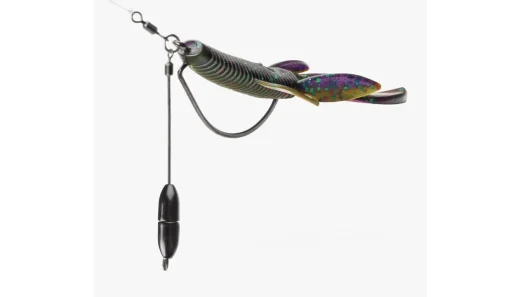
A sophisticated quick-strike rig that reduces sucker damage is one of the major innovations discussed on this trip. A rubber band and bridle system are used in conjunction with a VMC 9617 hook that is bent out to prevent embedding into the bait. The rubber band is threaded through the sucker’s nose with the assistance of a tiny bait needle, and the rig is snapped into place.
This system’s simplicity and efficacy are its greatest features. The sucker can swim free after a muskie bites because it only takes a light tug to shatter the rubber band and push the hook home. This method keeps bait lively and unstressed while increasing bites and hook-ups.
The Advantages of Live Bait and a Successful Strike
One angler receives a good hit while the crew is fishing a river that is downstream from a probable strike zone. A gorgeous muskie is brought in after a short struggle and some excitement in the boat. Fat, healthy, and barely hooked, it’s a big one. The fish is safely and swiftly released.
One of the most notable advantages of the quick-strike live bait technique is this.
Live bait rigs like this one tend to hook fish close to the mouth, reducing damage and facilitating a rapid release, in contrast to artificial lures that muskies frequently inhale deeply. It’s a morally sound and successful strategy that’s also excellent for introducing new fishermen to the excitement of muskie fishing.
Recognizing Muskie Behavior and Locations
Muskies exhibit predictable behavior during the cold-water phase. They gather in deep-water holes with slack or slow-moving current when river temperatures fall to the low 50s (Fahrenheit). It’s a good idea to stalk suckers around these current breaks slowly.
Anglers concentrate on structural features and steep drop-offs in lakes. Tulibees start to spawn on reef systems when water temperatures fall into the 40s, which is precisely where muskies are hunting.
Understanding the movements of tulibees, a crucial forage species during this season, can result in significant catches.
Positioning Tactical Boats and Effectively Covering Water
Some fishermen use planer boards to drag suckers in order to cover more water, while others cast hard baits and soft plastics along the edges of structures.
It’s interesting that the boards aren’t widely spaced. Rather, they are targeted to a rock spine where muskies are probably holding, and they are fished closely together on one side of the boat.
The team locates big boulders 15 to 30 feet away from the boat using side-imaging sonar, then sets up their boards to run baits directly along this edge. This technique guarantees that the baits stay in the strike zone more precisely and for a more extended period.
Using Technology to Help Muskie Succeed
Modern fishing electronics have transformed musky fishing. While 2D sonar, side imaging, and down imaging are all beneficial, Hummingbird’s Mega Imaging is particularly noteworthy for its extraordinary clarity. Nowadays, anglers can see fish so well that they can determine their size and identify their fins.
Serious muskie anglers frequently return during the busiest feeding windows after dropping waypoints on fish they see on their screens. This clever use of technology boosts productivity and removes uncertainty.
Boat control has advanced significantly as well. Thanks to features like Minn Kota’s iPilot Link system, anglers can control boat position from anywhere on board. Anglers can move precisely along structural edges with follow-the-contour, cruise control, and autopilot, allowing them to concentrate on fishing rather than steering.
Fall: Trophy Muskie Prime Time
Fall is considered by many to be the best time of year for muskies. Muskies gain weight as the water cools, and the likelihood of catching a real trophy rises sharply. Additionally, it’s a fantastic time to introduce new anglers to the sport or go fishing with friends.
The fish are large, the action is intense, and the memories will last a lifetime. To demonstrate the quick-strike rig’s speed and effectiveness, the crew on this trip shares an exciting moment: hooking a doubleheader. The ability to set the hook instantly is crucial when dealing with muskies that strike quickly and turn away, and this setup does just that.
The Double Net Moment: An Uncommon Milestone for Muskie
Following meticulous techniques and exhilarating moments, the team managed to land two 50-inch muskies in the same net, which was truly remarkable. A situation so uncommon that, even to experienced muskie hunters, it almost seems legendary. The boat was electric with excitement. The cry, “You got both of them, boys!” was the climax of an already remarkable fall muskie fishing day.
Planer Boards: A Competitive Advantage in Cold Water
The crew exchanged ideas about planer boards, one of the setup’s unsung heroes, as they changed tactics. With the help of these tools, fishermen can cover more water and spread out baits while remaining hidden from the boat.
The team:
• Offshore Small Planer Board displayed three sizes: Usually used for trout or crappie, this model provided just enough buoyancy to function as a bobber for presenting short-range suckers.
• Medium Board: Ideal for longer-distance sucker trolling, this board is the preferred option for walleye fishermen.When hunting muskies in open water, the largest of the group, the Mag Planer, is used to pull crankbaits.
Flexibility according to bait size, trolling speed, and water conditions is ensured by having a range of board sizes available.
Rods and Reels That Fit the Job
The gear talk transition served as a crucial reminder that the proper equipment can make or ruin your presentation. The St. Croix Big Plastics Rod is ideal for large, soft plastic baits such as Medusas and Bulldogs. When combined with a Daiwa Lexa 400 reel, its 9-foot, extra-heavy fast action build provides comfort and casting power.
However, the team adopts a different strategy when it comes to live bait. They prefer a more conventional live bait rigging technique, even though many choose fast-action rods for aggressive hooksets. Jim emphasized his setup:
• Rod: The 9-foot, medium-light, fast-action St. Croix’s Downsizer rod is perfect for keeping an eye on minnow movement and discreetly responding to strikes.
• Reel: Daiwa Lexa 300 line counter, which is essential for managing bait depth when fishing vertically or pulling behind boards.
This system’s advantage is that it minimizes damage to the fish while increasing hookup success by enabling a smooth, controlled hookset with a rubber band breakaway rig.
Strike Zone: Live Bait Success and Visual Verification
The anglers found muskies nestled into boulder slides using side imaging and sonar. Just as everyone was saying, “Whoa, whoa, whoa, I got one!” the planer board dipped, and mayhem broke out. There was another giant muskie in the boat after a strong blow.
The success of a strategic fall approach and the adaptability of planer boards were demonstrated by this fish, which was captured with a crappie-sized board and live bait. Contrary to popular belief, the team observed that well-rigged live bait setups cause little harm to fish, making them a responsible and efficient choice.

