



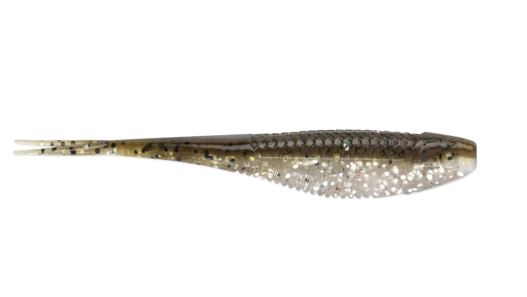

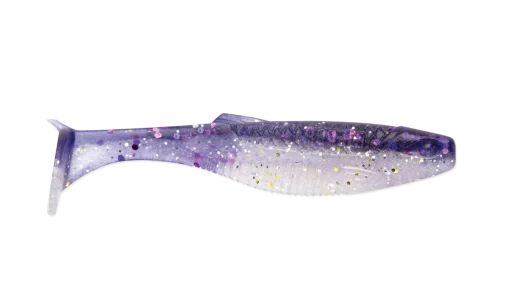




Once gamefish complete their spring spawning, it’s time to eat and grow. That urge tends to make summer fishing excellent across the northern states. While walleyes, pike, and bass are known to eat numbers of crayfish and frogs at times, the bulk of their diet is preyfish of various sorts. From crappies to muskies, swimbait have become a key presentation for every species that swims.
A swimbait is one of the most versatile lures, as they’re available in sizes from two to inches to more than a foot in length. And they can be rigged to fish from just a couple feet of water down into the depths, as I’ve used them to catch lake trout more than 100 feet deep.
The reason for their effectiveness is their amazingly lifelike appearance and action. The boot-tail design of a swimbait imitates the natural swimming action of baitfish, while adding a subtle body roll that creates attractive underwater vibrations suggesting prey that’s vulnerable to attack.
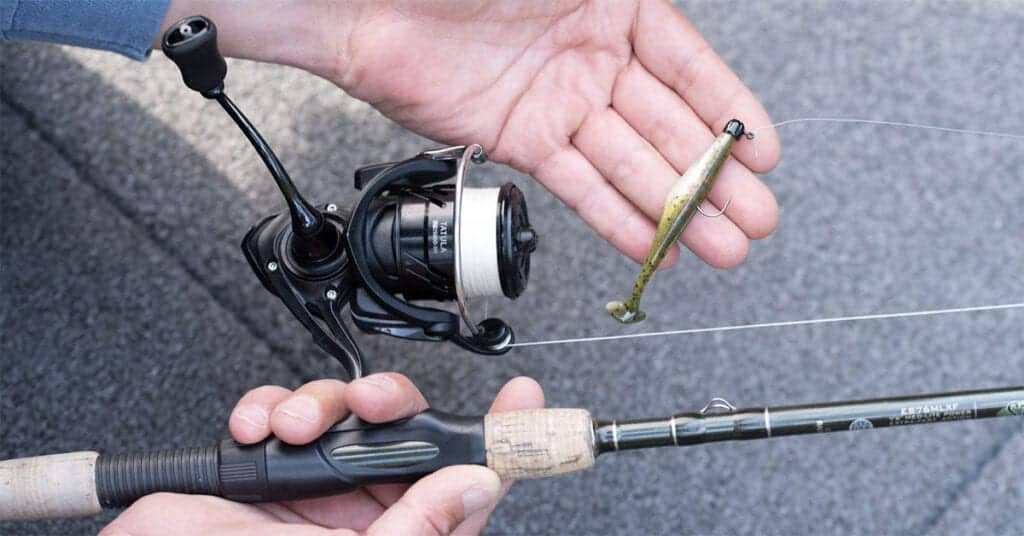
Jigheads match swimbaits well, and weights from 1/16-ounce to more than an ounce are commonly available, with hook sizes to match lures from two to nine inches or more. And for thick vegetation or brushy habitat, they can be rigged weedless on a Texas rig with a weighted, wide-gap hook.
For crappies, I fish a 2-inch Big Bite Baits Crappie Thumper on a 1/16-ounce VMC Neon Mooneye Jig, retrieving it along deeper weed edges. Crappies hold there in summer, often suspended 7 to 10 feet down over 12 to 15 feet. You can spot them on a powerful sonar unit; then count the lure down to their depth. This works great during the day when they group up, since crappies move upward and spread out toward evening.
For smallmouth bass, the Storm 360 GT Searchbait is deadly and easy to use, since it comes rigged on a jighead that lets you swim the lure over rocky flats to find fish, and when they see it, they strike. To probe deeper areas, with to 3/8- or 1/2-ounce jig heads.
 For largemouth bass and pike in cabbage or lily pad beds, rig a 4- to 6-inch swimbait weedless and it comes through cover cleanly and its wiggling action attracts violent attacks.
When those big predators hold deeper on reefs or ledges, rig them on heavy jigheads and make long casts to work those 15- to 25-foot structures. Count the bait down to a desired depth then retreive slowly and steady with a intermittent jerk to change lure cadence and trigger strikes.
Lately I’ve been using giant swimbaits for muskies, too, particularly the big, prerigged ones built to have a high hooking percentage. For the big toothies, try a Muskie Innovations Swimmin’ Dawg, Chao Tackle Posseidon, or WaterWolf Lures Shadzilla.
Whatever the species, it’s hard to beat a swimbait for feeding fish in summer. They combine the realistic look of live baitfish with lifelike action to ensure great days on the water. Don’t miss out on this bite.
A Lake on the Rise: Smallmouth Explosion and Spring Strategy
Leech Lake is undergoing a significant shift when it comes to smallmouth bass. Historically, the lake held a modest population that wasn’t necessarily targeted by anglers, but that’s changing quickly.
Recent data and angler experience confirm that smallmouth numbers are burgeoning—good news for those who love the aggressive fight and finesse tactics these fish demand. With Leech’s abundant structure—multi-layered rock reefs, patches of weeds, and healthy forage—the lake is primed to become a premier smallmouth destination.
During the outing, the hosts demonstrated how the fish were stacked up in shallow flats—just four feet deep—with slightly darker bottoms. These spots were not near the classic rocky structures you’d expect. In the spring, just ahead of the spawn, smallmouths move into these warm, protected areas to feed heavily.
This transition from deeper rock humps to shallow sandy bays is crucial for anglers to understand, especially when planning their springtime approach.
Fine-Tuned Tactics: Finesse Swimbaits and Ideal Gear
A key presentation throughout the day was a subtle swimbait retrieve. But this wasn’t your standard “cast and crank” technique. Instead, the bait was slow-rolled along the bottom, mimicking a jigging retrieve, allowing the paddle tail to thump just enough to entice bites. This finesse approach proved incredibly effective, as multiple doubles were hooked up when pods of bass followed one another in.
The preferred rod and reel setup included a 6’8” to 7’2” medium power, extra-fast action rod—perfect for throwing light swimbaits with precision.
The rod of choice was the St. Croix Legend Tournament Walleye Snap Jig Rod, paired with a 2500-size spinning reel, ideal for finesse braid and light fluorocarbon leaders. Many were fishing 8-pound braid with 6 to 8-pound fluorocarbon leaders, a light and sensitive combination that still had the backbone to manage solid smallmouth.
Why Leech Stands Out
Leech Lake is more than just a good fishery—it’s an outstanding one. With world-class walleye, muskie, perch, largemouth, and now an expanding smallmouth bass population, it’s a multi-species angler’s dream.
Add in the variety of lodging options, local bait and tackle shops, restaurants, and other amenities in Walker and surrounding communities, and it becomes clear why Leech continues to draw anglers year after year.
Whether you’re planning a family vacation or a hardcore fishing trip with friends, Leech offers both incredible fishing and a warm, welcoming northern Minnesota experience. The combination of structure, forage, and seasonal patterns offers something for every angler.
Technology That Makes a Difference
The episode also highlighted how modern electronics are changing the way anglers approach structure and fish-holding areas. Tools like Humminbird’s Mega Imaging Plus allow anglers to see fish and bottom transitions in stunning detail—up to 200 feet out on each side of the boat. These tools eliminate guesswork and allow for precision in finding and staying on fish.
And when the weather turns—which it often does in northern Minnesota—gear from brands like Blackfish ensures anglers stay comfortable, dry, and focused on the fishing rather than the forecast. In tough spring conditions, good gear can make the difference between calling it quits early and catching fish all day.
A Broader Reflection
As the episode wrapped up, it took a surprising turn—pivoting to a reflective moment about the state of the world, cultural tensions, and a personal reaction to a news article about Mississippi’s new state flag.
While this commentary stepped outside the realm of fishing, it revealed a deeper, personal perspective from the host, grounded in a belief system that sees spiritual dynamics influencing the world today. Whether or not you share that view, it was a reminder that fishing—like any pursuit—doesn’t exist in a vacuum. It connects to who we are, what we believe, and how we see the world.
With the right gear, a solid game plan, and a little help from modern sonar, spring on Leech can offer some of the most exciting and rewarding fishing you’ll find anywhere in the Midwest.
Whether you’re a seasoned bass angler or just looking to learn a new technique, there’s something here for everyone. And remember—when you’re out there, slow it down, watch for those follower fish, and always be ready. Because on Leech Lake, you never know when that next cast might be the one that changes your day.

