







Reading the Conditions: When Fishing Gets Tough
Cold fronts, scorching midday heat, the chaos of the spawn—every angler has faced these bite-killing scenarios. Yet another, often-overlooked challenge is the transition period, when walleyes migrate between seasonal haunts (shallow flats to deep basins or back again). Success in these windows hinges on staying flexible, matching presentations to fish that could be anywhere in the water column and willing to move hour-by-hour.
Destination: A Maze of Opportunity
Our hosts this week, Jeremy Smith and Pete Przepiora, flew into Aikens Lake Lodge—a remote Manitoba jewel laced with countless islands, cuts, and basin humps. The lake’s reputation is legendary: numbers of eater-size walleyes, genuine “over-30” giants, pike (“jackfish”) that push the 40-inch mark, and even the odd trophy lake trout. From the first coffee delivery at dawn to last call in Big Molly’s bar, owner Pit Turenne and his team make sure every off-water detail matches the on-water excitement.
Game Plan: Cover Water Fast
Armed with local intel—“some fish shallow, others already out deep”—Jeremy and Pete chose an aggressive, two-pronged strategy:
- Shallow Recon – Flat-line troll crankbaits across two-to-five-foot flats to pinpoint life, then hop on the trolling motor and cast.
- Deep Backup – Once the shallow bite slows, slip out to mid-lake humps and basin edges in search of true Manitoba hawgs.
Key search baits included:
- Size 10 Rapala X-Rap® jerkbaits (Pete’s first choice for reaction strikes in skinny water)
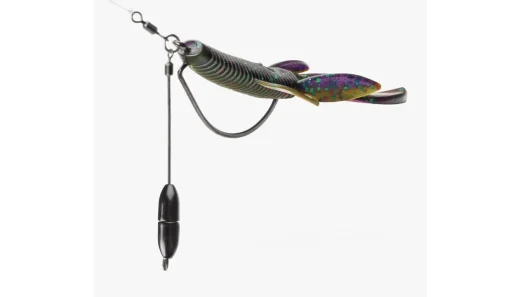
- ¼-oz VMC Moon-Eye jig paired with a boot-tail swimbait (Jeremy’s go-to for crawling or swimming without snagging)
- Medium-running shad cranks for flat-line trolling between casting passes
Instant Payoff in Two Feet of Water
Within minutes of scooting down a sandy shoreline, the side-imaging lit up with targets—and a ghost-like school of walleyes materialized alongside the boat. One bombed cast later, Pete’s X-Rap was freight-trained before it could settle. “Holy cow—they’re shallow!” became the theme of the morning as fish after fish pounced on jerkbaits and swimbaits, some even tail-walking like smallmouth.
- Repeated doubles proved the flat was loaded.
- Bent rods revealed chunky 18- to 24-inch “Canadian gold” already sporting leech and mayfly scars.
- Bug-spitting bellies confirmed the forage feast up shallow, even while deeper pods continued to roam mid-lake.
Why the Shallow Program Works
Early-summer transitions often see walleyes slide shallow overnight to gorge on emerging insects, then retreat as light and boat traffic increase. Casting lets you:
- Reach Suspended or Bottom-Hugging Fish – Adjust retrieve speed or jig cadence on the fly.
- Stay Weedless & Efficient – Minnow-shaped hard baits and streamlined paddletails deflect off rock and sparse cabbage.
- Cover Ground – When the flat’s “hot,” every cast lands near a biter; when it cools, you simply kick the trolling motor and keep hunting.
Tools of the Trade
- Humminbird MEGA Imaging + revealed walleye packs in just two feet—no guesswork, only verified marks.
- Smooth Moves seat suspensions softened the ride on the windy main basin crossings.
- Lund Adventure 1775 matched with a 200-hp Mercury Pro XS V-6 made the hop-and-cast routine effortless.
- Bubba cordless fillet knife waited on shore for the evening’s fish fry (should Jeremy and Pete decide to keep a couple).
- Big Bite Baits paddletails delivered that perfect thump on a straight retrieve.
“You don’t often get to cast jerkbaits for walleyes in two feet of water,” Jeremy grinned between fish, “but when the lake lines up like this, you’d better roll with it.”
Bass-Style Walleye Fishing and the Power of Versatility
For both Jeremy and Pete, casting in ultra-shallow water at Aikens Lake felt more like bass fishing than traditional walleye tactics—and they couldn’t get enough of it. Using jerkbaits and swimbaits in two feet of water, they were surprised by just how aggressively walleyes were feeding, even launching out of the water in typical largemouth fashion. As Pete said, “I would have never thought I’d be up here casting X-Raps in two feet of water catching these fish.”
Understanding Seasonal Movements: Humps and Depth Transitions
Key to finding success throughout the open water season is understanding how walleyes relate to humps. After the spawn, they cling to shallow humps—perhaps 4 feet deep in a 10-foot basin. As the water warms and the season moves on, fish slide deeper. In late spring, a 25-foot basin might hold walleyes on 10-foot humps. These rules of thumb, while not absolute, help predict fish movement and guide daily strategy.
This ongoing migration was evident on Aikens: shallow rocks in back bays held numbers of aggressive fish, but some giants had already moved out to deeper structures. The beauty of transitional fishing lies in its unpredictability—and its potential.
Keep It Simple: Effective Soft Plastics
When it comes to shallow presentations, plastics shine. Jeremy stressed the value of bringing a mix of profiles:
- Minnow-shaped soft baits
- Curly tail grubs
- Boot-tail swimbaits like the Big Bite Cane Thumper
These baits, rigged on a simple jig head, were perfect for the clear water and aggressive strikes of shallow Aikens walleyes.
Spinning Gear: Light Tackle, Heavy Results
The light spinning tackle made the experience even more fun—and educational. Pete took time to highlight how far modern reel technology has come, especially with Daiwa’s LT family (Light and Tough). He showcased the Exist, the lightest and smoothest spinning reel on the market—an ideal match for finesse walleye casting.
Meanwhile, Jeremy emphasized how critical gear versatility is on a trip like this. You can’t bring everything, so you need combos that can do almost anything:
- 6’10” Medium Extra Fast spinning rod
- 7’ Medium Fast spinning rod
- 10-lb Sufix 832 braid paired with 12-lb fluorocarbon leaders
- 2500-size spinning reels, like the Daiwa Ballistic LT
These setups let anglers cover all the bases: jigging, casting, trolling—whatever the fish demand.
The Role of Technology in Wilderness Fishing
Jeremy stressed that good electronics are essential—especially in uncharted Canadian waters. Akins outfits all its camp boats with units like the Humminbird Helix 7, equipped with Side Imaging and AutoChart Live. With a Zero Lines SD card, anglers can build detailed maps of structure, breaks, and humps as they fish, turning unmapped water into a customized LakeMaster card.
Not only is this crucial for navigation and safety, but it’s an irreplaceable tool for finding new schools of fish and dialing in presentation depth and boat position.
Boat Control: An Overlooked Key
In the absence of trolling motors or spot-locks, boat control at Aikens is handled entirely with the 40-hp Mercury 4-stroke tiller outboards. And they perform flawlessly. Quiet and fuel-efficient, these outboards allow for precise maneuvering—even in 3 feet of water—without spooking fish. Whether casting shallow or pulling bottom bouncers deep, they offered the control needed to stay on fish.
Jeremy and Pete demonstrated that even “old-school” techniques like tiller steering are just as effective—when used with intent and precision.
A Fully Loaded Walleye Experience
From vertical jigging to casting jerkbaits, trolling cranks to bottom bouncing, the walleye action at Aikens Lake was nothing short of spectacular. “It has been absolutely crazy,” Jeremy said, reflecting on the variety of techniques and fish caught. “If you want to come catch tons of big walleyes and have great action—come experience Canada.”
With quality gear, strong local guidance, and the flexibility to adapt, Jeremy and Pete turned a transitional bite into an unforgettable Canadian fishing adventure. And as Pete put it, “Aikens Lake has really got it going on.”

