









Open-Water Whitefish: A Deep-Water Playbook for Sport and Table
A Different Kind of “Sight” Fishing
Modern sonar turns the mid-summer hunt for lake whitefish into a visual experience. Instead of peering over a shallow flat, anglers stare at their electronics, mark a pod, drop straight down, and—nine times out of ten—get hammered almost instantly. On the screen, the fish stack up like oversized emerald shiners, and every waypoint is a promise of stretched string.
Why Target Whitefish?
Lake whitefish (Coregonus clupeaformis) roam most of Canada and the northern United States, overlapping prime walleye and lake-trout water—including all the Great Lakes. Commercial crews have netted them since the 1800s, yet they’re only now gaining fame in the sport-fishing crowd. They fight hard, reach six to eight pounds (larger in northern lakes), and, when iced immediately, deliver firm, buttery fillets perfect for the smoker.
Locating Mid-Summer Schools
Whitefish behave a lot like lake trout—pelagic, cold-water roamers that herd baitfish over deep basins. Electronics rule the search:
- Structure: Saddles or long ridges separating two deeper holes funnel schools. The crew highlighted a 39-foot hump dropping sharply into 80 feet—classic bait-trap terrain.
- Mobility: Expect wandering packs instead of tight schools. Drive, scan, and don’t fish until you see. One pass might show a handful; circle back and the screen lights up again.
- Forage clues: Clouds of tiny minnows and the tell-tale arcs of whitefish hovering just above.
Rod, Reel & Line Essentials
Deep water demands speed:
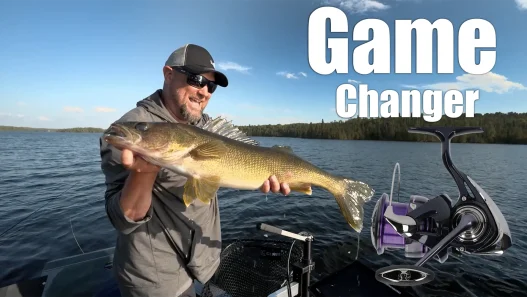
- Reel: A 2500-size Daiwa Ballistic spinning reel dumps line fast and manages slack on the drop.
- Rod: A 7-foot St. Croix Eyecon with a forgiving tip protects the species’ soft mouth.
- Line: Six-pound monofilament adds essential stretch; braid risks ripping hooks free.
Ice Gear in July—Small, Heavy, Deadly
Traditional jigging spoons and the new Rapala Flat Jig shine because they’re heavy for their size:
- Drop: In 45 feet, the Flat Jig free-falls in about seven seconds.
- Pop & Pause: One sharp lift attracts; then hold dead still. Strikes happen during the hover.
- Experiment: When a standard jigging spoon stalled, a switch to the fluttering Flat Jig triggered immediate bites.
Fish Care: Treat Them Like Salmon
Whitefish are oily. Tossed into a livewell, they get soft and “funky.” Instead, bleed them quickly, slide them into a Yeti stacked with a 20-pound ice bag, and the meat stays pristine for the smoker—exactly the plan for today’s haul.
Boat Control & Sun Control
Wind amplifies the vertical presentation challenge. Spot-Lock keeps the transducer glued to the fish, while sun shirts, buffs, and fingerless gloves from Gill fend off harsh UV during long mid-lake drifts. Even at 80 °F, the lightweight fabric feels like a built-in mist system.
Hooksets, Battling & Handling
Hook a whitefish and be ready for a trout-like tussle—long bulldog runs and head shakes. Their torpedo bodies make them slippery, so keep a long-handle net handy. Once aboard, admire the thick, copper-tinted flanks before sliding each fish into the ice coffin.
With fish iced and marks still scrolling, the crew repositions on the hump’s edge, ready for another drop. In the next section we’ll break down nuanced jigging cadences, bait color selection, and a step-by-step smoking recipe that turns these “giant minnows” into golden slabs of perfection.
Vertical Precision: Dialing in the Bite
Targeting lake whitefish in open water is more than just a drop-and-hope strategy—it’s a refined process of vertical precision. Because whitefish can suspend anywhere from the bottom to the surface, the angler must actively search the entire water column. Drop to the bottom, work it 10 feet up, repeat, and then start again. It’s systematic, like typing line by line with sonar.
Using electronics to pinpoint individual fish, the anglers carefully position their baits with the help of GPS-controlled spot-lock motors. Jim runs a transducer from the bow Minn Kota while his partner works from the transom, each holding their boat position and bait over precise marks.
Soft Touch, Light Gear, Big Rewards
The setup matters. Whitefish have delicate mouths, so a soft-action spinning rod, 6-pound monofilament line (Sufix Siege), and a buttery-smooth drag are essential. Too stiff a rod or tight a drag and you risk ripping hooks free. The finesse approach is key—even when battling brutes with the strength of Boston Bulldogs.
Bait presentation, too, is nuanced. When fish turned finicky, downsizing from a bright, parrot-colored flat jig to a more compact profile quickly triggered a response. And in a surprise twist, one downsized bait brought a bonus hookup: a lake trout.
Bonus Lakers and Big Battles
Yes—lake trout. These whitefish haunts share territory with lakers, and one of the day’s thrills came when a flat jig tempted a hefty, copper-backed lake trout into biting. Another came when a true “magnum” whitefish inhaled the jig and bent the rod to its limit.
The fight? Pure brute strength. They don’t jump like smallmouths, but the battle is bulldog-strong and deeply satisfying. As the rod loads up and drags scream, it becomes clear why more anglers are discovering the joy of whitefish.
Smoked Whitefish: A Simple, Delicious Recipe
Once caught, it’s time to honor the harvest. Whitefish’s high oil content makes them ideal for smoking. Here’s a straightforward method from in-house chef Mike Hainer:
Simple Smoked Whitefish
- Prep the Fish: Head and gut the fish, then halve the carcass for easier handling.
- Brine: Mix 3 gallons of cold water with 2 cups of pickling salt in a 6-gallon bucket. Soak the fish chunks for 18 hours.
- Air Dry: Set the brined fish on smoker racks for one hour.
- Smoke: Use your favorite wood chips. Set the smoker to 180°F and smoke for 4–5 hours depending on ambient conditions.
- Serve: Enjoy the smoked fillets plain, on crackers, in spreads, or layered on fresh bread. They’re rich, flaky, and versatile.

