








There’s something about that first real stretch of safe ice in the North Country that just pulls you in. It’s not just fishing—it’s exploration. It’s dialing in patterns, reading fish moods, and embracing whatever the lake throws at you that day. And when you’re talking about a place like northern Manitoba—especially waters like Wacusco and Reed—you’re stepping into what I’d call true “land of the giants” country.
Up here, the diversity alone is enough to keep you on your toes. Walleyes—what we like to call “Manitoba Gold”—are the backbone. But you mix in lake trout, jumbo perch, whitefish, burbot, and big northern pike, and suddenly every drop down the hole feels like it could be something different.
Reading the Conditions: Let the Fish Tell You
One thing that stands out right away on these early ice trips is how quickly things can change. One day, fish are aggressive—chasing spoons, smashing jigging baits, reacting fast. The next day? A cold front slides in, a little snow hits, and everything slows down.
That’s where adaptability becomes everything.
We saw it firsthand—what worked best shifted to a simple, subtle presentation: a dead stick. Just a plain jig tipped with a salted minnow, set a couple feet off bottom, sitting still. No flash, no noise. Just letting the fish come to you.
And when it’s right… it’s right.
Walleyes would slide up off bottom—sometimes three, four feet—to eat that bait. Light bites, slow pressure, but consistent action. It’s a reminder that early ice isn’t about forcing a technique—it’s about listening.
Spread Out and Hunt the Schools
One of the smartest things you can do on big water like this is spread your group out along structure.
We were set up along a ledge—guys spaced 50 to 60 feet apart—covering water, watching how fish moved. And that’s key. These aren’t isolated fish. You’re dealing with schools that roam, slide up onto flats, then drop back into deeper water.
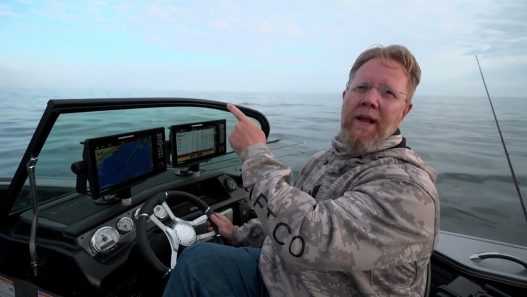
Electronics play a huge role here. Whether you’re running traditional 2D sonar or something more advanced like forward-facing sonar, you can actually watch waves of fish move through.
You’ll sit quiet… nothing happening… then suddenly, three or four rods go off in a matter of minutes.
That’s Manitoba.
Multi-Species Madness
The beauty of these fisheries is you never quite know what’s coming up next.
You drop down for walleyes, and suddenly you’re hooked into a thick-bodied whitefish. Or a jumbo perch slides in—12 inches of pure gold. Then maybe a burbot shows up, twisting and rolling under the ice.
And of course… the pike.
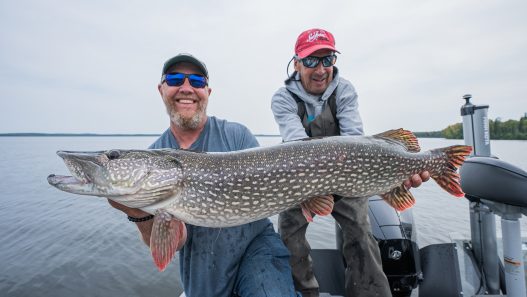
Big, heavy, mean northern pike that can show up anytime. Fish pushing 8 to 10 pounds—or bigger—crushing baits meant for walleyes. It’s that unpredictability that keeps every hole interesting.
Gear Matters—But Versatility Matters More
Coming into a trip like this, you’ve got to be prepared.
We’re carrying everything:
- Medium and medium-light rods for walleyes
- Heavier sticks for lake trout and pike
- Even lighter setups for panfish and stocked trout
Because on these waters, you might fish three different species in the same afternoon.
And bait selection? Same deal.
You experiment:
- Jigging raps
- Slab-style baits
- Spoons with flash and rattle
- Plain jigs with minnows
But when conditions get tough, don’t overthink it. That dead stick with a minnow can outproduce everything else in the arsenal.
Structure + Movement = Opportunity
The most productive areas we focused on were transition zones—inside corners, points, and flats adjacent to deep water.
Fish would stage deep, then slide up to feed.
And here’s the key: they weren’t always active. You had to stay patient, stay quiet, and be ready when that window opened.
Even with heavy ice—over two feet in some areas—and snow cover, noise still mattered. These fish can feel you. Move carefully, drill smart, and let the area settle.
Then be ready.
Why the North Country Hits Different
There’s a reason trips like this stick with you.
It’s not just the size of the fish—though that’s a big part of it. It’s the scale of everything. Massive lakes. Endless structure. Healthy populations. And the ability to truly explore.
You can chase walleyes in the morning, hook into pike midday, and finish the afternoon battling trout or whitefish.
That’s not normal fishing.
That’s Manitoba.
And when you hit it right during early ice… it’s about as good as it gets.
If you take one thing away from a trip like this, it’s simple:
Be prepared to fish multiple ways—and let the fish decide the program.
Some days it’s aggressive. Some days it’s finesse. But if you stay adaptable, stay mobile, and trust what you’re seeing—both on your electronics and down the hole—you’re going to experience something special.
Because up here, every drop could be a giant.

