









Mastering Walleye Jigging: A Season‑Long Guide to Presentations and Patterns
The Modern Spectrum of “Jigs”
Ask ten anglers what a jig is and you’ll get a dozen answers. In today’s walleye world, the term covers far more than the classic ball‑head and minnow: blade baits, Jigging Raps, soft‑plastic swimbaits, bucktail and marabou hair jigs, even vibrating lipless cranks such as the Rapala Rippin’ Rap all belong under the same umbrella. Understanding when and where each style shines is the first step toward a dialled‑in jig game.
Early‑Season Giants on Lake Vermilion
• Setting: 55 °F spring water; rock humps topping out in 5–8 ft.
• Tackle: Plain hard‑ball jig tipped with half a nightcrawler.
• Presentation: Fan‑cast and swim the jig slowly across the crowns of isolated boulders located with forward‑facing sonar and 360‑imaging.
• Result: Consistent catches of “monstrous” Vermilion walleyes—much like summertime smallmouths that station on identical terrain.
Mid‑Summer “Jig Trolling” on Remote Sturgeon Lake, Ontario
• Tackle: ½‑oz VMC Mooneye Jig paired with a 3.5 in. Big Bite Suicide Shad.
• Depth: 22 ft.
• Technique: Drop to bottom, then reel the jig up 3–4 ft and hold it there while the boat creeps at ~0.5 mph. The bait never touches bottom; it simply hovers and hunts.
• Why It Works: Heavy heads (½–1 oz) track true, cover water quickly, and stay above the snag‑laden rocks that dominate many Canadian shield lakes—yet few anglers pack them.
The Evergreen Jigging Rap
If a walleye box had a “must‑carry,” the Rapala Jigging Rap would be it. Guides on Leech Lake bomb it across 8–10 ft sand flats in spring; deep‑water hunters snap‑jig it on mid‑lake humps all summer.
Critical cadence:
1 Let the lure hit bottom.
2 Pop it sharply, then immediately drop the rod tip, giving slack so the bait can dart right and left on a semi‑free fall.
3 Repeat.
Many “non‑believers” fish it too straight and too tight—once they witness the slack‑line jump‑and‑glide, confidence (and catch rates) soar.
Fall on Mille Lacs: Hair Jig vs. Blade Jig Shootout
• Conditions: 58 °F autumn water; walleyes scattered between 8 and 14 ft on sprawling weed flats and adjacent clean sand/gravel.
• Day 1:
◦ Al (back deck) – Black Moontail Hair Jig, slow‑rolled.
◦ Author (front) – Rapala Rippin’ Blade, ripped hard.
◦ Outcome: Both baits produced, with the blade excelling.
• Day 4 (same spot, new crew): Hair jig outfished the blade 4 : 1. A guest in the stern used a lighter head and simply crept it through weed edges, proving how micro‑adjustments in weight and speed decide the score.
Weight, Plastics, and Drop Speed—Tiny Tweaks, Big Dividends
Two seemingly identical 3.5 in. plastics on Mooneye heads can behave worlds apart:
| Jig Head | Trailer | Action & Drop |
|---|---|---|
| ⅛‑oz | Suicide Shad (boot‑tail) | Slower fall; tail vibration creates lift—great when fish want a languid glide. |
| ⅜‑oz | Slim Minnow (straight tail) | Faster, erratic dart and plunge—deadly when walleyes are snappy or in wind‑swept shallows. |
The Rippin’ Rap: Early‑Season & Dirty‑Water Ace
When Green Bay or any turbid river system warms early, shallow flats (4–8 ft) load with pre‑spawn walleyes. Side‑scan or Live‑scope identifies pods; the Rapala Rippin’ Rap cleans up:
1 Cast long, let it thump bottom.
2 Lift 2–3 ft and drop.
3 Pause—many bites come while the lure sits motionless and the fish simply inhale it.
The same ripping retrieve scores midsummer in fast current and in weedy, stained lakes.
From swimming jigs over Vermilion boulders to slow‑rolling hair through Mille Lacs cabbage, the common thread is matching head weight, tail style, and retrieve to depth, cover, and fish mood. Master that trio and a “simple” jig becomes the most versatile tool in your walleye box.
When Live Bait Earns Its Place
Before we close, a quick word on live bait. While many anglers—including Al—prefer to rely solely on artificials, I’m not a strict purist. If conditions dictate that a nightcrawler, leech, or lively shiner will turn lookers into biters, that rod locker absolutely opens.
The key is flexibility: deploy whatever the walleye mood, season, and water clarity require.
Even so, the past decade has proven that artificial jig‑based presentations now catch fish in situations once dominated by meat rigs. Learning when to swap a minnow for a ½‑oz Mooneye or trade a slip‑float for a Rippin’ Rap has become the hallmark of the modern multi‑species angler.
Master the Jig Spectrum, Catch More (and Bigger) Walleyes
Whether you’re swimming a ball‑head and crawler across Vermilion humps, slow‑trolling a ¾‑oz swimbait jig in northern Ontario, ripping a Jigging Rap over mid‑lake gravel, or feathering a hair jig through cabbage on Mille Lacs, one truth stands tall:
The better you understand the full spectrum of jigging baits, the more—and larger—walleyes you’ll put in the net.
Embrace the entire toolbox, experiment with weight, cadence, and trailer style, and never shy away from live bait when conditions call for it. Do that, and you’ll out‑fish yesterday’s best every time you hit the water.
Walleye Jigging: Live Bait, Plastics, Jigging Raps and Blade Baits
Walleye jigging encompasses a range of different lures that include blade baits, hair jigs, Jigging Raps, jigs rigged with soft baits, and, of course, the classic ball head jig tipped with live bait. Throughout the seasons, water depth, temperature, structure and the simple mood of the fish can dictate which jigging methods and lure options are going to perform the best.
Every year, I often fish walleyes in a variety of different locations using these jigging above baits. Taking the time to learn how, when and where to fish each option is simply going to enable you to catch more walleyes.
Walleye Jigging: Plain Hard Ball Jig with Nightcrawler
Early in the season, when the water temperatures were around 55°F in spring, we were catching monstrous walleye on a plain Hardball jig with a nightcrawler. We were targeting the tops of submerged rock humps in 5- to 8-foot of water. We often fan cast and slow-reel the bait over the tops of the humps. It’s intriguing because we use forward-facing sonar to locate isolated boulder piles and swim the bait right through them. This technique reminded me of fishing for smallmouth bass in midsummer when they are up on the crowns of rock piles. It was a successful presentation and a great way to target walleye in this particular situation.
Jig Trolling
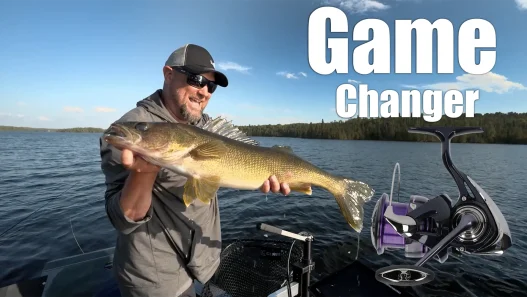
Another interesting jigging presentation that I discovered while fishing on Sturgeon Lake in Northwest Ontario is jig trolling. In midsummer, we used a half-ounce jig with a three-and-a-half-inch Suicide Shad. Instead of casting the bait and jigging it back to the boat, we dropped it to the bottom and then reeled it three to four feet off the bottom while moving the boat at a prolonged rate of speed, around 0.5 miles per hour. The key was to hold the bait suspended off the bottom without bouncing it. This technique allowed us to cover ground quickly in moderate to deeper water conditions. It’s important to note that many walleye anglers do not carry these heavier jigs, but they can be a game-changer in certain situations.
Walleye Jigging with Jigging Rap: A Must-Have Bait
One bait that all walleye anglers should have in their boat is the Jigging Rap. This bait has proven to be incredibly effective in a wide range of fishing situations. Whether you’re fishing in moderate to deeper water or shallow sand flats in the early season, the jigging rap can produce results. It’s a versatile bait that allows you to cover a lot of ground quickly due to its weight. One important tip when fishing with a Jigging Rap is to fish it erratically and aggressively. This means popping it off the bottom and dropping the rod tip back to the bait, causing it to jump right and left. This presentation can make a significant difference in your success with the jigging rap.
Walleye Jigging Moon Tail Hair Jig and Ripping Blade
Last year, I had the opportunity to fish on Mille Lacs Lake. We were targeting walleye in 8 to 14 feet of water, where the fish were moving back into the big, expansive weed flats. My fishing partner, Al, was using a black MTJ Moontail Jig while I was using a Ripping Blade. It was interesting to see how the two baits performed differently. Al was slow-rolling the hair jig with a lightweight head, allowing it to swim slowly through the edge of the weeds.
On the other hand, I was ripping the blade off the bottom, creating extreme vibrations. Both baits were successful, but it was intriguing to see how the fish preferred one over the other on different days. It just goes to show that experimenting with various baits and techniques is vital to finding success.
Understanding the Weight and Movement of Jigs
When it comes to jig fishing, it’s crucial to understand the weight and movement of the bait in the water column. This can make a significant difference in the number of fish you catch throughout the day. Let’s take a closer look at a few examples:
1. Ripping Blade: This bait is a vibrating bait that falls quickly and creates extreme vibrations when ripped off the bottom. It’s an excellent bait for covering a lot of ground quickly.
2. Moon Eye Jig with Big Bite Suicide Shad: This bait comes in two styles, one with a boot tail and the other with a straight tail. The weight of the head and the style of the plastic determine the bait’s movement in the water. For example, a heavier head with a straight-tailed plastic will move erratically and fall faster, while a swimbait tail will slow the drop speed and create more lift.
3. Ripping Rap: This loud and noisy bait can be cast out and reeled in, creating a lot of vibration. However, it’s typically fished with a ripping or jig ging retrieve, where it is ripped off the bottom to imitate a wounded baitfish.
Experimentation is Key to Walleye Jigging
One thing I’ve learned throughout my experiences with jig fishing is that experimentation is critical. The mood of the fish can change from day to day, and what works one day may not work the next. It’s essential to be open to trying different baits, techniques, and presentations to see what the fish responds to. Sometimes, a slight change in weight or bait movement can make all the difference.
In conclusion, jig fishing for walleye is a versatile and effective technique. There are a wide variety of jig baits available, each with its unique characteristics and applications. Understanding the spectrum of jigging baits and how to use them in different fishing situations can significantly increase your success on the water. Remember to experiment and let the fish tell you what they want. With practice and experience, you can become a skilled jig fisherman and catch more and bigger walleye than ever before.


[…] concentrate the baitfish into one location which will attract numbers of predatory species like walleye, bass, musky, and northern […]
Walleye Jigging is without a doubt the best way to catch them. Thanks!