










Up North, avid anglers are eager for open-water early-season fishing. It’s been almost five months since we stored the boat away. Between the end of ice fishing and the open-water season, here’s time to prepare rods and tackle.
At Lindner Media, we’ve always focused on multispecies fishing, believing that each gamefish brings its own fascination and challenges. Spring can be the best time to catch all kinds of critters. Here are a few early-season presentations we always have on the deck in the spring.
Top Early Season Fishing Lure Options
#1. Jerkbait
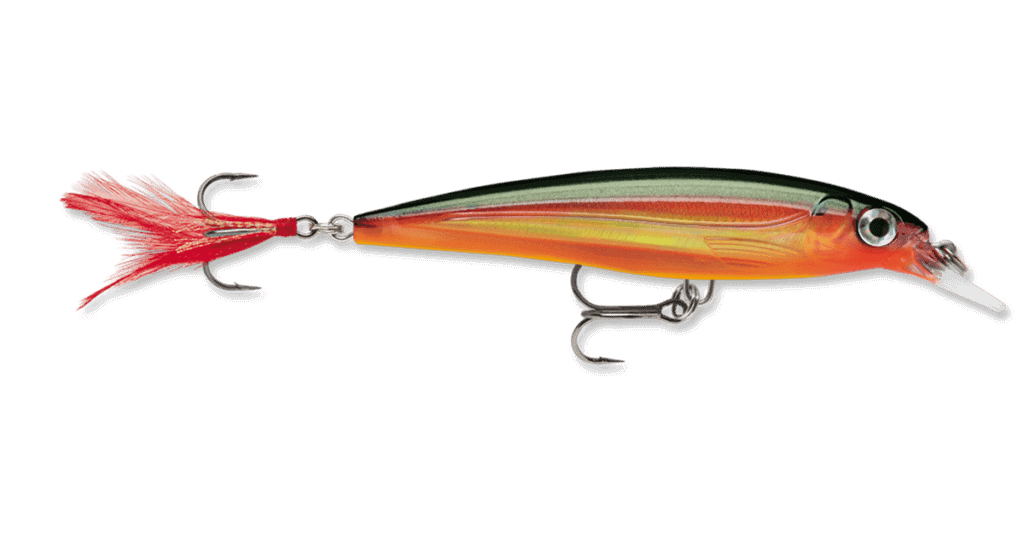
This is such a fun bait to throw, everything will eat it, but largemouth, smallmouth, and walleye can lose their mind for it.
Something interesting about it is how your work the bait, can produce different fish in the same area. Fish it erratically and smallmouth jump all over it.
Use a pull and pause cadence and walleyes smash it and smallmouth often ignore it. The bait generally shines in shallower water say 2-12 feet and seems to be most effective when water temps range from the mid-forties to the high-fifties.
Generally the colder the water the more subtle the retrieve and the longer the pause the warmer the water the faster and more erratic to work the bait.
One thing we’ve found in really cold water when fish are still deep is to “Jerk Troll” using a deep version of an X-Rap or Shadow Rap. Use the motor like your reel, kicking it in and out of gear. It can be amazing when the fish are in the 12-18’ range.
Many anglers fish Jerkbaits with bait casting equipment, however, we like fishing them with spinning gear.
We fish St. Rods and Daiwa reels and they have this combo available in a variety of price points: A 6’10” Medium Power Fast action, with a size 2500 or 3000 reel spooled with 10-pound Sufix 832 in 10 Pound with a 12 pound Fluorocarbon.
With this set up you can really make jerk baits dance! Jerkbaits are one of my favorite early-season presentations.
#2. Lipless Crankbait
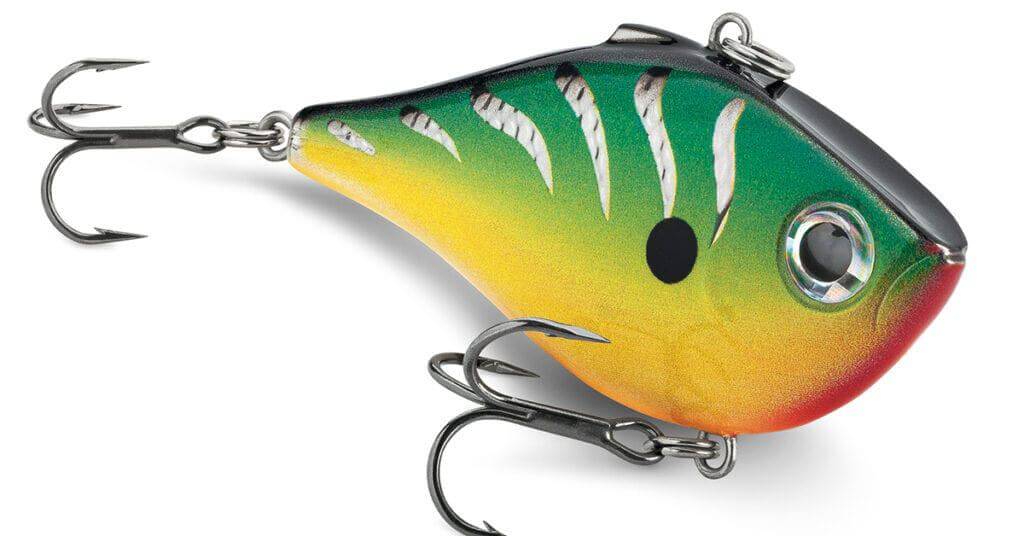
This is one of the most versatile tools in your tackle box. It can be fished shallow, deep, horizontally, or vertically, there’s no wrong way to fish it. This is my number one search tool in the spring for walleyes, smallmouth, and white bass.
However, it’s not limited to those species. Smaller versions are deadly for crappies and stream trout, and larger sizes can be awesome for pike and lakers.
Generally in the spring fish are shallow and concentrated in small areas. I use the Lipless Crank to find pockets of fish. You can put on a lot of miles with this bait and that’s a big key to its success.
A simple cast and wind with subtle hesitations is the retrieve when pounding the shoreline. If the fish are deeper off the first break, let the bait hit the bottom and slowly roll or jig it back. It’s simply one of the best tools for covering water.
A couple of notes about the baits and equipment. The size 6 Rippin’ Rap is my favorite, but there are a ton of options in this category. Lipless cranks are heavy for their size and have small treble hooks, so your rod, reel, and line selection is important in landing fish.
It’s nice to have a setup with a lot of give. We use glass rods with medium power and moderate action, a 100-200 size reel, preferably with a slower gear ratio, like a 6.3:1, and monofilament or fluorocarbon line.
For me I like the 10-pound Sufix Advance Mono, it has much less stretch than most monos, and it’s insanely strong. The glass rod and mono line put a lot of play in the system and keep fish pinned when they jump.
Shallow vegetation often attracts huge schools of shiner at this time of year, which in turn draw in bass, walleyes, pike, and big crappies. Lipless rattle-baits are hard to beat in these situations.
Favorites today include Rapala’s Rippin’ Rap and the Storm Arashi Vibe. Fish it over developing vegetation in 4 to 8 feet for largemouth bass, and you find pike lurking there as well. Retrieve slowly, letting the lure tick the top of the grass before you pull it free.
Walleyes favor the mouths of feeder creeks and gravel bars, where you run into smallies, too. If fish have pulled out deeper, work it with a lift-drop retrieve, a jigging action that imitates dying preyfish.
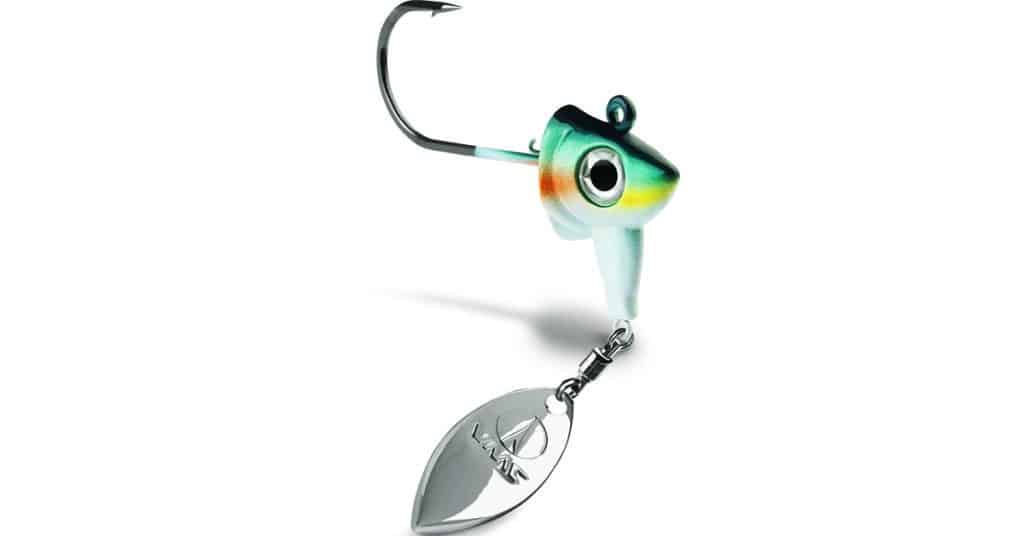
#3. Bladed Jig
This innovative lure comes into its own when waters warm into the 50°F range, it has a big thump that can make fish lose their mind in shallow water. Though this was designed as a largemouth bass bait, other species have no idea.
They’re deadly for pre-spawn smallmouths on gravel and rubble flats, and on several spring trips filming TV shows, we’ve caught more walleyes than bass. The bladed jig is often gets overlooked when choosing early-season presentations.
If you’re not fishing this category of lure you must, when it’s on, you’d be hard-pressed to find another presentation even close to as effective as this one. The bait has a lot of “lift” meaning it wants to rise on the retrieve.
I like choosing slightly heavier weights than you would generally think for shallow water.
You can throw this on your favorite rod for spinnerbaits or jigs. If you really get into it, you’ll find most hard-core bladed jig fishermen use a 6’10” -7’4” Medium Heavy/Moderate Fast rod with 20# Fluorocarbon and a 6.3:1 gear ratio.

4. Marabou Jig
One of the oldest early season presentations, these fuzzy little lures go back to the 1960s, long before anyone used rubber or silicon skirts on jigs. I first learned about this technique from my friend north of the border Jeff Gustafson.
The Canadians were killin’ it with marabou for years before smallmouth anglers found its fire down here. There are many versions of Marabou Jigs, but what I’m specifically talking about here is a very light 1/16-1/8 oz. The black marabou jig is a great leech/bug imitator.
Again this presentation caught fire with smallmouth, but an incredible walleye lure, perhaps one of the deadliest clearwater largemouth baits for a tough bite, and trout, pike, and panfish love it too.
This feather dressing gives the lure a gentle swimming motion on a slow retrieve. You don’t fish this like a traditional jig and minnow. You basically want to glide the bait a couple of feet off the bottom with very little jigging.
A steady retrieve almost always out-produces a jigging retrieve. They’re deadly from ice-out until fish move deeper in summer. Tie one on!
The biggest challenge with this presentation is throwing a 1/16oz jig a long distance. Longer rods are your friends here, walleye rigging rods work well.
I use a 7’6” – 8’6” medium light, extra fast rod with a size 2500 reel, and here’s the secret, 8-pound Sufix NanoBraid with a 6-12 pound leader, depending on the conditions. With this system, you’ll be able to throw, basically a fly, an incredibly long distance.
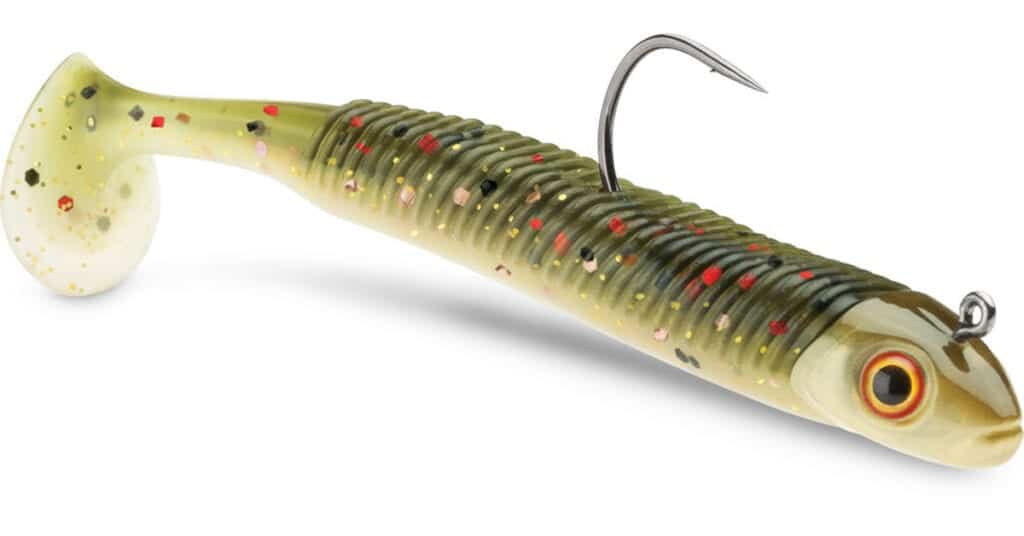
5. Swimbait
Swimbaits, specifically soft plastic swimbaits are a lure we have tied all year. There’s no wrong way to fish them, everything eats them and they can be fish in any depth, depending on the weight of the jig you choose.
If you’re just getting started in this category try something like a Storm 360 GT, a pre-rigged swimbait in a 3.5 or 4.5-inch size. As you learn of its effectiveness you’ll discover a whole new world of different jigs, hooks, body shapes, sizes, and colors in this category.
For us in the spring we have a 1/8 or 1/4 oz Mooneye Jig with a 3.5” Suicide Shad tied on. As far as early season presentations go their versatility makes them extremely effective, when weather changes cause fish to shift locations and depths.
Adjust weights to follow them deep or shallow.

