








Vertical Jigging for Lake Trout in Northern Michigan: A Hands-On Approach with Sport Fish Michigan
Fishing for lake trout in the Great Lakes is a time-honored pursuit, and for those seeking a more engaging, hands-on method than trolling, vertical jigging offers a thrilling alternative. Recently, we had the opportunity to join Sport Fish Michigan captains for a deep dive into this interactive technique.
A Personal Favorite: Vertical Jigging Lake Trout
Vertical jigging is one of my favorite ways to target lake trout. Having pursued these fish across the continent—from Canadian waters to western reservoirs—I’ve developed a strong appreciation for the unique challenges and rewards this species offers. The program Ron and Chad run is particularly effective and fun, offering anglers a break from the traditional trolling methods common on the Great Lakes.
Rather than trolling with downriggers, dipsy divers, and planer boards, vertical jigging involves scanning the water with electronics, stopping directly over schools of fish, and dropping a jig right into the strike zone. It’s simple, direct, and incredibly exciting.
Scanning, Spot Locking, and Dropping In
With advanced sonar and GPS trolling motor technologies like Spot-Lock, the captains methodically search for steep underwater points and breaks. When they locate suspended fish—often 80 feet down over 100+ feet of water—they stop the boat’s forward momentum, reverse briefly, and lock into place using Minn Kota’s Turova system. The key here is stealth. In the gin-clear waters of northern Lake Michigan, where you can often see bottom in 50 to 60 feet, noise and movement from the motor can spook fish. Shutting down the engine and maintaining a quiet boat presence is essential.
Once in position, the action begins. Dropping spoons or blade baits straight down and working them just off bottom provides immediate, tactile feedback when a trout hits.
Seasonal Patterns and Stocking Success
Lake trout are incredibly responsive to seasonal shifts. In early spring after ice-out, the cold water draws them into the shallows to feed. During this period, casting jigs or blade baits from shore or shallow boats can be very productive. But by mid-June to July, the thermocline sets up, pushing fish deep and making vertical jigging the go-to technique.
What makes this region even more impressive is the sheer number of lake trout. Stocking programs run by federal agencies as well as Michigan and Wisconsin state agencies have created an abundant and balanced population. The mix of wild fish and fin-clipped stockers means that whether you’re trolling or jigging, you’re likely to encounter fish—and lots of them.
The Battle and the Beauty
Catching lake trout with a vertical jig isn’t just effective—it’s exhilarating. These fish hit hard and fight deep, making for an unforgettable experience. During our trip, we landed several large, healthy trout, many of which were full of alewives and gobies—the rich forage base that helps produce such strong, vibrant fish in the region.
Handling these fish properly is crucial, especially when planning to release. Bringing them up slowly allows them to vent their air bladders naturally, minimizing trauma and increasing survival. The difference compared to king salmon, which often don’t survive release after a long fight, is notable.
Learning the Jigging Cadence
Finding the right cadence is one of the most interesting aspects of vertical jigging. Some days, a sharp, aggressive rod pop—two or three feet—is the ticket. Other days, a subtle eight-inch twitch proves more effective. On this trip, a gentler stroke seemed to be the key, and once one angler figured it out, everyone else followed suit and the boat lit up with hookups.
Whether you’re a seasoned angler or new to lake trout fishing, the technique is surprisingly accessible. With the right gear and guidance, even beginners—kids, parents, or grandparents—can get in on the action. The real-time feedback from electronics combined with the direct connection of a rod in your hand makes it an ideal introduction to the thrill of Great Lakes fishing.
Essential Gear for Deep Water Jigging
Vertical jigging for lake trout relies on a few key tools:
- Heavy spoons or blade baits – Two- to three-ounce options like the Luhr-Jensen Crippled Herring are excellent choices.
- Sensitive rod and reel combo – Preferably with a good backbone to drive hooks home at depth.
- High-quality electronics – Sonar and forward-facing imaging help locate fish accurately and efficiently.
- Spot-Lock trolling motor – Essential for maintaining precise boat positioning over structure or schools of fish.
Dialing in the Technique: Cadence, Conditions, and Bait Options
A calm morning, a glowing sun, and cooperative lake trout make for a near-perfect fishing experience—but getting consistent bites requires more than just good weather. While bluebird skies and flat water can be visually stunning, a slight chop often improves the bite window. Similar to many other species, lake trout can become wary in glassy conditions, but in low-light periods like dawn or dusk, they tend to feed more aggressively. If the wind holds, bites can continue throughout the day.
Proven Jigging Presentations and Baits
In addition to heavy spoons like the Luhr-Jensen Crippled Herring, blade baits such as the Rapala Rippin’ Blade offer another great option. These baits can be vertically jigged for suspended fish or ripped along the bottom to trigger reaction strikes. Another killer bait is the Jigging Rap Magnum, weighing in at 1 1/8 ounces. When vertically jigged, it darts erratically from side to side, often mimicking distressed baitfish and provoking savage strikes.
Don’t overlook soft plastics, either. The team frequently deploys one-ounce VMC Swimbait Jigs rigged with Big Bite Baits Salt Tubes or Jerk Minnows—a combination that produces strikes in nearly any lake trout setting.
Watching the Graph: Electronics and Fish Behavior
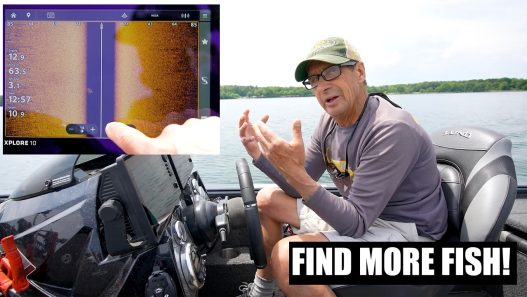
Success in deep water jigging hinges on interpreting what your electronics are showing. During one sequence, a suspended fish at 95 feet acted just like an eager retriever, “chasing the ball” (in this case, the jig) as it descended. Adjusting cadence and matching the movement to fish behavior can be the difference between a follow and a bite.
By zooming in on the 70 to 120 foot range and carefully adjusting sonar sensitivity and contrast, you can clean up the picture and isolate key zones where trout are staging. Using real-time sonar features like the RTS window (color A-scope) on a Humminbird unit helps you track your bait and fish reactions live—critical for real-time cadence adjustments.
Graph Settings That Matter
- Lower range: Set to 120 feet
- Upper range: Adjusted to around 70-80 feet
- Sensitivity: ~15-16
- Contrast: ~19
- Chart speed: Set to 10 for faster returns
- RTS Window (Color A-scope): Enabled for real-time column visualization
This setup enables precise, in-the-moment decision making and helps you refine your jigging to provoke more strikes.
Gear Matters: Rod, Reel, and Line Setup
When jigging lake trout in 80–120 feet of water, your equipment needs to be up to the task. A 7’6” medium-heavy rod with a moderately fast taper allows for solid hooksets at depth. Paired with a Daiwa Tatula 300 high-speed reel (7.1:1 gear ratio), anglers can quickly pick up slack line when trout hit and swim vertically toward the surface.
Spooling with 30-pound braided main line and a 15- to 20-foot fluorocarbon leader (15-lb test) joined via an FG knot ensures both strength and invisibility, crucial in clear Great Lakes waters.
Why a Wide-Spool Reel?
With the amount of line let out in deep water jigging, having a wide spool maintains the reel’s effective gear ratio even as line diminishes from the spool. This ensures consistent performance and responsiveness throughout the retrieve.
Forward-Facing Sonar and SpotLock: A Game Changer
New technologies like SpotLock and forward-facing sonar have revolutionized vertical jigging. SpotLock holds the boat precisely over structure or schools of fish, allowing anglers to focus on presentation rather than boat control. Meanwhile, front-mounted sonar lets anglers locate fish ahead of the boat and adjust positioning before making a drop. This combo drastically improves accuracy and efficiency, especially on isolated humps, turns, and steep breaks.
High-Definition Mapping
Detailed mapping on Humminbird units reveals subtle underwater features such as inside turns and contour changes where trout congregate. This information eliminates much of the guesswork and leads to faster success on the water.
Cadence Makes the Difference
Strikes often come when the presentation imitates a natural movement—whether that’s a fast erratic rip or a slow, soft lift. One of the most productive patterns during this outing was a 6-inch lift followed by a two-second pause, which mimicked a perch feeding motion. That pause made all the difference on a calm morning, when lake trout were just a bit more lethargic.
Rods Built for Battle
High-quality rods like St. Croix’s moderate fast action models are perfectly suited for battling big lake trout. With power distributed further down the blank, they offer control and cushion for heavy runs. Even when the fight turns into a slugfest near bottom, the rod provides the backbone to wear down strong fish.
The combination of elite gear, dialed-in electronics, and real-time observation makes this style of lake trout fishing both technical and rewarding. And for the charter captains leading the charge—who often spend their time helping others catch fish—it’s a treat to get on the business end of a rod themselves.
A Memorable Morning and a Lasting Impact
As the morning unfolded on the crystal-clear waters of northern Lake Michigan, the action never slowed. Lake trout after lake trout came to the net—many with broad shoulders, heavy girths, and undeniable power. With over a dozen landed fish and countless interactions on sonar, the day stood out as one of those rare, perfect outings. Calm water, cooperative fish, and great company combined to make it memorable.
One especially striking fish came unbuttoned right at the net, but was still admired for its sheer size and health. The abundance of forage like alewives and gobies has clearly benefitted these trout, which show remarkable condition and fight. These are not just numbers on a screen—they’re beautiful, living creatures that thrive in a well-managed fishery.

