









In today’s world of fishing, your electronics can make or break your day on the water. Just ask James Lindner, who spends his seasons fishing all over North America for a wide range of species. But when it comes to catching fish consistently, it all comes down to one thing:
“The real key to catching fish consistently is simply finding them,” says James. “And we use all the tools – mapping, 2D sonar, side imaging, MEGA 360, and Humminbird MEGA Live.”
The truth is, today’s sonar technology isn’t just about locating fish; it’s about reading behavior, adjusting your casting angles, and knowing when to switch tactics. In this article, we’ll walk through how James and Ron use Humminbird MEGA Live and MEGA 360 Imaging in real-world smallmouth scenarios, and how you can do the same.
MEGA Live vs. MEGA 360: What’s the Difference?
One of the common questions anglers ask is: What’s the difference between MEGA 360 and MEGA Live, and do I need both?
The short answer is yes if you want full situational awareness on the water.
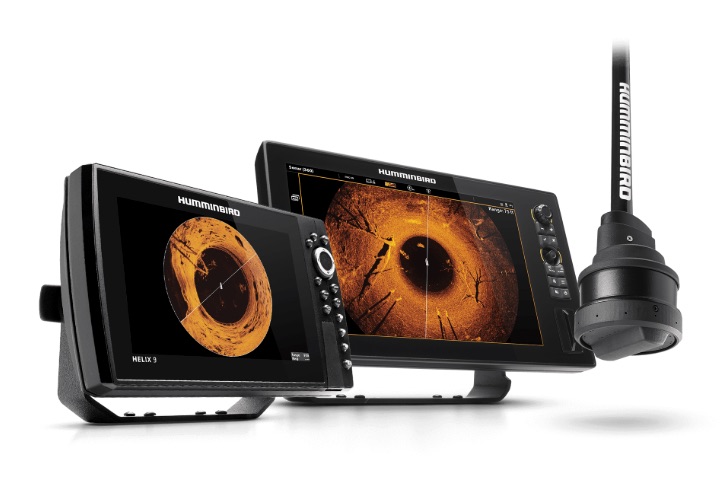

- MEGA 360 Imaging shows a high-resolution, top-down scan of the structure and fish around your boat, in a full 360-degree sweep. It works best when you’re stationary or moving slowly, and is excellent for identifying rock piles, boulders, grass edges, and isolated fish.
- MEGA Live Imaging provides forward-facing sonar that shows fish in real time, how they move, react, and position themselves in the water column.
“Even with how crazy Live is and all you can learn from it,” says James, “being able to see structure and fish on 360 is still such a big part of everything I do.”
Each tool serves a different purpose, and together, they give you the full picture.
Mapping to Sonar: The Full Workflow
When James and Ron hit the water, they don’t start casting; they start scanning.
Here’s how the workflow typically goes:
- Mapping: Use Humminbird LakeMaster or similar to identify key areas: points, reefs, saddles, and drop-offs.
- Side Imaging: Scan those areas at speed to confirm structure or baitfish.
- MEGA 360 Imaging: Drop the trolling motor and scan around the boat to locate structure and fish positions.
- MEGA Live: Once fish are located, use Live to see how they’re behaving and where they’re moving in real time.
This approach ensures every cast is calculated and every adjustment is data-driven.
The Value of Staying on Fish
One of the things James emphasizes is that sonar isn’t just for finding fish; it’s for staying with them. Especially with roaming smallmouth, who often slide on and off structure throughout the day, MEGA 360 helps anglers see the entire picture, while MEGA Live tells you what the fish are doing right now.
This gives you two major advantages:
- You make smarter casts – targeting fish instead of guessing.
- You waste less time fishing dead water.
The result? More bites, better quality fish, and a clearer understanding of what’s happening beneath the surface.
Modern Sonar = Consistent Results
If you want to catch more fish, learning how to read your electronics is essential. Whether you’re a weekend angler or a seasoned pro, investing time in MEGA Live and MEGA 360 Imaging will help you find more fish, make better decisions, and catch more consistently.
Sonar doesn’t replace angling skill; it enhances it. And as James and Ron showed in this session, when you combine the right tools with time on the water, the fish will come.

