








There are few joys in fishing that rival chasing smallmouth bass with a trusted friend, and in this segment, legendary angler Al Lindner is joined by longtime friend and industry expert Jeff “Kolo” Kolosinski for a day and a half of serious smallmouth action. Their mission: to explore a northern lake during the critical post-spawn period using state-of-the-art electronics, while sharing real-world insights that will help any angler find and catch more fish.
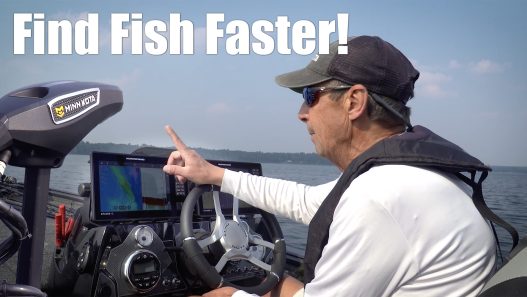
Cole, who works with Humminbird and Minn Kota, brings an immense wealth of knowledge to the boat—not only about how to use modern fish-finding tools, but also where and when they make the biggest difference. With 360 Imaging, Mega Live, and the full One-Boat Network at their fingertips, they’re able to break down structure, identify productive zones, and adapt their techniques on the fly.
Why Structure Matters: Saddles, Boulders, and Flats
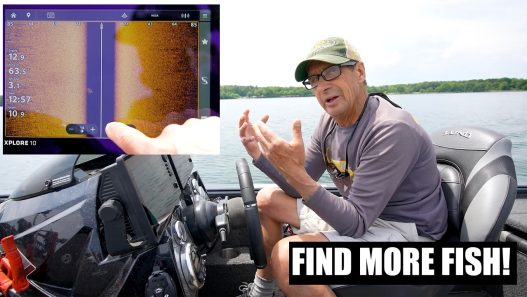
The morning begins with Al and Kolo identifying classic smallmouth structure: saddle areas flanked by boulders, rocky flats, and transition zones between sand and rock. Using Humminbird 360 Imaging, they pick out individual rocks and underwater terrain features that hold fish. As Al puts it, “This is a megastructure—big rocks here, big rocks there, with a saddle in between. It’s a no-brainer. When you open a map, you look—we will fish that.”
One of the standout lessons here is the importance of understanding not just what kind of structure you’re fishing, but how it positions the fish. The smallmouth they’re targeting are loosely scattered—post-spawn males and late-arriving females—and those larger boulders often provide the ambush points and resting zones these fish favor.
Topwater Surprises and Bait Selection
Despite expecting a deep-water bite, the pair discover that a topwater presentation proves surprisingly effective. This transitional time—just after the spawn, as insect hatches begin—can create a window where smallmouth start looking up, feeding on emerging bugs and anything that mimics them.
That said, the approach isn’t one-dimensional. Swim baits, finesse rigs, and scaled-up presentations all play a role. At one point, Cole hooks up on a bigger fish by upsizing his swimbait to avoid pesky rock bass. And with every presentation, they pay close attention to the fish’s behavior on the electronics—adjusting size, depth, and retrieve accordingly.
Matching Rods and Reels to the Task
Al takes a moment to spotlight the gear they’re using, highlighting his arsenal of St. Croix rods: the dependable Legend Elite, high-end Legend Xtreme, versatile Victory, and upgraded Legend Tournament Bass series. Paired with Daiwa spinning reels, particularly the Tatula MQ LT 3000, the gear is fine-tuned for handling everything from finesse plastics to small swimbaits.
The emphasis on the right gear isn’t just about product promotion—it’s about function. Whether you’re battling current, drop-shotting on rock, or launching casts across open flats, the right rod-and-reel combo dramatically improves your efficiency and feel.
The Evolution of Electronics: From 2D to Live Sonar
One of the trip’s most valuable insights is how far fishing electronics have come. As Al notes, the journey started with basic 2D sonar, moved into side imaging, advanced to 360 Imaging, and now includes live sonar. Each technology builds upon the last, creating a suite of tools that not only finds fish but lets you observe their behavior in real time.
Using Mega Live, Al and Cole can tell if fish are tight to the bottom or suspended, if they’re following a bait, or actively feeding. It’s this real-time observation that allows them to fine-tune their approach and turn a tough day into a productive one.
Fishing the Flats: Grinding Through the Numbers
The duo admits that it’s not an easy bite. They’re working through plenty of rock bass to find quality smallmouth, and the fish are scattered, not schooled. But the electronics—combined with persistence—reveal the fish are indeed there. It’s a grind, but it’s a rewarding one. Each nice smallmouth that hits the net is a testament to reading structure, using electronics effectively, and staying flexible with presentation.
Flats with “character”—defined by scattered rock and boulder clusters—are critical. Sugar sand doesn’t hold fish; structure does. And on many northern lakes, the post-spawn fish fan out across these flats, making precise electronic mapping essential.
Real Talk: Why Catching Matters
In a candid reflection, Al acknowledges the heart of why anglers keep coming back to the water: catching fish. “You can enjoy the loons and the breeze,” he says, “but if you don’t get bit, you’re not coming back.”
Electronics, used wisely, are the game changer. They help anglers of all skill levels shorten the learning curve, build confidence, and—most importantly—catch fish. For new anglers, a few successful trips can make the difference between a lifelong passion and a forgotten hobby.
Fish Have Other Plans
As every angler knows, plans rarely go exactly as expected. But with the right tools—LakeMaster maps, side imaging, Mega 360, and Mega Live—you can adapt. As Cole notes, “You leave the boat launch with a plan, but sometimes the fish have other plans.” That’s when electronics help piece together the puzzle, from bottom structure to fish mood, enabling anglers to make informed adjustments.
Whether it’s a finesse worm, swimbait, or topwater plug, the magic comes from reading conditions and experimenting until the fish respon

