






Power Fishing for Summer Walleyes: Mastering Mobility and Reaction Strikes
Buck Perry’s Lasting Legacy
“Deep water is the home of the fish,” said Buck Perry, the legendary angler from Hickory, North Carolina. That simple principle laid the groundwork for structure fishing—a concept Perry championed decades ago. His core philosophy was clear: if you’re not catching fish shallow, work deeper until you find success. While today’s technology and tactics have evolved, Perry’s foundational ideas remain deeply relevant.
Anglers now understand that fish aren’t uniform in behavior—different groups of walleyes may hold at different depths or in various types of cover, and they don’t all activate at the same time. To stay successful, anglers need to be adaptable and willing to fish across the entire water column. On this episode of The Edge, the focus turns to power fishing for mobile walleyes—fish that move up and down breaklines, slide into shallow weedbeds, or suspend off structure entirely.
Chasing Aggressive Fish with Aggressive Tactics
Power fishing is about covering water efficiently and triggering the most aggressive fish in any zone. Whether walleyes are relating to weeds, structure, or open water, power tactics like ripping and jigging can provoke strikes when traditional methods come up short. As the hosts demonstrate, these aggressive techniques not only help you locate fish faster, but also increase your chances of boxing quality eaters—and sometimes even trophy-class fish.
One such walleye, described mid-show, is held up for the camera: “That’s a nicer one, huh?” While not a monster, it’s the kind of quality eater that anglers come to expect from natural walleye lakes. In fact, these mid-sized fish—typically in the 16- to 20-inch range—are the bread-and-butter targets for most anglers across the heart of walleye country.
What’s a Big Walleye? It’s All Relative
What defines a “big” walleye varies widely based on the fishery. If you’re fishing the Great Lakes, western reservoirs, or trophy lakes in remote Canada, 8- to 10-pounders are not uncommon. But on the smaller, natural lakes spread across the Midwest—often mesotrophic or slightly eutrophic systems—a 6-pound fish is a real standout.
In these smaller lakes, most fish range from 1.5 to 3 pounds. Hooking into a 4- to 6-pounder is an exciting event, and 8-pound fish are rare trophies. The host underscores this relativity: “Even on big-name lakes like Lake of the Woods, Red Lake, or Winnebago, an 8-pounder is still a big, big fish.”
Online galleries on sites like Target Walleye showcase giants stretching over 30 inches, but these often hail from the Great Lakes or western impoundments. For most anglers, a productive day is filled with walleyes in the 16- to 20-inch slot—ideal for both action and table fare.
The Power of Reaction Baits
Despite what some anglers may say about poor fishing conditions, the results often tell a different story. Early in this outing, the anglers landed three walleyes and a pike within 10 minutes of launching. Nearby, another group lamented the “bad bite,” having dragged live bait rigs with limited success. The difference? Reaction baits.
Instead of passively waiting for fish to take nightcrawlers or minnows, the hosts turned to high-action lures like the jigging rap, rip jig, and lipless crankbaits. These aggressive baits trigger instinctual responses, especially during tough conditions like post-frontal weather and flat-calm afternoons.
Even experienced walleye anglers are still catching up to the effectiveness of these lures. Many haven’t even tied on a jigging rap yet—an oversight that’s costing them fish. As one host explains, “It’s amazing to me, after all of the exposure, how many people haven’t tried it.”
Three Must-Have Lure Types
The hosts outline their top three bait styles for power walleye fishing, none of which involve live bait:
- Jigging Rap – Often described as a miracle bait for walleyes, especially in summer when fish can be reluctant to bite. It delivers erratic, fast-paced action that demands a decision from the fish.
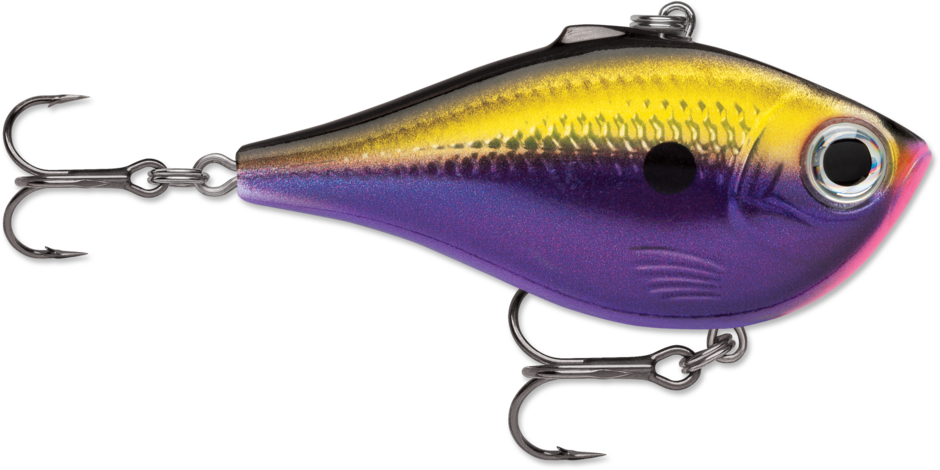
- Lipless Crankbait (Rip and Rap) – With its compact shape and rattle, this bait excels when ripped through water columns or bounced off bottom transitions.
- Soft Plastic on a Jighead – A moon eye jig paired with a paddletail soft bait (such as a Big Bite Baits boot tail) offers versatile appeal, especially when fish are in a slightly less aggressive mood.
These three lure families cover lakes, rivers, and reservoirs alike. When fished with confidence and skill, they can outperform even high-end live bait presentations—yes, even redtail chubs.
Instinctual Predators and Tactical Tools
Fishing with reaction baits is about reading fish behavior and provoking bites on instinct. Predators like walleyes don’t spend time deliberating; they react to movement and aggression. A well-placed jigging rap in the right cadence can outperform the most carefully presented live bait on days when fish need a little coaxing.
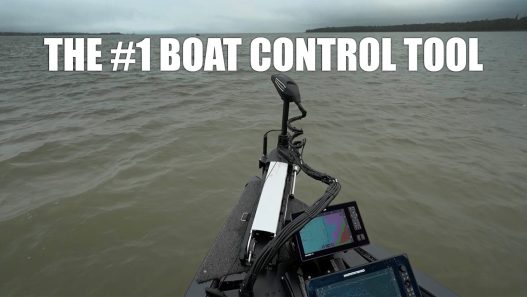
New tools, like Minn Kota’s iPilot Link and Humminbird electronics, add to the tactical edge—allowing anglers to lock onto spots, follow contours, and cover water methodically. Technology is a force multiplier when paired with the right lures and techniques.
Summer Power Fishing: Maximizing Aggression and Efficiency
Rethinking Walleye Behavior in Summer
As the mid-summer heat sets in and water temperatures reach their seasonal peaks, many anglers default to finesse tactics, assuming that walleyes become sluggish in warm, flat, and sunny conditions. But that assumption often leads to missed opportunities. In reality, when the water warms up, a walleye’s metabolism is in overdrive. These predators are anything but lethargic—they’re feeding machines.
Instead of downsizing, the better approach is to go bigger, go bolder, and fish faster. Aggressive presentations are far more likely to trigger reaction bites during these peak metabolic windows. The key is to find fish-holding structure, then put the right bait in front of them with the right speed and action.
Targeting Shoreline Breaks and Summer Structure
In terms of location, shoreline breaks often out-produce mid-lake humps during the dog days of summer. Flats in the 6- to 10-foot range, especially those adjacent to inflowing or outflowing creeks, can be hotspots. The flow itself, not the direction, is what matters—it creates natural funnels that attract baitfish and, in turn, walleyes.
On these flats, the best areas often have irregularities—such as weed clumps, small points, bends in the contour, or changes in bottom composition. Some of the best deep jigging spots even feature clam beds, which can be identified when your jigging rap picks up a few unexpected hitchhikers.
By combining these key elements—structure, bait movement, and aggressive techniques—you can routinely put together great walleye days in the middle of summer.
Seeing Results in Real Time
As the day progresses, the bites continue to stack up: chunky slot fish, 22-inchers, and even a surprise freshwater drum or two. The action speaks for itself. Whether over shallow flats or near transitions into deeper water, the walleyes are responding to the speed and erratic action of power baits, not slowly crawled live bait rigs.
This approach not only catches fish, but it often outperforms traditional methods, even when others on the lake insist the bite is tough.
Electronics: The Ultimate Fish-Finding Advantage
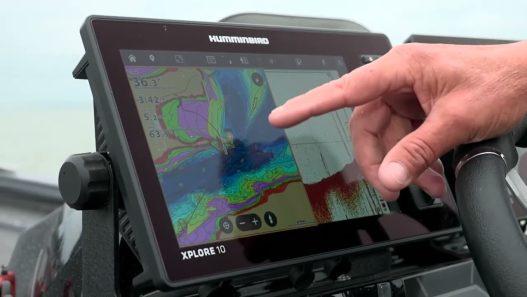
A huge part of this system’s success comes down to on-the-water efficiency, and that means using the right electronics. One of the hosts shares his favorite Onyx screen layout:
- Mapping to stay oriented on the breakline
- 2D sonar to mark fish and bait under the boat
- Side imaging to scan the area laterally
- Down imaging for ultra-clear vertical target identification
This four-panel display provides constant, detailed feedback, allowing the angler to adjust presentations and positioning on the fly. Combined with real-time bathymetric mapping via AutoChart Live, anglers can unlock even the most unfamiliar lakes in just a few hours of scouting.
Rod, Reel, and Line Setup: Tools for the Job
Each bait used in this power program—jig-and-plastic, jigging rap, and rip and rap—requires a different gear setup to maximize effectiveness:
- Jig and Plastic (Big Bite Baits Boot Tail on a BMC Jig)
- Rod: St. Croix Legend Tournament 6’8″ Medium Extra Fast
- Reel: Quantum Speed Freak 25
- Line: 10 lb Sufix 832 braid with an 8 lb fluorocarbon leader
- Best Use: Ripping through weeds and shallow structure
- Jigging Rap
- Rod: St. Croix Legend Tournament 6’10” Medium Light
- Reel: Quantum Catalyst 30
- Line: 10 lb Sufix Siege monofilament
- Tip: Use a barrel swivel 2 feet above the lure to reduce line twist; the softer rod helps avoid tearing the heavy bait out of a walleye’s mouth.
- Rip and Rap (Lipless Crankbait)
- Rod: St. Croix Legend Extreme 7′ Medium Power
- Reel: Quantum Speed Freak with an 8.1:1 gear ratio (retrieves 35 inches per crank)
- Line: 12 lb Sufix fluorocarbon
- Best Use: Shallow or deep, when aggressive strikes are expected
These setups are not only optimized for walleyes but double effectively as bass gear, making them versatile additions to any angler’s rod locker.
Natural Lake Realities and Year-Round Effectiveness
In smaller natural lakes with perch and shiner forage bases, walleyes are primarily structure-oriented. Most of the fish you’ll encounter will be hugging the bottom or within a couple of feet of it—not roaming in open water. This makes power presentations on defined structure even more effective.
While live bait rigging, spinner pulling, or trolling crankbaits can all work, the day-in and day-out productivity of the jigging rap, the rip and rap, and the jig-and-plastic trio is unmatched in warm summer conditions.
“These are the bread and butter money walleyes,” the host notes, holding up another chunky 20-incher. “They’re what most people are fishing for in these natural lakes.”
From 16-inch eaters to the occasional 24-inch tank, this strategy delivers consistent results for anglers willing to move fast, fish hard, and think aggressively.
Stay tuned for the next section, where we continue exploring presentation strategies and locating mid-summer walleyes across a variety of waters.
Add These Power Baits to Your Arsenal
Before we wrap up, here’s a friendly reminder straight from the boat: make room in your tackle box for the jigging rap, the rip and rap, and the jig-and-plastic combo—especially that jigging rap. In decades of chasing midsummer walleyes, few lures have proven as consistently deadly. Fish them with confidence and you’ll discover why they’ve earned a place in our “can’t-leave-home-without-’em” lineup.
Closing Thoughts
So, what have we learned on this trip?
- Walleyes aren’t shy in summer. Warm water means high metabolism—match that energy with fast, erratic presentations.
- Shoreline breaks and subtle irregularities rule. Flats topping out in 6–10 feet near flowing creeks are prime real estate.
- Electronics shorten the search. A four-pane display—map, 2-D sonar, side-imaging, down-imaging—keeps you on the fish.
- Gear matters. Match each lure family with a rod, reel, and line that maximize hook-up ratios and fish-landing percentages.
- Versatility wins. Be ready to shift shallow, mid-depth, or deep as walleye location and mood evolve through the day.
Add these tactics—and those three reaction baits—to your summer playbook, and expect more “great days” than merely “good ones.”
Structure Fishing Walleye: Buck Perry’s Legacy and Modern Tactics
From the heart of Hickory, North Carolina, fishing legend Buck Perry once famously proclaimed that “deep water is the home of the fish.” Now, decades later, his foundational beliefs still echo across lakes and rivers, guiding modern anglers. As Perry demonstrated, if fish aren’t shallow, the next logical move is to probe progressively deeper waters until success is found.
That timeless strategy has evolved as our understanding of fish behavior has deepened. Today, we recognize that fish—particularly walleyes—don’t all congregate in one place or behave uniformly.
Different groups use different depths and forms of cover, becoming active at various times throughout the day. The goal? To locate and trigger the most aggressive fish available, wherever they may be.
The Edge: Power Fishing for Structure Walleyes
In this episode of The Edge, we dive into power fishing tactics designed for mobile walleyes. These elusive fish don’t stay put—they move in from deep water, suspend off break lines, venture into weeds, and even slip into the shallows.
The strategy is all about using aggressive presentations to find and provoke the biters, no matter their depth.
When anglers lock onto a productive pattern, the rewards are immediate—walleyes in the box and smiles on faces.
These “bread and butter” fish—particularly in natural lakes—are often the primary target for everyday anglers. Typically, keepers for the table range in size, with even slightly smaller fish prized for their flavor.
What Constitutes a “Big” Walleye?
Angler perception of what defines a “big” walleye varies dramatically depending on where you fish. In massive systems like the Great Lakes or trophy destinations in Canada, 8 to 10-pound walleyes are common fare, and a true giant might top 12 pounds.
But in the smaller, natural mesotrophic to slightly eutrophic lakes that populate the core of the walleye belt, expectations shift. In these fertile waters, a solid walleye weighs around four to six pounds.
An eight-pounder? That’s a rarity—a true trophy. These smaller lakes are home to healthy populations of 1.5 to 3-pound fish, and a six-pounder can make your day.
Even in renowned waters like Lake of the Woods, Red Lake, Mille Lacs, Leech Lake, or Winnebago, 8-pound fish are still rare trophies. It’s all relative to the system.
Curious about big walleye trends? Check out sites like Target Walleye, where you’ll find impressive 30- to 34-inch giants, almost exclusively caught from expansive waters like the Great Lakes, western reservoirs, or remote Canadian lakes.
For most of us, however, a stringer full of 16- to 20-inch walleyes is a winning day.
The Power of Reaction Baits
Fresh off the dock and within ten minutes on the water, the crew had already boated three walleyes and a pike. Meanwhile, other anglers lamented slow fishing while dragging traditional live bait rigs—night crawlers, leeches, and minnows.
What’s the difference? Reaction baits.
In tough conditions—summer heat, post-frontal pressure, flat calm days—reaction baits like jigging raps, ripping raps, and rip jigs shine. These baits provoke strikes not out of hunger, but instinct.
The aggressive motion triggers fish that would otherwise ignore live bait presentations. It’s a technique not everyone has adopted, but its effectiveness is clear.
One angler summed it up: “They think the fishing stinks. We’re going to catch who knows how many walleyes today.” The advantage lies in understanding how, when, and where to fish these lures with confidence.

The Three Go-To Baits for Walleye Success
For years, live bait has taken a backseat in the power fishing world. While there are still a few niche scenarios where it works best—like slip bobbering—the rise of three specific artificial bait types has changed the game:
1 Jigging Raps – A miracle bait for triggering inactive fish. Its erratic action fools even wary walleyes.
2 Rippin’ Rap (Lipless Crankbaits) – Excellent for aggressive fish in a variety of conditions. The shape and sound make them deadly.
3 Soft Plastics on Moon Eye Jigs – A reliable, versatile choice. Pair them with paddle tails or boot tails for enticing action.
Whether you’re fishing lakes, rivers, or reservoirs, these three bait families consistently outperform traditional bait—especially during summer when fish are tough to trigger.
The secret? Confidence and understanding. Once you’re dialed in, you’ll outfish even the most dedicated red-tailed chub user.
Modern Tech Meets Old Wisdom
Fishing is about more than gear—it’s about precision. Enter the Minn Kota and Humminbird iPilot Link system, where modern sonar and GPS technologies allow anglers to anchor electronically, trace waypoints, follow depth contours, and navigate with pinpoint accuracy.
This integration brings Perry’s philosophy full circle. While he taught us where to look, today’s tools ensure we get there—and stay there—with unmatched precision.
The Mid-Summer Walleye Surge: Why Bigger Lures and Active Presentations Win
The footage captures the magic of a perfect walleye day: light wind, warm water, and non-stop action. As the narrator exclaims, “That’s not a job. That’s a lifestyle,” the passion behind the pursuit becomes evident. And when it comes to targeting summer walleyes, it’s clear that a dynamic, aggressive approach pays off in spades.
Feeding Frenzy in Full Swing
During mid-summer, water temperatures peak and so does the metabolism of the walleye. Far from being sluggish, these predators are in a feeding frenzy and need to consume more to sustain their activity. This goes against the traditional advice of downsizing during calm, sunny days.
Instead, the experts in this episode argue for using bigger baits and triggering reaction strikes from these hungry fish.
Prime Structural Targets: Shoreline Breaks and Flats
One of the best strategies shared is targeting shoreline breaks over humps. Ideally, these shoreline flats range between 6 to 10 feet, with 8 feet being the sweet spot. If a creek is nearby—whether flowing in or out—it adds another layer of productivity due to the increased water movement.
And there’s more: successful anglers look for “irregularities” in these flats. Points, weed clumps, bends in the breaks, or changes in bottom composition can all concentrate fish. Interestingly, some of the best deep-water spots are associated with clam beds—actual clams, not shoreline snails—which can be detected by snagging them while working a Jigging Rap.
A Tactical Approach with Electronics
Utilizing high-quality electronics is another key to maximizing success. A favorite setup includes a split-screen display with mapping, 2D sonar, side imaging, and down imaging all in view. This multi-pane setup provides a comprehensive understanding of structure and fish location in real-time, ensuring no productive area is missed.
Effective Gear for Every Presentation
The gear breakdown is just as meticulous. Rod, reel, and line combinations are selected based on the specific bait and target depth:
• For jig and plastic combos (like the BMC jig and Big Bite Plastics), a St. Croix Legend Tournament 6’8” Medium Extra Fast paired with a Quantum Speed Freak 25 and 10-lb Sufix 832 braid (plus 8-lb fluorocarbon leader) is ideal. This setup excels in shallow weeds.
• For the jigging rap, the preferred choice is a 6’10” Medium Light rod with a Quantum Catalyst 30 reel and 10-lb Sufix Siege mono. The softer rod action and stretchy line help prevent tearing hooks out of a walleye’s mouth. A barrel swivel two feet above the bait helps minimize line twist.
• For the Rapala RipStop or Shadow Rap, a St. Croix Legend Extreme 7’ Medium with a Quantum Speed Freak (spooled with 12-lb Sufix fluorocarbon) delivers the power and speed needed for deeper or more aggressive presentations.
These rod setups aren’t just for walleyes, either—they’re versatile enough for bass fishing too, adding value and utility.
Fish Here, There, Everywhere
As seen throughout the action-packed footage, walleyes may be on top of the flat, tucked into the break, or hanging just off the drop in deeper water. Conditions—and the fish’s mood—can shift over the course of a day. That’s why adaptability, matched with the right tools, is essential. The narrator calls his rods “tools,” emphasizing that each has a specific job and is chosen based on where and how the fish are holding.
The Bread and Butter of Walleye Country
Finally, there’s something universally satisfying about catching those mid-range walleyes—the 20 to 24-inchers. These are the quintessential fish that sustain walleye fisheries across natural lakes. They’re fun to catch, sometimes excellent to eat, and they represent the heartbeat of walleye angling across North America.
Understanding Natural Lake Forage and Fish Behavior
In many of the natural lakes featured on this episode of The Edge, the primary forage base includes schools of perch and shiners. Open-water species like ciscos or tullibees may be present in some systems, but by and large, these ecosystems support structure-oriented walleye behavior. These walleyes are typically tight to the bottom—either belly-down or suspended just a couple feet off—making them perfect targets for bottom-focused presentations.
The nature of these structure fish is key to consistent success. While live bait rigs, spinner rigs, or flatline trolling with crankbaits like Rapalas can all be productive under the right circumstances, the show emphasized that three specific artificial baits outperform in warm summer conditions across these natural lake environments.
The Power Trio: Summer’s Most Reliable Walleye Baits
The episode champions a trio of lures that are tried, tested, and exceptionally effective for summer walleye fishing:
1 VMC Jigs with Big Bite Plastics – Ideal for aggressive presentations along weedy shorelines or flats. Rigged on a medium-power spinning rod with braided line and a fluorocarbon leader, this setup is tailor-made for targeting shallow, active fish.
2 Rapala Jigging Rap – Particularly useful in deeper structures or when fish are hugging the bottom. A medium-light spinning rod with monofilament line is recommended for this technique to absorb shock and reduce lost fish, and a barrel swivel two feet above the bait helps combat line twist.
3 Rapala Rippin’ Rap – Effective at multiple depths, this lipless crankbait can be fished aggressively to trigger strikes from scattered or active fish. It’s paired with a medium-power casting rod and fast-retrieve reel, ideal for making quick work of high-percentage zones.
These baits are not just options—they’re essentials. Especially the Jigging Rap, which was described as “one of the most amazing walleye producers” the angler had seen in decades of fishing.
Fishing Rods, Reels, and Line: Purpose-Built Tools
Each presentation is matched with purpose-built rod, reel, and line combinations designed for maximum efficiency and fish-landing success:
Shallow Jig Fishing:
◦ Rod: St. Croix Legend Tournament 6’8″ Medium, Extra Fast
◦ Reel: Quantum 25 Speed Freak
◦ Line: Sufix 10 lb 832 Braid with 8 lb fluorocarbon leader
Jigging Rap in Deeper Water:
◦ Rod: St. Croix Legend Tournament 6’10” Medium Light
◦ Reel: Quantum Catalyst Size 30
◦ Line: Sufix 10 lb Siege Monofilament
Rippin’ Rap Presentation:
◦ Rod: St. Croix Legend Extreme 7′ Medium
◦ Reel: Quantum Speed Freak with 8:1 gear ratio
◦ Line: Sufix 12 lb Fluorocarbon
These rods double as bass gear, making them versatile investments for multi-species anglers.

