







There are days on the water when small adjustments make all the difference—and then there are days when one subtle tweak completely changes how you fish. This was one of those days.
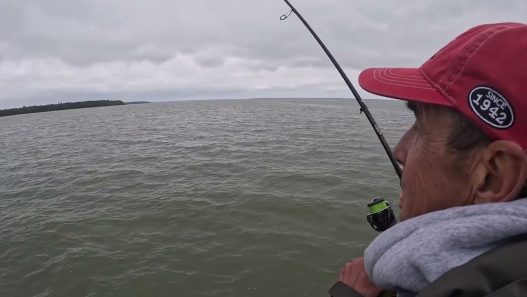
We were working shallow rock, the kind of spot that screams early-season walleyes. Mike hooks up, and right away you could tell something was a little different—not just in the fish, but in how everything was happening. The bait, the fall, the feel… it all had a different rhythm.
And that moment opened the door to something worth talking about—line choice, and specifically, co-polymer.
What Makes Co-Polymer Different?
Mike was running a co-polymer line—specifically Defcon from Sufix—and if you haven’t spent time with this category lately, it’s worth revisiting.
Think of it as a hybrid:
- Fluorocarbon-coated monofilament
- Sinking characteristics
- Manageable stretch
- Natural presentation
At around 8-pound test, this setup creates something you just don’t get with braid.
The Critical Difference: Angle of Presentation
When you’re fishing shallow rocks—especially dragging or subtly working a crawler on a jig—angle matters more than most anglers realize.
With braid:
- You get a tight, straight-line connection
- Immediate contact
- Great sensitivity—but sometimes too direct
With co-polymer:
- You get a slight bow or curve in the line
- A more natural, sweeping presentation
- The ability to float that jig over rock instead of driving into it
“You’re getting a little bit different angle than you would with braid… it’s got more of that curve to it.”
That subtle curve is everything. It allows your bait to glide, lift, and crawl naturally over structure—exactly what pressured or neutral fish want to see.
The Fall: Slower, Softer, More Natural
Another key advantage is how the bait falls.
Co-polymer sinks, but not aggressively. That means:
- A controlled, slightly delayed fall
- Less “nose-down” action compared to fluorocarbon
- More time in the strike zone
When you’re working shallow rock transitions, especially with live bait, that softer fall can be the difference between getting ignored and getting bit.
The Feel: A Throwback That Works
If you grew up fishing mono, you’ll recognize it immediately—the stretch.
And while stretch gets a bad rap in today’s braid-heavy world, there’s a time and place where it shines.
“You start reeling and… you get the stretch in your string. It’s pretty cool.”
That stretch:
- Absorbs head shakes
- Keeps fish pinned on light-wire hooks
- Gives you a more forgiving hookset, especially with live bait
It’s not about losing sensitivity—it’s about gaining control in specific situations.
When to Use Co-Polymer
This isn’t a replacement for braid—it’s a tool. And like any tool, it shines in the right conditions.
Best applications:
- Shallow rock or mixed structure
- Live bait presentations (crawlers, minnows)
- Neutral or pressured fish
- Situations where a natural glide matters more than pinpoint control
There’s a tendency in modern fishing to default to the most advanced, most sensitive, most high-tech setup every time. But sometimes, dialing it back—just a little—actually gives you an edge.
That day on the water was a reminder:
- Fish don’t care what’s trending
- They care about how your bait looks and behaves
And in that situation, co-polymer gave us something different—something better.
It wasn’t just about catching fish. It was about understanding why.
And that’s what keeps all of us coming back.

