


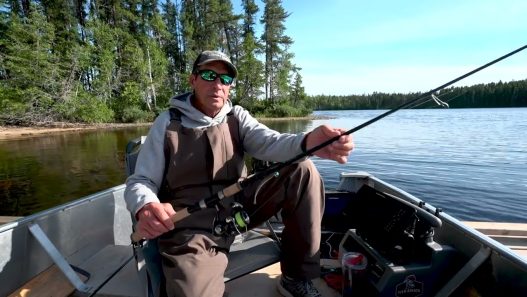




Bottom Bouncing walleye is one of the most effective ways to catch lots of walleyes. Fishing Shebandowan lake in northwest Ontario. The perfect place to bounce up and spin precious walleye gold.
Trolling the Depths: Chasing Giant Walleyes in Sunset Country
Seasonal transitions often bring unpredictability to fishing patterns, prompting fish to leave familiar structures and roam the expansive waters of northern lakes.
Anglers are often caught between two choices: wait for the fish to come to you or actively pursue them. On large bodies of water, especially in the vast wilderness of northwest Ontario, the latter tends to be the winning approach.
Rather than sitting idle, we embrace a proactive method—trolling and searching—actively testing various zones to intercept and locate fish on the move.
Welcome to Canadian Walleye Country
In this episode of On the Edge, we venture into the remote yet accessible wilderness of northwest Ontario, deep in the heart of Canada’s famed walleye country.
These waters are not only vast but also teeming with walleyes—if you can find them. That’s the first challenge. The second is convincing them to bite, which becomes especially difficult when volatile summer weather patterns disrupt feeding behavior.
One of the most reliable ways to overcome this is by fine-tuning your trolling speed. When conditions shift, getting that speed just right is critical—not too fast, not too slow—just right to keep your bait in the strike zone and tempt even the most finicky fish.
Bottom Bouncers: The Gold Standard for Deep Water Walleyes
There’s no doubt about it: if you’re chasing trophy walleyes in deep water, especially during mid-summer, bottom bouncers are your go-to rig. Today, we’re fishing out of Kashabowie River Resort on Shibandowan Lake, about an hour west of Thunder Bay. Neither James nor I have fished this body of water before, which adds a layer of excitement. We’re here to find big fish and figure out a pattern fast.
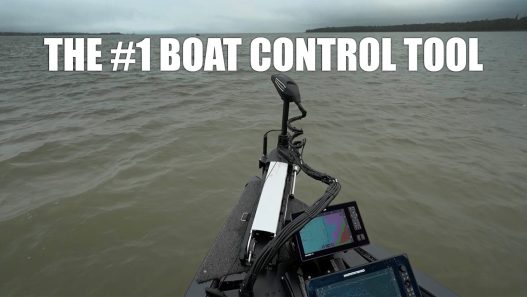
To kick off our adventure, we’re utilizing a trolling technique powered by a Mercury 150 four-stroke motor—an ideal choice for this kind of fishing. Quiet, fuel-efficient, and extremely reliable, this motor is coupled with a SmartCraft gauge system that allows precise control over trolling speeds, saving us from constantly adjusting throttle manually.
Trolling: A Tactical Approach to Unmapped Waters
Trolling serves multiple purposes on a lake like Shibandowan, which is largely unmapped. First, it helps us understand the structure of the lake—critical in identifying the underwater features where walleyes are likely to gather. Second, it keeps our lures at the proper depth for longer stretches, increasing the chances of attracting aggressive fish. Once we’ve identified promising spots, we can always circle back and refine our presentation.
Yesterday’s trolling run revealed some main lake structures loaded with bait and hosting both large pike and healthy walleyes. Today, we’re returning to those areas to fine-tune our technique and fish more methodically with bottom bouncers.
Deep Water Tactics and Spinners in Action
In these deep Ontario lakes, locating and catching fish often depends on seasonal movements and forage availability. During early summer, fish are typically shallow, hanging out in bays and river mouths. By late July, however, they shift to deeper, cooler waters where forage like ciscos and tullibees congregate. These baitfish attract not only walleyes but also smallmouth bass, big pike, and even lake trout.
That’s why today we’re focusing on spinner rigs paired with bottom bouncers. We’re using a VMC Spindrift rig right now, but bottom bouncing can also be paired with live bait or even crankbaits like Rapalas. This technique is remarkably versatile, allowing us to target multiple species at various depths, simply by adjusting speed and bait type.
Chebandowan Lake: Remote Feel, Real Access
Though it feels remote, Chebandowan Lake is relatively accessible and quite popular with residents of Thunder Bay, just an hour away. There are cottages, boats on the water, and all the signs of summer fun—but the fishing quality is what really makes it stand out.
Armed with our gear and camera equipment, we’re not paddling into the Quetico like some adventurers. Instead, we’re fishing with modern comforts and advanced tools, allowing us to maximize efficiency and fish smarter, not harder.
The Bite is On: Double Headers and Big Fish Action
It doesn’t take long before the action heats up. Walleyes and big pike start hitting the spinner rigs hard. We’re maintaining a speed of 0.8 to 1.2 mph using the trolling motor and adjusting drift to keep those spinner blades spinning consistently. Precision is key here—especially with spinner rigs that require constant motion to stay effective.
Then it happens: double headers. We’re reeling in fish after fish, including some truly impressive walleyes that justify the journey to this remote corner of Ontario. Occasionally, we even hook into large pike—reminding us of the mixed bag potential of these deep lake structures.
Reading the Structure
With coordinates programmed into our GPS, we’re tracing a ledge in about 38 feet of water. These waypoints form a path roughly the length of two city blocks, guiding us along the top of a drop-off where big fish are hanging out. Following this edge with precision allows us to stay in the strike zone and increase our chances of repeated success.
As we near one of the key points, a familiar mark appears on the sonar—it’s another big walleye. And just like that, we’re back in the action, dialed into a productive pattern on deep water structure.
Mastering the Bottom Bouncer: Final Thoughts from the Edge
As the segment draws to a close, we circle back to the core message of the episode: precision, patience, and the right gear make all the difference when you’re targeting trophy walleyes in Canada’s legendary waters. The final part of the day on the water solidified why the bottom bouncer system remains a go-to approach for pros like Al and James.
Bottom Bouncers: The Workhorse of Canadian Walleye Fishing
The bottom bouncer’s snag-resistant design allows it to traverse rugged underwater terrain—slopes, boulders, and ledges—without constantly hanging up.
his versatility means it’s suitable for multiple presentations: from a classic spinner rig with a nightcrawler to a crankbait or a plain snell when fish are particularly finicky. Al explains that the method works across a spectrum of speeds, from slow creeping to a modest 1.0 mph troll, allowing anglers to match the fish’s activity levels and water temperature.
Currently, most fish are holding between 22 to 25 feet deep, just off those rocky ledge structures. The team uses the trolling motor to precisely control drift and boat speed, fine-tuning the bait’s position with a lift-drop method. This technique involves pulsing the bait just above the bottom before letting it momentarily touch down—mimicking the erratic movement of prey and reducing snags.
Gear Breakdown: Rods, Reels, and Rigs
The success of this system is also tied to a well-balanced gear setup. Al’s rod of choice is the St. Croix Icon series, specifically crafted for bottom bouncers. This medium-heavy rod with a forgiving tip cushions the constant motion of the rig and enhances hooksets. Pair that with 10-pound Sufix Siege for durability and a responsive feel, and you’ve got a rig built for Canadian waters.
The Quantum Smoke reel features a thumb bar that makes depth adjustment easy—an essential feature for the lift-drop technique. Al emphasizes the importance of keeping the bait just off the bottom and how minor tweaks in bait position can mean the difference between a hit and a miss.
Bait Options: Versatility is Key
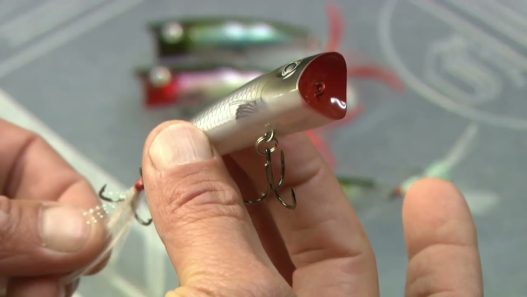
While spinner rigs were the day’s top producer, the team also had a VMC SpinDrift rig and a Rapala Flat Rap in play—each suited for specific conditions. The SpinDrift allows for a super slow presentation while still maintaining rotation and action, ideal for ultra-finicky walleyes. Meanwhile, the Flat Rap excels at covering water either fast or slow and pairs well with heavy bottom bouncers, thanks to its shallow-running, floating profile.
Customization is king with these setups. Spinner blades can be swapped to match water clarity and light conditions, and the VMC spinner rig’s double hook ensures you connect even with short strikers—a common behavior in big walleyes.

