







Deep Water Action at Trapper’s Point Camp: Lake Trout, Northern Pike, and Walleye on Sturgeon Lake
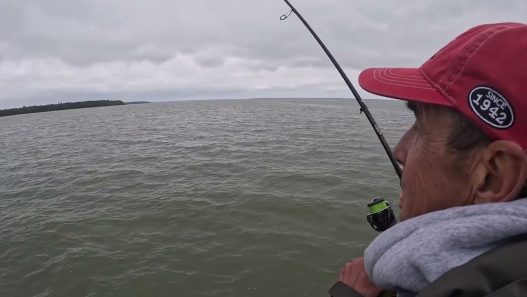
There’s no better way to kick off a fishing adventure than with the jolt of a northern pike hammering your line—and that’s exactly how our trip began. After a few swipes at the bait, the big snake finally committed. “Big, big snake,” someone shouted, and it sure was. Heavy across the back and full of fight, it was one of the best pike landed on the trip so far.
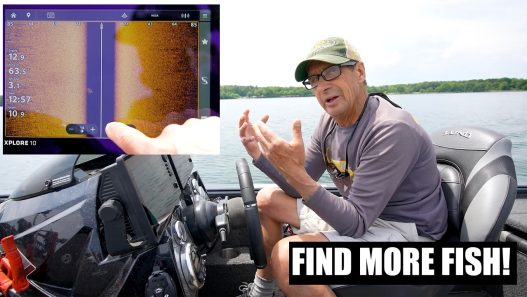
At Trapper’s Point Camp on Sturgeon Lake, catching quality fish like that is just part of the experience. The lake is massive, loaded with rock piles, weed beds, and underwater structure, making it a multi-species haven for anglers. One standout feature of the camp is that every guest is provided with a depth finder, preloaded with waypoints for lake trout, northern pike, and walleye—as well as marked safe travel routes—so even first-time visitors can hit the ground running.
More Than Just a Lodge—An On-the-Water Guide
Robert, the camp owner, goes above and beyond for his guests. Each week, he personally takes new groups of four or more anglers on a complimentary guided trout trip. While targeting lake trout, Robert also shares seasonal walleye spots across the lake. In early spring, the walleyes are stacked in a sanctuary area within three miles of the camp. But once summer hits and the fish move deeper, his week-to-week knowledge becomes key to keeping guests on the bite.
Tim, a first-time guest, shared how crucial the navigation aid was. Robert’s GPS system included a full track around the lake, complete with color-coded safe routes. “Without that, it would’ve been kind of tough,” Tim admitted. “You don’t want to hit anything with your boat.” Thanks to this setup, finding fish—and getting back safely—is far easier than most wilderness trips.
Blade Baits and Deep Lakers
With lake trout stacked deep mid-to-late summer, we turned to one of the simplest but most effective tools: the blade bait. It’s a vertical jigging presentation that can be done with your standard spinning gear. No need for downriggers or complex trolling systems—just drop, jig, and hang on.
The Rapala Magnum, particularly in perch color, quickly proved its versatility. Whether targeting lakers, walleyes, or even big pike, it was a consistent producer. A key advantage of the Mag Wrap is its compact, heavy build (1 1/8 oz), allowing it to reach the bottom in 60–70 feet of water in no time. It’s also built with a center-mounted ball-bearing swivel hook, which prevents twisting and helps keep fish pinned during the fight.
Midday Madness in the Basin
The beauty of Sturgeon Lake’s mid-summer fishing lies in the deep basins. While scanning with electronics, we noticed a stack of hooks on the sonar in a gut between two points. We were already geared up from walleye fishing nearby, so we simply dropped the same rigs down—and the trout were there.
Using a St. Croix vertical jigging rod, 10-pound Sufix braid, and fluorocarbon leader, we got into a rhythm. Drop to bottom, jig, and boom—fish on. Multiple lake trout came to hand quickly, proving that timing and electronics are everything.
Precision Spot Marking
As we moved between spots, Robert demonstrated how he charts the lake for his guests. At the tip of a large point, he marked the sand-to-rock transition zones, identifying key waypoints around inside corners and rock edges—prime ambush zones for walleyes and lake trout alike. With wind pushing bait into these edges, fish naturally concentrate there. “That inside corner right there should be a really good spot right now,” he said—and it was.
Versatility and Simplicity on the Water
One of the best aspects of the trip was how much fishing could be done with a single setup. The same rod-and-reel combo was catching walleyes in shallow and lake trout in deep water. The Rapala Magnum wasn’t just catching fish—it was making the entire trip easier by eliminating gear changes and keeping the boat productive.
And the proof kept coming. “Another one?” “Yeah, slightly bigger than an eater,” someone said. Between lake trout, pike, and eater-sized walleyes, the day shaped up to be one of those rare multi-species bonanzas that every angler dreams about.
Covering Water and Adapting Techniques for Canadian Walleyes
As our trip continued into mid-August, the shift to deeper water patterns for Canadian walleyes became more apparent. Using spinner rigs—especially in floating configurations with bright blades like gold-orange—proved especially effective. These rigs shine when you’re trying to cover a lot of water on unfamiliar lakes. With Sturgeon Lake’s immense size and its endless bars, humps, and deep-water basins, mobility and coverage are key.
From spinner rigs to jigging raps, the variety of tackle scattered across the boat’s deck reflected the diversity of walleye presentations. One of the standout techniques we leaned into was a method known as “moping.” Unlike traditional jigging, which pounds the bottom, moping is all about suspending a soft plastic bait like a Big Bite Baits Slim Shad three to five feet off the bottom and slowly moving the bait through the water column using the trolling motor.
This approach is perfect for avoiding snags on the rugged, rocky Canadian structure while targeting walleyes that are feeding on suspended baitfish like ciscos. It’s a remarkably effective tactic, made even more powerful when paired with forward-facing sonar and traditional 2D sonar. Watching fish rise to meet the bait off the rocks was a thrill in itself.
Tactical Fishing on a Vast Lake
Trapper’s Point Camp’s host Robert emphasized just how effective spinner rigs and jigging techniques can be for fast-moving exploration. He encouraged bouncing from one underwater point or hump to the next until you find active fish. Sturgeon Lake, with its 56-mile stretch, demands this kind of run-and-gun approach. When the bite slows, the key is to simply slow your presentation and adjust—an adaptable mindset that paid off in spades.
Even when the fish weren’t in full feeding mode, we still managed to pick off solid walleyes and pike. “That’s a better one,” someone exclaimed as another thick walleye slid into the net. These moments added up to an unforgettable trip.

