








There’s something about late-season lake trout fishing on Lake Superior that feels different from just about any other fishing trip. That’s exactly what Mike Hehner and I were chasing during this trip along Minnesota’s north shore — one final run at deep-water lake trout before the season started closing down for winter.
And right away, it became obvious this wasn’t going to be a shallow-water trolling bite.
The surface temperature was still hovering around 60 degrees, while the trout were holding way down at 160 to 170 feet, over depths pushing 200 feet. Those fish simply couldn’t move shallower because the upper water column was still too warm.
That changes everything.
Fishing the Thermocline
One of the biggest lessons with fall lake trout fishing is understanding how tightly these fish relate to temperature. Even though the calendar says late September and the trout are beginning to think about spawning, they still hang out in stable cold water until turnover finally happens.
Mike and I spent the day targeting a very specific depth zone — right around that 165- to 170-foot range where the electronics showed fish stacked along the thermocline.
This is where modern electronics become absolutely critical.
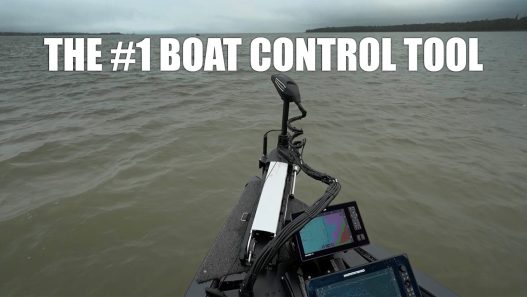
Running twin Humminbird Explorer 10 units allowed us to monitor mapping, bait, fish locations, and trolling speed simultaneously. We used detailed contour mapping to stay on productive basin edges while constantly watching sonar for suspended trout.
When fish are compressed into such a narrow band of water, precision matters.
If your lure is 20 feet too high, you might as well not even be fishing.
Why Downriggers Were the Right Call
Because the fish were so deep, Mike and I simplified the spread and focused on efficiency. We ran a two-downrigger program with large trolling spoons positioned exactly at fish depth.
That’s one thing anglers sometimes overlook on big water — simpler can actually be better.
Sure, you can run planer boards, lead core, copper, Dipsey Divers, and all kinds of additional presentations on the Great Lakes. But when trout are sitting 170 feet down, a controlled downrigger setup becomes the cleanest and most efficient way to consistently stay in the strike zone.
And when one of those rods loads up in deep water, you know it immediately.
The fish don’t just tap the lure.
They crush it.
Watching a downrigger rod buried into a slow, steady bend while line disappears off the reel is one of the coolest sights in freshwater fishing.
Rods, Reels, and Why Mono Still Matters
One of the most interesting discussions we had during the trip centered around line choice.
A lot of anglers automatically assume braid is always better. But for deep-water downrigger trout fishing, monofilament still offers huge advantages.
We were running 20-pound Sufix mono paired with heavy-action moderate-bend trolling rods, specifically a 9’6” St. Croix Rods Encore downrigger rod.
That softer rod action combined with monofilament creates an incredibly forgiving system.
Lake trout roll constantly during the fight. They shake their heads, twist, surge, and use the weight of deep water against you. Mono absorbs those violent head shakes and helps keep fish pinned when they make sudden moves near the boat.
Mike also pointed out another important factor — mono releases from downrigger clips much cleaner than braid.
That matters.
When you’re fishing 170 feet down, you want everything functioning perfectly.
For reels, we used Daiwa SeaLine 40 line-counter reels. The larger spool capacity is important, especially if you decide to target salmon as well. Big kings on Lake Superior can absolutely empty a reel in a hurry.
Spoon Selection for Lake Trout
If there’s one lure category that consistently dominates for trolling lake trout, it’s spoons.
Day after day. Year after year.
Spoons simply produce.
Mike talked about carrying hundreds of spoons in different sizes, finishes, and colors, and honestly, that’s not an exaggeration for serious Great Lakes anglers.
The key isn’t just having variety.
It’s having duplicates.
When one specific spoon color starts taking all the bites, you want the ability to duplicate that exact presentation immediately across multiple rods.
That’s how you maximize a trolling pattern once fish show a preference.
On this trip, bright spoons with flash and strong visibility were consistently drawing strikes in the ultra-clear water of Superior.
And when those trout hit…
They hit hard.
Adapting a Multi-Species Boat for the Great Lakes
One thing I really appreciated about this trip was how versatile the setup was.
We were fishing from my 1875 Lund Pro-V — a boat I use throughout the year for walleyes, bass, crappies, and panfish. But thanks to Lund’s Sport Track system, we were able to quickly transform it into a fully functional Great Lakes trolling machine.
That system allowed us to mount electric downriggers and rod holders without permanently drilling into the boat.
When the trip is over, everything comes off cleanly.
That flexibility is huge for anglers who fish multiple species and don’t want a dedicated trolling rig sitting permanently on the boat all season.
The Health of the Lake Superior Trout Fishery
One of the coolest parts of this trip was hearing how healthy the fishery currently is.
According to fisheries reports and what anglers are seeing on the water, Minnesota Department of Natural Resources biologists believe Lake Superior is loaded with quality eater-size trout right now — especially fish in that 3- to 6-pound range.
That makes this an incredible time for anglers wanting to experience lake trout fishing for the first time.
There are still giants swimming in Superior too.
Mike talked about anglers targeting true trophy fish around places like Isle Royale and the Apostle Islands using forward-facing sonar and precision open-water techniques for trout over 40 inches long.
But honestly?
There’s something special about a chunky 4- or 5-pound Superior lake trout. They fight hard, they’re beautiful fish, and they’re excellent on the table.
Respecting Deep-Water Fish
One important discussion we had during the trip involved fish care.
Because these trout were coming from extreme depths, we made careful decisions about which fish to release and which fish to keep.
Some fish handle deep-water release well.
Others don’t.
When fish come from 170 to 200 feet down, barotrauma becomes a real concern. If we felt a fish had a poor chance of survival after release, we chose to keep it responsibly for the table instead.
That’s part of ethical fishing too — understanding conditions and making smart decisions for the resource.
Why We Love Lake Trout Fishing
At the end of the day, this style of fishing becomes more than just catching fish.
It’s about building a complete system.
Dialing in trolling speed.
Reading current.
Matching spoon action.
Tracking thermoclines.
Positioning downriggers perfectly.
Working together in the boat.
That’s the fun part.
And then finally, after all the adjustments and experimenting, a rod buries under pressure and a deep-water lake trout starts peeling line somewhere 170 feet below the surface.
That moment never gets old.
For Mike Hehner and me, this trip was one more reminder why Lake Superior remains one of the most incredible fisheries anywhere in North America.

