







There’s something about fishing Canadian Shield water that never gets old. The jagged rock reefs. The pine-lined shorelines. The clear water. The feeling that every cast could connect with a big walleye, smallmouth, pike, or musky. And when you combine that setting with Lake Vermilion’s incredible walleye population, it creates one of the most enjoyable fisheries in the Midwest.
On this trip, Jeremy Smith and Mike Hehner hit Lake Vermilion in northeast Minnesota chasing summertime walleyes with a mix of modern electronics, aggressive jerkbait tactics, finesse jig-and-crawler presentations, and classic jigging techniques. What unfolded was one of those classic “figure-it-out” days where versatility and adaptability made all the difference.
Why Vermilion Is Special
Lake Vermilion is nearly 40,000 acres of classic Shield-style structure. Massive rock reefs, sharp points, boulder flats, deep basins, and expansive shoreline transitions create endless walleye habitat. It’s also a lake with tremendous diversity in fish size classes.
Jeremy explained that Vermilion is divided into eastern and western basins, each with unique characteristics. The western basin tends to be more productive, while the eastern basin is deeper and slightly less fertile. That productivity difference even impacts walleye growth rates, according to local DNR observations.
But regardless of basin, Vermilion consistently produces quality fish and numbers. Add in the lake’s protected slot limit, and anglers have the opportunity to both harvest great eating fish and release healthy spawning-class walleyes.
Fishing Rock Structure with Electronics
One of the biggest keys during this trip was using electronics not just to locate fish—but to understand the structure itself. Jeremy and Mike leaned heavily on Humminbird MEGA Live and Side Imaging to identify rock height, determine safe lure paths, and keep presentations above snaggy structure.
That’s a huge point.
A lot of anglers think forward-facing sonar is only about seeing fish. In reality, on lakes like Vermilion, it’s often more important for reading the terrain. The reefs they targeted featured jagged boulders rising several feet off bottom. If your bait dropped too low, you were instantly snagged.
Instead of dragging baits through the rocks, Jeremy and Mike focused on presentations that stayed above the structure while triggering reaction strikes from fish hiding in the crevices below.
The Jig-and-Crawler Deal
One of the hottest presentations during the trip was a simple jig-and-crawler setup. But like many effective techniques, the details mattered.
Mike Hehner spent much of the day swimming a crawler-tipped jig across the tops of the rocks using a lighter-falling approach. Instead of fishing traditional braid, Mike was running Sufix Defcon co-polymer line, which provided a slower, more natural presentation.
That softer line created a different angle in the water compared to braid. Rather than pulling the jig sharply upward, the co-polymer allowed the bait to glide and float naturally over the structure.
Jeremy noted something interesting that many top walleye anglers have rediscovered recently: monofilament and co-polymer lines are making a comeback for live bait presentations because the added stretch helps fish hold onto the bait longer.
The crew also experimented with different jig styles, including the VMC Snitch Jig, which features a small attractor blade and specialized crawler keeper that keeps bait pinned securely in place.
For finesse applications around rock, they also leaned on tungsten jigs like the VMC Redline Tungsten Jig and VMC Tungsten Mooneye Jig. The compact tungsten profile allowed them to maintain bottom awareness without hanging constantly in the rocks.
Jerkbaits for Summer Walleyes
While the crawler bite produced numbers, Jeremy’s favorite pattern involved covering shallow rock structure with jerkbaits.
Few techniques are more fun than casting jerkbaits for walleyes, especially when fish are actively feeding on shallow reefs during low-light periods. Jeremy focused heavily on the Rapala Maverick jerkbait system, alternating between shallow and deep-running versions depending on structure depth.
One major takeaway was the importance of cadence.
Jeremy explained that the retrieve itself often determines success more than the bait choice. Some days fish want an aggressive side-to-side “walk-the-dog” action. Other times, a slower pull-pause cadence produces dramatically better results.
That experimentation is critical.
The team also dialed in specific tackle details that improved performance:
- 10-pound Sufix 832 braid main line
- 14-pound fluorocarbon leader
- Daiwa Ballistic MQ 3000 spinning reel
- 6’8” medium extra-fast rod
Jeremy emphasized that heavier fluorocarbon leaders actually improve jerkbait performance because the stiffer line prevents the bait from fouling or wrapping during aggressive twitches.
The larger 3000-size reel also aided line management and pickup speed—something increasingly important when fishing slack-line jerkbait presentations.
And on Vermilion specifically, one color consistently stood out:
Perch.
Perch-pattern jerkbaits were absolute producers throughout the trip.
Keeping Fish and Enjoying the Resource
One refreshing aspect of the episode was the realistic approach to harvesting fish. Jeremy and Mike openly discussed keeping several eating-sized walleyes while releasing larger slot fish.
Too often, fishing conversations become polarized between “keep everything” and “release everything.” Vermilion showcases how proper fisheries management creates balance. Anglers can enjoy fresh walleye dinners while still protecting the lake’s trophy potential.
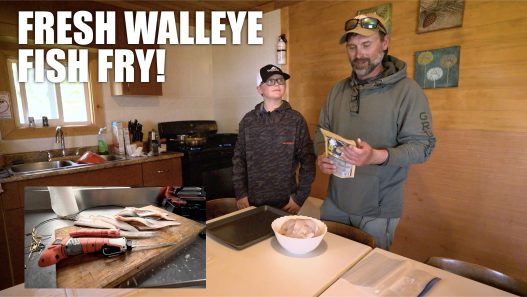
Mike Hehner joked about his reputation as a “meatpacker,” while Jeremy pointed viewers toward Mike’s popular fish-cleaning content on Angling Edge.
Multiple Presentations Win
One of the biggest lessons from the trip was versatility.
The fish moved constantly throughout the day. Early and late periods favored jerkbaits over shallow rocks. Midday conditions pushed fish slightly deeper, where finesse crawler presentations excelled. When fish slid toward softer edges, jigging wraps became productive.
Instead of forcing one approach, Jeremy and Mike adapted continuously based on fish position, light conditions, and structure composition.
That flexibility is often the difference between a decent day and a phenomenal one on natural lakes.
Canadian Shield Fishing at Its Best
At its core, this trip captured what makes Shield-country walleye fishing so addicting. You’re visually fishing structure. You’re reading electronics. You’re experimenting with retrieves. And every spot has the potential to hold aggressive fish.
For Jeremy Smith and Mike Hehner, Lake Vermilion once again proved why it remains one of the premier walleye destinations in North America—a fishery where classic techniques and modern technology blend perfectly to produce unforgettable days on the water.

