






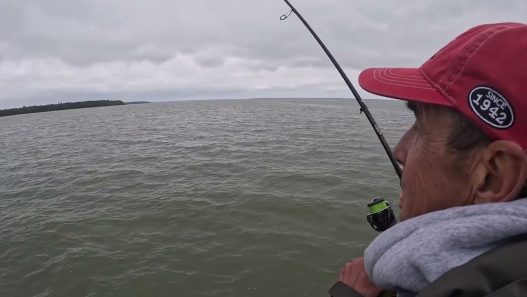




There are certain fisheries across North America that earn legendary status over time. Places where the stories seem almost too good to be true. Giant walleyes. Endless structure. Massive schools of fish. Explosive growth. And somehow, every season seems better than the last.
Then there’s Devils Lake — a fishery that completely rewrites what we think is possible in freshwater angling.
The Incredible Rise of Devils Lake
I’ve been fortunate to fish all over North America, but Devils Lake, North Dakota, stands apart in a way that’s hard to explain unless you’ve seen it firsthand. This isn’t just another productive walleye lake. This is one of the most unique fisheries in the world, both historically and biologically. And what makes it even crazier? It just keeps growing and the fishing keeps getting better.
That sounds impossible, doesn’t it?
But that’s exactly what’s happened.
Back in 1993, Devils Lake sat at one of the lowest water levels ever recorded, covering roughly 69 square miles. At that point, few people could have predicted what was about to unfold. Then the water started rising. And it didn’t stop. Year after year, the lake expanded farther into surrounding land, flooding farmland, roads, homes, and entire communities.
Today, the system has exploded into roughly 285 square miles of water — growing from around 44,000 acres to more than 211,000 acres. That kind of expansion is almost unheard of in modern fisheries management.
But here’s the part that matters to anglers:
As the lake expanded, the fishing somehow got even better.
Why Devils Lake Produces So Many Walleyes
The secret lies in habitat diversity.
When water floods new terrain, it creates an absolute buffet of nutrients and cover. Submerged trees. Old roadbeds. Fence lines. Rock piles. Coulees. Flooded grasslands. Newly created weed growth. Every inch of that expansion created fresh habitat for baitfish, insects, and spawning forage.
And walleyes thrive in it.
What makes Devils Lake so unique is the sheer amount of fish-holding structure spread across an enormous system. You’re not fishing one isolated basin. You’re fishing a constantly evolving ecosystem filled with transitions, current flows, submerged timber, shallow feeding flats, and deep-water travel corridors.
The fish population responds accordingly.
You can spend the morning pitching shallow shoreline structure, slide into submerged timber during midday, and finish by pulling leadcore or crankbaits over open-water basin fish in the evening. Few fisheries offer that kind of versatility at such a high level.
And the numbers are staggering.
You can legitimately catch quantity and quality in the same day. That’s rare in the walleye world. Usually, lakes specialize in one or the other. Devils Lake consistently gives anglers both.
A True Multi-Technique Fishery
One of my favorite things about Devils Lake is that it rewards anglers who understand seasonal movement and electronics.
This is not a “one-pattern” lake.
Forward-facing sonar can absolutely shine here when fish suspend around flooded trees or roam basin structure. Side imaging becomes critical for identifying old roadbeds, submerged rock spines, and isolated cover. Mapping is equally important because the lake’s constant expansion changed everything over the years.
The anglers who consistently excel here are the ones willing to adapt daily.
Sometimes the fish are feeding aggressively in shallow water. Other days, they slide deeper and roam. Wind direction can reposition fish quickly. Water color matters. Baitfish location matters. And because the lake is so massive now, anglers have endless options to chase active fish.
That’s one of the reasons Devils Lake continues producing world-class fishing pressure after pressure. The system is simply too large and too diverse to get “fished out.”
One of the Best Walleye Destinations in the World
There’s a reason Devils Lake is consistently mentioned alongside Lake Sakakawea and Lake Oahe as one of the top fisheries in the Dakotas.
North Dakota has quietly become one of the premier walleye destinations in North America, and Devils Lake sits right in the center of that conversation.
What’s especially impressive is the economic and cultural impact the fishery now carries. Nearly half of North Dakota’s angling activity is connected to fisheries like these.
And honestly, once you spend time there, you understand why.
This lake has personality.
It changes constantly. It challenges anglers. It rewards experimentation. And every time you launch the boat, it feels like there’s potential for something special.
That’s the magic of a fishery built on expansion and natural productivity.
Devils Lake Is Still Evolving
What fascinates me most is that the story isn’t over yet.
Most legendary fisheries eventually plateau. Habitat ages. Weed growth changes. Development increases. Fishing pressure intensifies.
But Devils Lake still feels alive and evolving.
New water continues reshaping fish movement and habitat. Seasonal transitions create constantly changing opportunities. And because the system is so fertile, the food chain continues supporting exceptional growth rates and healthy fish populations.
That’s why anglers continue traveling from all over the country to fish it.
And when you’re out there catching aggressive walleyes against a backdrop of flooded timber, endless prairie water, and giant North Dakota skies, it’s easy to understand the obsession.
Because this isn’t just a good walleye lake. It’s one of the most remarkable freshwater fisheries ever created.

