









Mastering Spring Smallmouth Bass with Jerkbaits: A Guide to X-Rap Success
Few freshwater fish match the raw power and aggression of smallmouth bass. Pound for pound, they’re among the toughest fighters in North America, and for many anglers—including the crew at Angling Edge—they’re also the most fun to catch. During the spring season, smallmouth present a dynamic challenge as their feeding behavior shifts from finicky to ferocious, making them the perfect target for a day on the water.
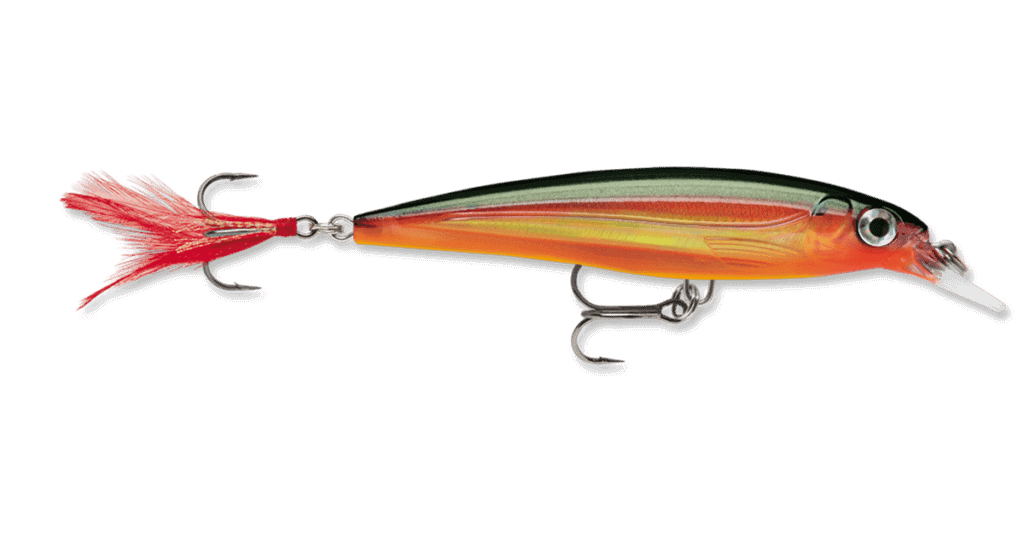
Whether they’re gently nipping at tiny herring jigs or hammering topwater baits, smallmouth bass can be caught with a variety of presentations. Spinnerbaits, crankbaits, and finesse swimbaits all have their moment, but one category stands out year after year: the jerkbait. And among jerkbaits, the Rapala X-Rap reigns supreme.
Why the X-Rap?
There’s something special about the erratic action of a jerkbait that just seems to drive smallmouth wild. This season, Jeremy Smith and Jake Wallace took to new waters to showcase just how versatile—and effective—the X-Rap can be when targeting bronzebacks.
From the start, the day’s fishing was a mix of trolling and casting, catching fish on the edge between aggressive feeding and passive interest. Jeremy quickly pointed out that when it comes to smallmouth and jerkbaits, there’s no one-size-fits-all approach. He regularly uses several X-Rap sizes—from size 6 and 8 up to the classic size 10—and includes deep models in his arsenal as well.
Downsizing for Success
One of the keys to unlocking bites during spring, especially when smallmouth are hesitant, is downsizing. Many times, fish will chase but not commit to a larger bait. Downsizing from a size 10 to an 8 or even a 6 can be the difference between no bites and a flurry of action.
Jeremy has encountered countless scenarios where he threw a size 10 through a prime area with no response, only to come back moments later with a smaller version and immediately get hit. That kind of adjustment can completely turn around a slow bite.
The Deep Advantage
When the water is still cold—say in the 40s to low 50s—Jeremy relies heavily on the X-Rap Deep in both size 8 and 10. With their longer bills, these models can reach depths of 8 to 9 feet while trolling or “jerk-trolling” over deeper rock structures, particularly in the 12- to 14-foot range.
These deep-running versions can still be twitched and paused like their shallower siblings but are especially helpful when fish aren’t willing to move far up the water column. They become a crucial part of the toolkit when standard jerkbaits just aren’t getting the job done.
Side Imaging: A Game-Changer for Finding Smallmouth
Alongside lure selection, technology plays a major role in spring smallmouth fishing. Side imaging sonar has revolutionized the way anglers locate fish-holding structure. While traditional 2D sonar can miss critical habitat features—like isolated boulders on a flat—side imaging provides a wide, detailed look at the lake bottom.
In spring, smallmouth gravitate to flats with scattered rock and boulders. These areas are often staging zones or spawning grounds. Side imaging helps reveal these spots quickly and accurately, saving time and focusing effort where it counts most.
Jeremy shared that even on lakes he’s fished his entire life, side imaging revealed sweet spots he’d never noticed before—spots that turned out to be loaded with bass.
Jerkbait Gear Tips
When throwing X-Raps, Jeremy and Jake prefer spinning gear, which provides the finesse needed for subtle twitches and long casts. The suspended nature of the X-Rap is key—it will dart erratically with a sharp twitch, then hang perfectly still, a presentation that often triggers hard strikes from smallmouth.
Bright colors like “Hot Head” are standouts, especially in stained or slightly off-color water. And whether casting or trolling, making sure you’re using the right rod, reel, and line setup can make all the difference in working the bait properly and detecting subtle hits.
Legendary Action and Pure Fun
Throughout the outing, the anglers landed a series of chunky, aggressive smallmouth. From visual strikes to subtle nips, the X-Rap continued to produce. Its reputation as a legendary multi-species bait was reinforced once again, but it especially shines in the hands of someone who understands how to work it through prime smallmouth structure.
Whether they were crushing the bait or just bumping it before committing, the fish made one thing clear: when smallmouth are on the menu, the X-Rap deserves a permanent place on your deck.
The Gear That Brings Jerkbaits to Life
For many bass anglers, spinning gear might seem out of place when working jerkbaits. But when it comes to smallmouth, especially in spring, spinning setups offer unmatched control and finesse. Jeremy Smith emphasizes that the specific combination of rod, reel, and line he uses helps bring the Rapala X-Rap to life in the water.
His preferred setup includes the newly redesigned St. Croix Legend Tournament, a 6’8” medium-power, extra-fast action rod. This length and action allow for sharp, low-angle jerks that make the bait dart erratically—just the way smallmouth like it. The rod’s tip has just the right amount of flex to make the X-Rap dance, triggering aggressive strikes from curious bass.
Paired with a Daiwa Ballistic MQ 3000 spinning reel, the setup becomes both lightweight and powerful. The MQ’s one-piece Zion B carbon frame and enlarged drive gear deliver unmatched smoothness and strength. The 3000 size ensures fast line pickup—critical for working a jerkbait properly and setting the hook when a strike comes.
Fine-Tuning Your Setup: Line, Leaders, and Knots
To maximize jerkbait performance, Jeremy prefers braided line with a 12- to 14-pound fluorocarbon leader. Braided line gives the bait an extra kick, making it jump more erratically—an essential quality when trying to trigger reaction bites from hesitant fish. The stiffer fluorocarbon leader helps keep the line from fouling in the bait’s split rings and provides added abrasion resistance.
His connection method? A modified Albright knot, which passes cleanly through rod guides and maintains a strong, low-profile connection between braid and leader. The result is a system that performs flawlessly during long days of casting, pausing, and twitching across rocky flats.
Jerkbaits: A Tool for Locating and Triggering
Jerkbaits like the X-Rap aren’t just for catching bass—they’re also an incredible tool for locating fish. In early spring, smallmouth tend to congregate in small, defined areas. You might fish two or three promising spots and find nothing, only to hit a fourth and be surrounded by action.
This can test an angler’s patience. But as Jeremy notes, smallmouth in cold water respond consistently to suspending jerkbaits. If they’re around, they’ll often follow—even if they don’t strike right away. Keep confidence high, explore different depths and water temperatures, and trust in the presentation.
Strikes, Sight, and High-Vis Line
One key to spring success? High-visibility braid. On several occasions, Jeremy spotted subtle strikes just by watching his line jump. He uses 10-pound Sufix high-vis braid, which helps detect bites in clear, calm conditions—especially when the fish strike on a pause and the rod doesn’t telegraph the hit.
Whether they were chasing the bait down or striking while it suspended, the X-Rap continued to produce. And when the water warmed even a little, the fish’s aggression kicked into high gear, resulting in hard hits and spirited fights.
Keep the Confidence, Keep the Casts Coming
Fishing in spring can feel like a puzzle—one moment you’re questioning everything, and the next you’re doubled up on fish. That’s the beauty and the challenge of smallmouth in cold water. The key, according to Jeremy and Jake, is to trust the jerkbait, fish it thoroughly, and keep moving until you find the concentration of bass.
Once located, the payoff is undeniable: explosive strikes, airborne leaps, and the kind of fishing action that keeps you coming back every spring.

