








Jigging for largemouth bass is one of the most popular techniques for catching bass and for a good reason. Jigs are versatile and can be used all year round. Lets explore the art of jig fishing and how it can be effective in different seasons and conditions.
Jigs are the number one bass bait in the world, and there’s a good reason for that. They are incredibly effective at attracting and catching bass. Whether you’re fishing in shallow water or deep water, jigs can be a game-changer.
When it comes to jig fishing, it’s important to choose the right jig for the job. Different styles of jigs work best in different situations. For example, in the spring when the water is cool, a slow-falling jig is ideal. As the water warms up in the summer, a faster-falling jig can be more effective.
Fishing in Weed Beds
Weed beds are a common type of cover in many lakes, and they can be a prime location for bass. In the spring, when the weeds are just starting to grow, a slow-falling jig is ideal. As the summer progresses and the weeds become thicker, a heavier jig may be necessary to penetrate the vegetation. It’s important to pay attention to the depth of the weeds and adjust your jig weight accordingly.
Finding the Fish
One of the challenges of fishing in weed beds is finding the fish. Weed beds can be vast and complex, with many different underwater structures. Using a depth finder can be helpful in locating the edges of the weed beds, where bass are likely to be positioned. Look for points, inside corners, and irregular edges, as these are often key contact points for bass.
Boat Control is Key
When fishing in weed beds, boat control is crucial. You want to position your boat right on the edge of the weeds and make short, precise casts. It’s important to maintain control of your boat and stay on the edge of the weed bed, as this is where the bass are likely to be feeding. Using a trolling motor and periodically checking the depth finder can help you stay on the edge of the weeds.
The Importance of Persistence
Fishing in weed beds can be challenging and requires patience and persistence. It’s important to keep fishing and trying different techniques to trigger the fish to bite. This can include using aggressive hops or subtle hops, as well as varying your retrieve speed. Don’t get discouraged if you don’t get a bite right away. Keep trying different approaches until you find what works.
Conclusion
Jig fishing in weed beds can be a highly effective technique for catching bass. By choosing the right jig, paying attention to the depth of the weeds, and maintaining boat control, you can increase your chances of success. Remember to be persistent and keep trying different techniques until you find what works.
Mastering Jig Fishing for Summer Bass: Big Baits in Deep Weeds
Jig fishing for bass may seem like a simple technique, but when done right—especially during the heat of summer—it becomes one of the most effective and versatile tools in an angler’s arsenal. In this blog, we explore the nuances of heavy jig fishing in deep weed lakes with seasoned angler and lure designer Mark Fisher.
Fishing Deep Weeds in the Dog Days of Summer
Despite the “dog days” label often associated with mid-to-late summer, some of the best bass fishing can be found in deep weed beds. On this August outing, we’re on a northern natural lake in Minnesota—classic “Land of 10,000 Lakes” country—where dense weed beds in deep, clear water hold large schools of bass. The effort it takes to find and fish these areas is well worth the payoff.
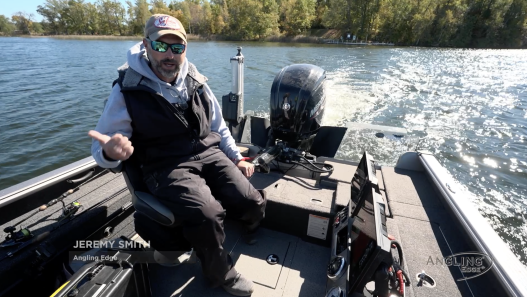
Meet the Expert: Mark Fisher
Mark Fisher, a Hall of Fame angler and lure designer for Rapala, brings decades of experience and innovation to the water. His work behind the scenes has helped develop many of Rapala’s top-performing lures, and his insight into presentation and gear is unmatched. Our goal today is to break down the art of jig fishing with someone who’s mastered every aspect of it.
Jig Fishing: An Essential Skill for Bass Anglers
While some may view jig fishing as dull or basic, any seasoned angler knows that mastering jigs is a must. Whether it’s flipping into heavy cover, dragging through rocky bottoms, or swimming across weed tops, the jig is a chameleon-like lure that can be adapted to any scenario.
We’re using large, heavy jigs—three-quarter ounce and heavier—something not commonly found in most tackle boxes. These jigs offer a distinct advantage in deep vegetation: they cut through cover, generate reaction strikes, and make a presence that bass can’t ignore.
The Case for Heavy Jigs
Northern lakes often feature extremely clear water and dense vegetation like coontail growing 20+ feet deep. In these conditions, heavy jigs not only punch through the canopy but also create a visible, noisy entry that draws bass in. Sometimes, that heavier weight is essential simply so bass can find the bait in low-light, heavily vegetated zones.
A properly selected jig weight can also help control the fall rate—slowing it when needed to entice a finicky fish, or crashing fast to trigger reaction bites. Many pros rely on heavy jigs not just for deep fishing, but also for shallow targets because they allow for more accurate casting and faster water coverage.
Matching Gear to Technique
To get the most out of heavy jigs, your rod, reel, and line must match the presentation. We’re using 30-pound Sufix 832 braid on a 7’4” heavy-action rod rated for 12- to 25-pound line. This setup provides the power to drive hooks into thick cover and wrestle big bass from the weeds.
A high-speed reel, like a 7.3:1 ratio, is also key. Often the strike comes at the top of the jig’s fall, requiring a quick reaction to reel down and set the hook before the bass spits the bait.
Weed Edge Strategy and Adjusting Presentation
Right now, we’re targeting deep weed edges—classic late-summer haunts. But it’s not a one-size-fits-all deal. In spring, bass suspend high in the weeds, and a light jig swum across the tops can outproduce heavier presentations. We’ve seen tournaments won because anglers adjusted and fished above the fish, not below them.
This flexibility is what makes jigs so powerful. Every angler has them, but not everyone thinks deeply about their application. Whether it’s swimming a finesse jig or bombing a heavy one through coontail, the key is understanding the situation and adapting.
Stirring the Pot: Feeding Frenzy Tactics
Once a bass is pulled out of a weed bed, the surrounding fish often get fired up. Mark calls it “stirring the pot.” The commotion draws in more fish, and it’s crucial to get another bait back in quickly to keep the school active. That’s where experience—and a well-stocked jig box—makes all the difference.
Jig Fishing Across the Seasons: A Year-Round Strategy
One of the greatest strengths of jig fishing is its year-round utility. Whether the water is just opening up in early spring or nearing freeze-up in late fall, there’s a jig to match every season. As Mark Fisher points out, water temperature and weed development dictate not just where bass are found, but how you should fish for them. In early spring, when fish are sluggish and recovering from winter, slow-falling finesse jigs keep the bait in the strike zone longer, matching the mood of cold-water bass. But as the season heats up, both the metabolism of the fish and the weed growth explode—requiring bigger, heavier jigs to penetrate the lush underwater canopy.
Matching Jig Weight to Vegetation
Much like southern anglers who pitch big jigs into shallow matted grass, northern bass fishermen must also punch through thick vegetation—often at much greater depths. On this trip, we’re fishing thick coontail beds in 13 to 14 feet of water, with the weed tops reaching up to 3 or 4 feet below the surface. To cut through 10-foot walls of vegetation, we’re using heavy jigs, often a half-ounce or more. The choice of weight and profile is key not just for getting to the fish, but also for presenting the bait in a way that triggers aggressive bites.
Finding Fish in the Weeds
While using the right jig is important, locating productive weed edges is just as crucial. The lake we’re fishing today is a maze of underwater features—flats, humps, and points—all of which can hold bass. The challenge is finding the right edge. Bass tend to relate to specific areas within these weed beds: inside turns, outside points, hard bottom patches, and abrupt drop-offs. These irregularities create ambush zones where bass wait for prey to wander by.
Understanding Weed Composition
Not all weeds are equal in the eyes of a bass. Species like coontail, cabbage, and milfoil offer ideal cover and attract forage species such as panfish and minnows. One of the advantages of fishing with braided line is the ability to feel the difference in weed types through the rod tip. Coontail, in particular, is a favored habitat—its deep green, bushy texture provides shelter and draws fish in tight.
The Role of Presentation: Cadence is Key
Much like fishing a jerkbait, working a jig effectively involves experimenting with different cadences—short hops, long drags, aggressive rips, or subtle twitches. As Mark demonstrates, varying your presentation can make a huge difference in triggering strikes. What works on one cast might not work on the next. It’s a constant game of adjusting and interpreting how fish are reacting on that given day.
Efficient Boat Control and Electronics Use
To fish deep weed edges effectively, boat control is critical. Using a Minn Kota trolling motor and Humminbird electronics, we’re able to stay right on the contour line where the deep weed edge meets the basin. A key feature is the Depth Highlight tool, which allows us to mark target depths—between 5 and 12 feet in this case—making it easier to track productive zones visually on the map. We’re making short, precise casts directly at the edge, ensuring maximum contact with the strike zone. Calm conditions today have made that process even more efficient.
Commitment Pays Off
Fishing these deep weed lines can be a grind. It takes time and focus to dial in where the fish are and how to present your jig effectively. But the payoff is clear. When you crack the code, the action can be nonstop, and the average size of fish found in these areas is impressive. For anglers willing to invest in learning these patterns and mastering heavy jig techniques, deep weed lines in summer can offer some of the most rewarding bass fishing of the year.
Final Thoughts: The Effort is Worth the Reward
Fishing deep weed edges with heavy jigs is a nuanced, often underappreciated technique—but for those who master it, the payoff is undeniable. Throughout the summer, especially during the dog days when shallow fish scatter and patterns shift, deep weed beds offer consistent action and the potential for big bass.
As we’ve seen through this session with veteran angler and lure designer Mark Fisher, success lies not only in selecting the right jig weight or presentation, but in understanding the lake’s underwater topography, the structure of vegetation, and how bass relate to their environment throughout the seasons. Coontail, cabbage, and milfoil weed beds in particular serve as prime real estate, holding both forage and game fish—and recognizing key elements like inside turns, points, and hard bottom transitions can lead to consistent catches.
Electronics, Efficiency, and Execution
Modern technology, like Humminbird’s Depth Highlight feature and Minn Kota trolling motors, has elevated the game, allowing anglers to maintain boat control with surgical precision. By tracking exact contours and depth ranges, anglers can stay on productive lines, make short, effective casts, and maximize every drift. It’s no longer about casting blind—it’s about casting smart.
Jigging with Purpose
Jig fishing isn’t just about dragging a lure on the bottom. It’s about matching mood, metabolism, and season with thoughtful presentation. From slow, high-floating finesse jigs in cold water to punch-through, half- to three-quarter-ounce jigs in lush summer weeds, there’s a jig setup for every scenario. Varying cadence, hookset timing, and understanding the “feel” of different weeds all play a role in dialing in the bite.

