








Channel Catfish: The People’s Fish
Baseball, hot dogs, mom’s apple pie—and channel cats? For many American anglers, that’s not just a catchy phrase; it’s a way of life. Found in more waters across the U.S. than not, the channel catfish has earned its place as one of America’s most beloved game fish. According to angler surveys, channel catfish consistently rank as the third most targeted species nationwide.
From meandering creeks to still ponds, mighty rivers to sprawling reservoirs, channel cats are widely accessible and willing biters. While they may not win any beauty contests with their whiskers and broad, shovel-like heads, don’t be fooled—these fish offer a unique combination of sport and table fare that few others can match.
Accessible, Affordable, and Action-Packed
One of the greatest appeals of channel catfishing is its simplicity. You don’t need high-end gear or an expensive boat. A basic setup—hook, line, sinker, and some smelly bait—is all it takes. Whether you’re using classic stink baits, chunks of cut sucker, smelt, or even unconventional choices like bubblegum or Spam, channel cats are famously unpicky. In fact, the stinkier the bait, the better the chances of a hookup.
From the primitive method of wedging your rod in a forked stick to high-tech sonar-guided tactics, there’s no wrong way to target these whiskered warriors. Best of all? They’re excellent eating. Small channels, especially, are a delicacy when soaked in milk, breaded in cornmeal, and fried to golden perfection. Big fighters and good fryers—what’s not to love?
Early Season Channel Cats in Fast Water
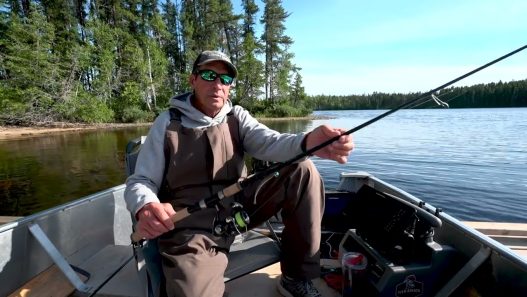
Al, James and Nick Lindner dive into early-season channel cat opportunities, emphasizing that good catfishing is often just a short drive away—especially if there’s a river nearby. And the action kicks off quickly.
Just minutes into their outing, Nick hooks into a hard-charging catfish. Contrary to the common belief that catfish are sluggish bottom-dwellers, these early-season males hit baits aggressively in the swift river current. These fish congregate in very specific areas of the river system—often around natural or manmade barriers like dams—where the current speeds concentrate bait and predators alike.
Fishing Tactics: Reading the River
One of the key lessons in this outing is understanding current dynamics. The water temperature was a chilly 48°F, yet the catfish were active. According to Al and Nick, success in river catfishing often comes down to positioning in the right current speed. Too fast, and it’s like a washing machine; too slow, and fish won’t concentrate. The magic lies in “stable fast” water—areas like eddies or slick current seams adjacent to fast-moving water, where fish can hold comfortably while waiting for food to drift by.
Last weekend, the river was two feet lower, and the fish were staged deeper—around 35 feet. With the water rising, the fish had repositioned, possibly blown out of the deep hole, and now held closer to shore in about 20 feet of water.
The pair used heavy sinkers to keep their baits pinned to the bottom and deployed VMC Tournament Circle Hooks, ideal for current-heavy environments. The unique shape of these hooks helps avoid snags on river debris—an essential feature when fishing over wood and other structure.
Gear Up, But Keep It Simple
Nick, ever the rookie in the group, found himself relegated to cutting bait and netting fish—an informal initiation for any young angler tagging along on a channel cat trip. With the action fast and furious, he joked about spending more time slicing up bait than holding a rod.
Their gear setup was straightforward but effective: big weights to hold the bait down in 20-foot depths, cut bait for scent dispersion, and rods rigged for vertical presentations. The fish were holding tight in small areas, and nearly every drop produced a bite or a hookup.
A Growing Trend in the North
While channel catfishing has long been a southern staple, interest is surging in northern states. These fish have always been present in northern river systems, but until recently, they didn’t receive much attention. Now, more regional and national producers—like the crew from The Edge—are shining a spotlight on this overlooked species, spurring increased interest through articles, shows, and online content.
Like the bass boom that brought us countless magazines, websites, and TV shows, catfishing is experiencing a media renaissance. And as more people realize how fun and accessible it is, the popularity continues to grow.
Tailwater Hotspots: Consistent and Bank-Friendly
Tailwater areas—those downstream from dams—are particularly productive. These zones consistently hold fish throughout the year and offer unique access opportunities for anglers without boats. The consistency of the bite in tailwaters makes them a favorite among veteran catfish anglers.
Even in summer, when many fish drop into deeper holes or woody cover, a steady population of channel cats remains active in tailwater zones. And because of their proximity to shorelines, these spots are perfect for bank anglers looking for reliable action.
Fine-Tuning Your Setup: Rods, Reels & Baits That Work
Nick’s passion for channel cats runs deep—deep enough that it steered him to Grand Forks for college, right on the famed Red River. When he lifts a bruising male from the current, his tackle choices come front and center. Up north, cold water sometimes allows for night-crawler bites, but cut bait—fresh sucker or oily mooneye—is the day-in, day-out producer. Come fall, migrating frogs become the go-to offering for truly big fish.
For hardware, the crew leans on St. Croix’s Mojo Catfish series matched with size-300 bait-casting reels (Daiwa in this case). That larger frame is critical: heavy 25 lb mono or comparable braid soaks up current shock and still leaves enough capacity for the occasional down-river run. Whether you favor stretchy mono for abrasion resistance or low-diameter braid for sensitivity is strictly personal preference—the cats don’t mind either way.
Reading—and Owning—the Current Seam
Al underscores a universal river truth: get 20 feet off the right seam and the bite dies. Channel cats pin tight to the exact line where fast water meets the slick. Position your boat so baits rest precisely on that boundary and the action becomes “drop, set, repeat.”
Two key tools make that pinpoint presentation possible:
- Proper Weighting – In six-mile-per-hour flow a lightweight sinker skitters. The fix? Jump to a five-ounce bank sinker and the bait glues to bottom, right where the fish are locked down.
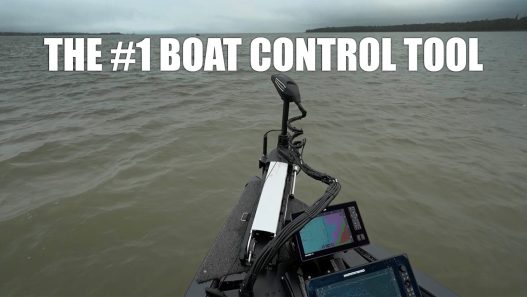
- Minn Kota Ultrex with Spot-Lock – Rather than anchor, Al nudges the bow-mount forward, taps Spot-Lock, and the trolling motor pins the boat immovably—even in pounding current. Micro-adjustments keep every rod soaking in the strike zone without re-anchoring or wrestling rope.
Rig Choices: Simplicity That Catches
- Santee Cooper Rig – A three-way swivel, float, and short dropper keeps bait just off bottom, perfect in snags.
- Spinner-Glow or Bead Rigs – Added flash can trigger strikes when visibility improves.
- Plain Three-Way with Cut Bait – Sometimes less is more; weight, leader, hook, bait—done.
No matter the rig, pair it with the heaviest sinker that still allows a clean presentation. The sinker isn’t an afterthought—it’s the difference between fishing vertically and dragging aimlessly.
High-Definition Scouting: Mega Imaging in Fast Water
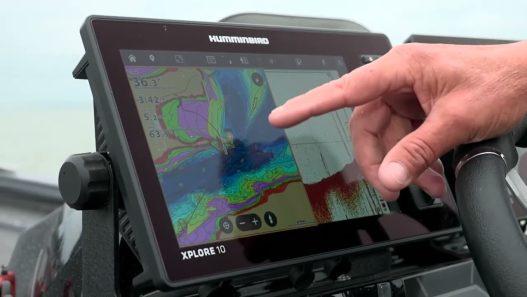
Current breaks around bridge abutments and the first deep hole below a shallow flat act as “soft” barriers much like a dam. To dissect them, the crew runs a Humminbird Helix 10 with MEGA Side Imaging alongside traditional 2-D and down imaging. The detail is jaw-dropping: individual boulders, scours behind pilings, and even the subtle shadows of catfish hugging bottom appear in photo-like clarity. With structure and fish mapped out, baits can be dropped exactly where they’ll be eaten—not merely seen.
A Challenge to Every Angler
Al closes the segment with a friendly dare: most viewers have never targeted catfish on purpose—yet there’s almost certainly a viable channel-cat river within a short drive of home. The recipe is straightforward:
- Find a barrier or current seam (dam tailrace, bridge hole, first drop off a flat).
- Pin the boat with Spot-Lock or anchor precisely.
- Use fresh cut bait on circle hooks with sinkers heavy enough to hold.
Do it once, and you’ll be hooked on the drag-screaming runs, bulldog head-shakes, and surprisingly broad-shouldered battles these “people’s fish” deliver day after day.

