








When it comes to catching crappies, most people think about grabbing some live bait and soaking it below a bobber. And swim jigs are a great alternative for catching slabs with artificials. In this video, Al Lindner and Jeremy Smith use some of their favorite soft baits that often outperform live bait. VMC offers a full lineup of crappie jigs in many different molds, colors, and sizes. Adding soft plastics, like from Big Bite Baits, gives you the one-two punch when crappie fishing. No need to mess with live bait!
Summertime Slabs: Unlocking the Secrets to Big Crappies in Weed Beds
A Lake Full of Surprises
Not every stretch of a lake will hold crappies, even on waters you know well. In this episode, Al and Jeremy are back on a lake where previous walleye trips turned up some unexpected—and massive—crappies. As Al explains, “I caught like five other ones, so we’ve got to go check it out.” The plan today is simple: explore the same general area where those surprise fish were caught, focusing on key sections of the weed edge that are known to hold pods of crappie.
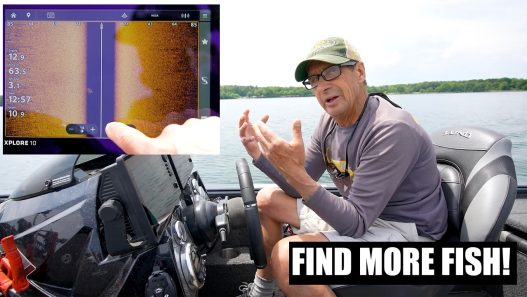
Armed with modern side imaging, they’re targeting crappies suspended off or buried deep in the weedline. Pods of fish—tight little groups of five to eight—appear clearly on the sonar screen. “Classic crappie,” Al says as they approach one such cluster. “You’re looking at them—one, two, three, four, five, six, seven—eight fish right there.”
The Mission: Big Summer Crappies
What started as a lucky walleye outing has evolved into a dedicated mission. Al’s biggest Minnesota crappie in years—a 15¼-incher—came just days before, and now the hunt is on. The conditions are perfect for summer crappies: warm water, healthy weeds, and fish stacked up in predictable locations.
The first cast produces a fat crappie, setting the tone for the day. “That’s a nice one,” Al says, holding up the fish. “Healthy lake. This fish has shoulders.” Within moments, they’re doubled up, both hooked into thick, feisty fish. “This one thinks he’s a bass,” Jeremy laughs. “This hot water—they’re going crazy.”
Jig Fishing in the Weeds
The key to success? Jigs. Specifically, lightweight 1/16 oz jigs like the VMC Neon Mooneye paired with soft plastics like the Big Bite Kamikaze Swimmer. “We’re fishing a little dirtier water, so that vibration and that profile really seem to help,” Jeremy explains.
These weed beds are no place for crankbaits. The structure is too dense. Instead, swimming jigs just above the weed tops allows anglers to cover water efficiently and trigger strikes. Jeremy shows how it’s done: “Cast downwind, manage your slack line, and keep that bait at about a 45-degree angle to the water.”
The presentation is all about finesse. Pull, reel, pause. Pull, reel, pause. “You want to swim that baby right along, just above the fish,” Jeremy says, noting how crappies usually strike from below.
The Importance of Depth Control
Crappies are notoriously sensitive to depth. Fish too deep, and you’re in the weeds—or worse, catching the wrong species like rock bass. The biggest mistake? “Fishing too low,” says Jeremy. To prevent that, he recommends a quick test: cast next to the boat and time how long it takes your bait to fall a foot. This gives you a reliable measure of your jig’s sink rate, which helps you control its position during your retrieve.
On this particular lake, casting into 6 to 8 feet of water and counting down to 2 feet before starting a slow pull has been the sweet spot. Any contact with weeds means it’s time to raise the rod tip and keep the bait riding higher.
These Fish Have Shoulders
The crappies here are thick—not just long, but wide across the back, a sign of a fertile lake with plenty of forage. “Look at the shoulders on that,” Jeremy remarks. “They’re not really long fish, but they’re actually big fish. They’re real healthy.”
One by one, more quality slabs come aboard. The anglers are using modern panfish gear—not the ultralight rods of yesteryear. Jeremy fishes with the new St. Croix Panfish Series, rods specifically tuned for this kind of jig swimming technique. The sensitive tip allows for detecting even the faintest tick, while the backbone handles big fish with ease.
Plastics Over Live Bait
One of the most noticeable trends in modern panfish angling is the shift away from live bait. “There’s a real growth in fishing for crappies with artificials in the last five or six years,” Al notes. “We’ve just learned you don’t need live bait.” The durability of plastics means you can catch fish after fish—often a dozen or more—on a single lure, making it a more efficient and cost-effective choice.
Gear Matters: Rod, Reel & Line
Feeling those subtle, slack-line bites starts with the right stick. Jeremy breaks down his setup: a St. Croix Panfish Series 7’ 3” ML-extra-fast. The newest generation uses even lighter, crisper material, and the extra-fast tip turns a faint line jump into an instant hook-set. Notice how the guide feet stand high off the blank—critical when you’re running ultra-thin braid like Sufix Nano Braid. By keeping wet, sticky line from dragging against the blank, those tall guides add casting distance and preserve sensitivity.
Paired with the rod is a Daiwa Revros LT 1000. Don’t let the price fool you; this reel borrows silky drag technology from Daiwa’s top shelf. The fold-in machined handle tucks neatly into an ice-rod tube, making the 1000 size a four-season workhorse. Jeremy runs 6-lb Nano Braid main line to a 6-lb fluorocarbon leader—stout enough to horse slabs through sparse cabbage yet light enough for long, breeze-aided casts.
Dialing In the Weedline Pattern
Mid-day, overcast skies, and a friendly chop set the stage. In northern natural lakes, summertime crappies live on the first break at the weed edge. That break might be 6 ft on one lake, 10 ft on another, or 15 ft on deep, clear water—but the pattern is universal. Low-light pushes fish up into the weeds; bright sun often drops them to the outside edge or just off the break.
Ideal patches are sparse enough to let crappies move and feed yet thick enough to hide bait. A light wind at your back lengthens casts and keeps the boat drifting naturally. When you locate a pod—often visible as a bait cloud with four or five big marks beneath—hit Spot-Lock on the bow-mount, and it’s “boom-boom-boom” fish after fish.
Why Artificial Lures Dominate
Al is famous for leaving the bait bucket at home, and this session proves why. Plastics are now the “finesse” option; hard-baits, lipless cranks, even topwaters catch plenty of crappies when they’re aggressive. Aside from the rare mid-winter finesse bite, there’s little reason to drag live minnows.
That mindset is perfect for the 8 million new anglers who entered fishing during the COVID boom. If you’re starting fresh, you’re free of the old habit of buying live bait for every trip. Tie on a 1/16-oz jig and a durable plastic swimmer, and you’ll catch fish cast after cast—and on a single bait, not a dozen minnows.
Practice Smart Harvest
Up north, a 12-inch crappie may be ten years old. Jeremy and Al keep selective harvest front-of-mind: take 9- to 10-inch “eaters,” release anything 12 inches or bigger. Protecting those slower-growing slabs preserves the fishery and ensures more trophy days like this one.
Think Big: Upsizing Your Crappie Baits
Southern tournament anglers have long thrown 3- and 4-inch profiles, and the crew is proving it works in Minnesota, too. From #8 X-Raps in spring to 4-inch paddletails right now, crappies inhale much larger meals than most anglers realize. Don’t be afraid to experiment with bigger offerings—especially in warm water when metabolism is high.
With aggressive fish, precision boat control, and dialed-in gear, the tally keeps climbing. Jeremy fires a long cast past the weed tip—“Way up there… ooh, big one!”—and swings another slab aboard, further cementing the power of modern, artificial-only crappie tactics.
Build Confidence by Trying New Things
The true “secret sauce” in fishing is confidence—believing that a specific presentation will trigger a bite. As Al puts it, “Get confidence in it. Confidence is one of the magic things in fishing. And how do you get confidence? You’ve got to go try something, and you’ve got to get bit on it—crappies, smallmouth, it doesn’t make any difference.”
That willingness to experiment—throwing bigger profiles, swimming jigs higher in the column, skipping live bait altogether—turned an average weedline into a 50-fish day. The lesson is universal: commit to a technique long enough to let the fish validate it. Once you feel those first thumps, your confidence (and catch rate) skyrocket.
Tight Lines Until Next Time
Spot-locking over weedline pods, swimming 1⁄16-oz jigs on ultralight braid, and trusting aggressive crappies to smash larger plastics proved a winning formula on this mid-summer outing. Add selective harvest, modern gear like the St. Croix Panfish Series and Daiwa Revros LT, and an open mind for experimentation, and you have everything you need to chase your own summertime slabs.

