








When it comes to walleye fishing in Ontario, there are few things more exciting than finding a big concentration of fish and getting them to bite consistently. And when you can catch fish after fish without ever opening a container of live bait, well, that’s when things really get interesting!
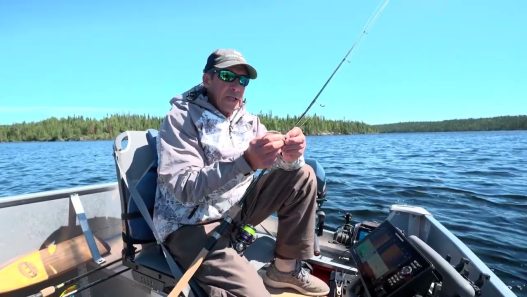
We’re up here on Minis Lake in Northwest Ontario, and the fishing has been absolutely stellar. In fact, during one morning alone, we caught 57 walleyes! That’s some pretty incredible action, and the amazing thing is that we’re doing it with a remarkably simple presentation: a jig paired with a Big Bite Baits Scentsation Slim Minnow.
No live bait. No complicated rigging. Just a straightforward system that takes advantage of where these walleyes are positioned, what they’re feeding on, and how they respond to a subtle minnow presentation.
And I’ll tell you what, this little bait has become one of my absolute favorites for fishing Canadian waters.
Why the Scentsation Slim Minnow Is So Effective
One of the things I’ve learned over the years is that successful walleye fishing often comes down to matching the forage and presenting your bait in a way that looks natural to the fish.
That’s exactly where the Big Bite Baits Scentsation Slim Minnow shines.
This soft-plastic minnow imitation has a slender profile that makes it an excellent choice when walleyes are feeding on baitfish. It also incorporates scent and flavor enhancement, which adds another dimension to the presentation.
When you’re fishing areas with large concentrations of walleyes, those little details can make a difference.
But here’s something that’s particularly important: It’s not just the bait you’re using. It’s how you’re fishing it.
A lot of anglers automatically associate jig fishing with bouncing a lure along the bottom. And there’s certainly a time and place for that approach.
However, the technique we’re using on Minis Lake is quite different.
Rather than constantly contacting the bottom, we’re actually suspending our jig and soft plastic several feet above it, using small, controlled movements to trigger strikes.
It’s a remarkably simple technique, but the results have been phenomenal.
Understanding Where Summer Walleyes Position
During August, many of the walleyes we’re targeting in Northwest Ontario are relating to deeper structural elements.
We’re talking about areas like:
- Submerged humps surrounded by deeper water
- Deep-water points extending into the main lake
- Structural areas where walleyes can intercept passing baitfish
- Locations holding concentrations of both predator fish and forage
These are classic summertime walleye locations, particularly on Canadian shield lakes.
One of the biggest keys to understanding these fish is recognizing that they’re often feeding on open-water forage.
Smelt, ciscoes, and other baitfish species are important food sources in many of these systems.
And those baitfish aren’t necessarily swimming right along the bottom.
They’re often suspended in the water column.
That’s a critical piece of the puzzle.
If the walleyes are positioned near bottom but looking upward for passing baitfish, dragging your lure along the rocks may not be the most effective way to reach them.
Instead, you want to get that minnow imitation up where the fish can see it.
That’s why we’re fishing the Scentsation Slim Minnow three to four feet above the bottom.
It puts the bait in a position where walleyes can move up and intercept it, much like they would a natural minnow.
The Jig and Soft-Plastic Combination
One of the beauties of this system is its simplicity.
When we travel to Ontario, we bring a good assortment of jig heads. The three sizes we rely on most frequently are:
- 1/8 ounce: A lighter option when a slower fall or more subtle presentation is appropriate.
- 1/4 ounce: A versatile middleweight jig for a variety of fishing situations.
- 3/8 ounce: A heavier option that helps maintain control when fishing deeper water.
Having those different weights available allows you to adjust your presentation based on the depth you’re fishing and how effectively you can maintain contact with your lure.
For this technique, we’re pairing those jig heads with the Big Bite Baits Scentsation Slim Minnow.
There’s nothing particularly complicated about the rigging. The goal is simply to create a natural-looking minnow profile that can be presented vertically and worked with very little movement.
One important consideration is choosing a jig weight that allows you to get down to the fish while still maintaining precise control.
When you’re fishing deeper humps and points, that control becomes increasingly important.
You want to know exactly where your bait is positioned in relation to the bottom.
And once you get it into the strike zone, you want to keep it there.
The Technique: Drop, Reel Up, and Twitch
Now, here’s where this presentation gets really interesting.
Instead of dropping your jig to the bottom and hopping it along the rocks, we’re using a technique that keeps the lure suspended above the fish.
It’s incredibly easy to learn, and when walleyes are feeding on minnows, it can be amazingly effective.
Step 1: Drop Your Jig to the Bottom
Start by lowering your Scentsation Slim Minnow all the way to the bottom.
This establishes an important reference point.
You know where the bottom is, and you can now position your bait at a specific distance above it.
Step 2: Reel Up Three to Four Feet
Once your jig touches bottom, reel it approximately three to four feet upward.
This is the key adjustment.
Rather than fishing directly on the lake floor, you’re positioning your minnow imitation up in the water column.
Remember, these fish are feeding on baitfish, and a suspended presentation can put your lure directly in their feeding window.
Step 3: Add Small, Subtle Twitches
Now, instead of aggressively jigging the bait, simply hold it in position and give it little twitches.
You don’t need big rod sweeps or exaggerated movements.
Just enough action to make that soft-plastic minnow look alive.
Think about how a real minnow behaves in the water. It doesn’t constantly jump several feet up and down. Much of its movement is subtle.
That’s the type of action we’re trying to imitate.
Step 4: Keep the Bait in the Strike Zone
Once you’ve established the right depth, maintain that position.
One of the biggest mistakes anglers can make with a presentation like this is moving the bait too much.
Sometimes the most effective thing you can do is simply keep that minnow hovering in front of the fish and let the subtle action do the work.
And based on the number of walleyes we’ve been catching, I can tell you that this approach is extremely effective.
Why Fishing Above the Bottom Makes Sense
There’s an important lesson here that applies to walleye fishing well beyond Northwest Ontario.
Walleyes don’t always feed directly on the bottom.
We often think of them as bottom-oriented predators, and certainly they spend plenty of time relating to bottom structure.
But relating to the bottom and feeding on the bottom are two different things.
A walleye might be positioned near a deep hump while actively watching for baitfish swimming several feet above it.
When that happens, a lure dragged along the bottom may pass underneath the fish’s primary feeding window.
By lifting your jig three or four feet above bottom, you’re presenting it in a position where fish can more easily locate and attack it.
You’re also giving the lure a different look than a traditional bottom-bouncing presentation.
Instead of imitating something crawling or hopping along the rocks, you’re imitating a minnow swimming naturally in the water column.
And when walleyes are feeding on smelt, ciscoes, and similar forage, that can be exactly what they’re looking for.
Let the Fish Tell You What They Want
One thing that never changes in fishing is the importance of paying attention to what’s happening on the water.
You can have a favorite bait, a favorite jig weight, and a favorite technique, but ultimately the fish determine what’s going to work.
That’s why I like having several jig sizes available and experimenting with the presentation.
If the fish are holding deeper, you may need a heavier jig to maintain good control.
If they’re responding to a more subtle presentation, you can adjust your movements accordingly.
And if you’re marking fish near bottom but not getting bites, consider changing the elevation of your lure before abandoning the spot.
Sometimes moving your bait a few feet higher in the water column can make a tremendous difference.
It’s these small adjustments that separate an average day from a really memorable day on the water.
A Great Alternative to Live Bait
Another thing I really appreciate about this system is that we’re catching all these walleyes without using live bait.
Think about that for a moment.
We’re fishing a Canadian lake in August, targeting walleyes around deeper humps and points, and catching tremendous numbers of fish on a simple jig-and-plastic combination.
That’s a pretty strong endorsement of how effective modern soft plastics have become.
And there are some practical advantages.
You don’t have to worry about keeping minnows alive, constantly replacing bait, or dealing with the additional logistics associated with live bait.
You can keep an assortment of jig heads and Scentsation Slim Minnows ready to go and concentrate on finding fish and refining your presentation.
For anglers traveling into remote Canadian fishing destinations, that simplicity is a real benefit.
And when the walleyes are responding this well, there’s certainly no reason to complicate things.
The Bigger Picture: Location and Presentation
If there’s one thing I want anglers to take away from this experience on Minis Lake, it’s that successful fishing is really about putting the right presentation in front of the right fish.
The Scentsation Slim Minnow has been an outstanding bait for us, but the success we’re experiencing comes from combining several important elements.
First, we’re fishing productive summertime structure where walleyes are concentrated.
Second, we’re recognizing that these fish are feeding on baitfish rather than necessarily picking food directly off the bottom.
Third, we’re adjusting our presentation to match that feeding behavior.
And finally, we’re keeping everything simple.
A jig. A soft-plastic minnow. A few feet of separation from the bottom. And subtle rod movements.
That’s it.
You don’t always need an elaborate system to catch walleyes.
In fact, sometimes the simplest techniques are the most effective because they allow you to concentrate on the things that really matter.
Don’t Head to Northwest Ontario Without Them
I’ve spent a lot of time fishing Canadian waters over the years, and one of the things that continues to amaze me is how productive these lakes can be when you figure out the right pattern.
Our recent experience on Minis Lake has been a perfect example.
Catching 57 walleyes in a single morning is something special, especially when you’re doing it without live bait.
And over the course of the last couple of days, the Big Bite Baits Scentsation Slim Minnow has proven itself as an outstanding option for targeting these fish.
Whether you’re fishing deep humps, main-lake points, or other summertime walleye locations, this is a presentation worth adding to your arsenal.
The next time you’re on a Canadian lake and find walleyes relating to deep structure, try dropping a Scentsation Slim Minnow to the bottom, reeling it up three or four feet, and giving it a few subtle twitches.
You might be surprised how quickly those fish respond.
And if you’re planning a fishing trip to Northwest Ontario, make sure you bring along a good supply of Big Bite Baits Scentsation Slim Minnows.
Based on what we’ve experienced up here, I wouldn’t want to be without them!